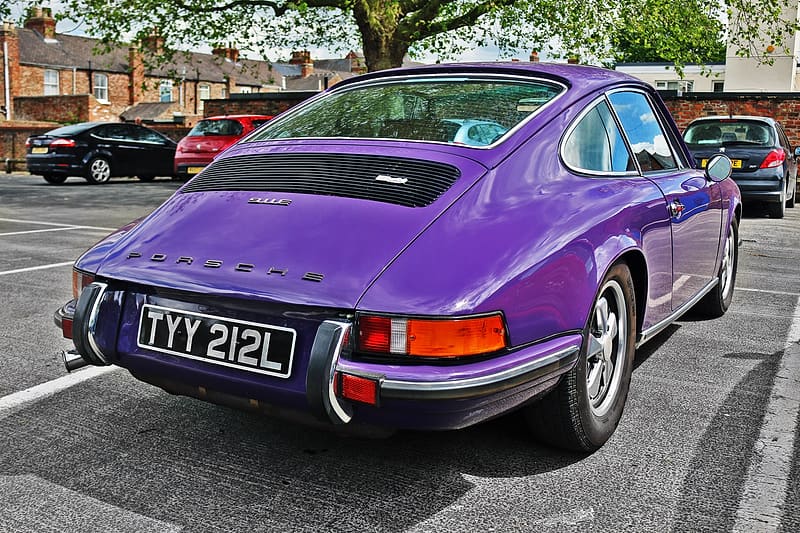
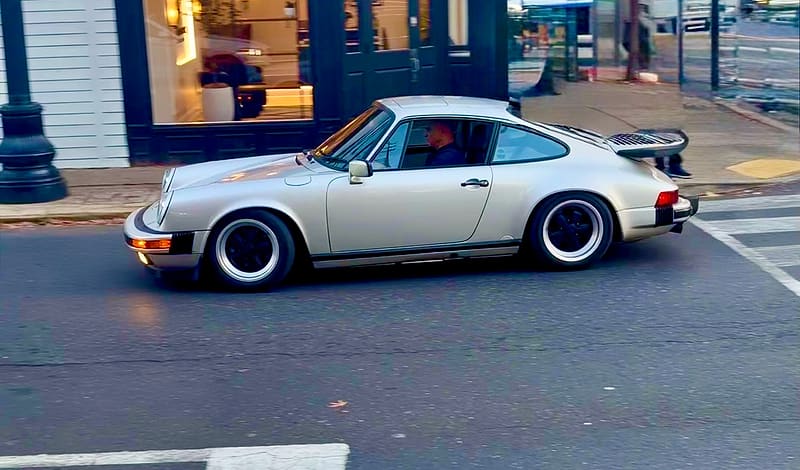
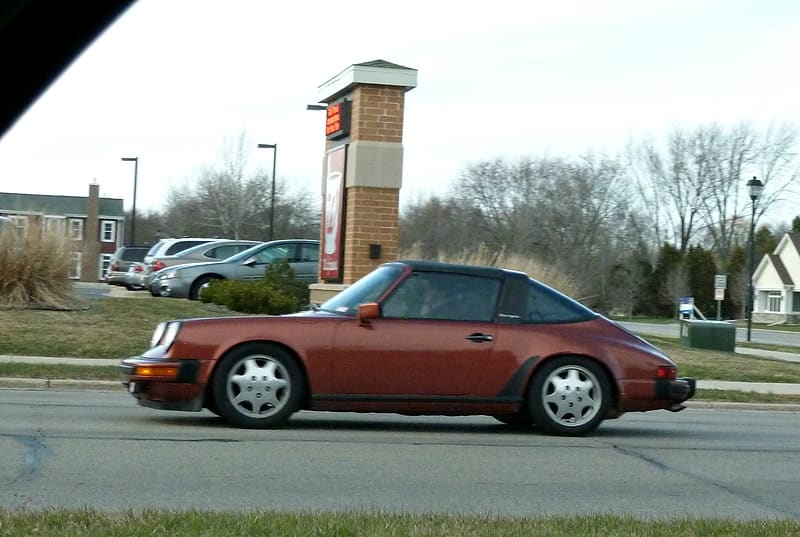
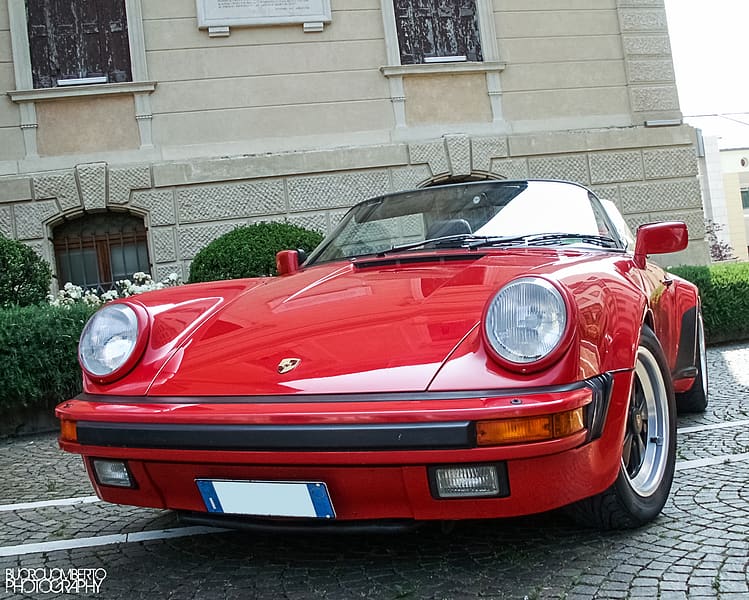
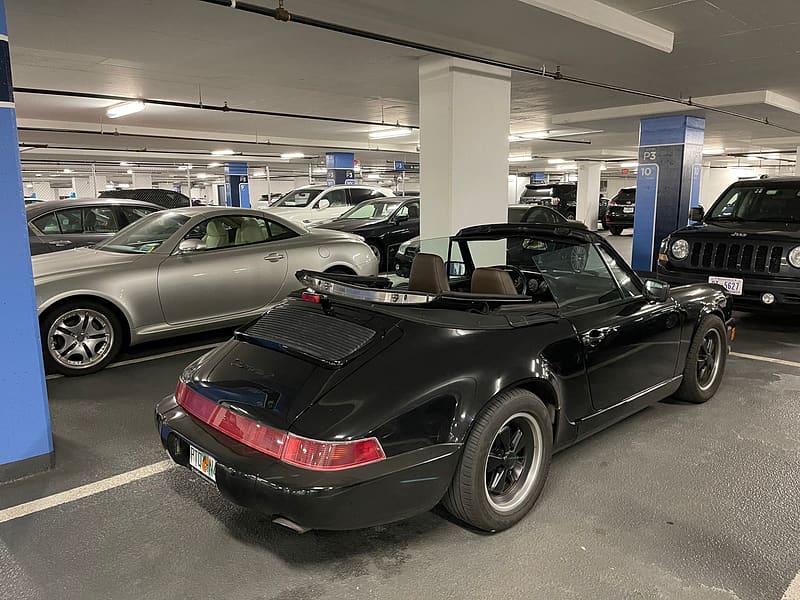
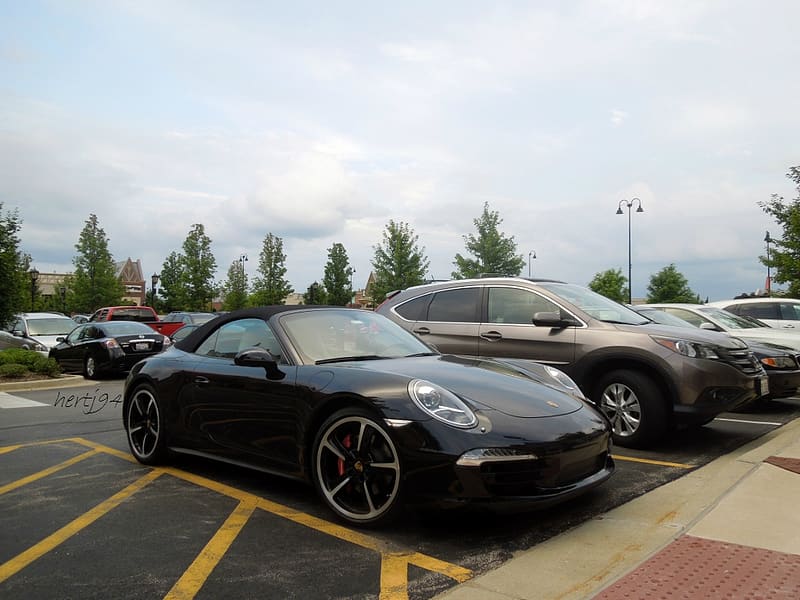
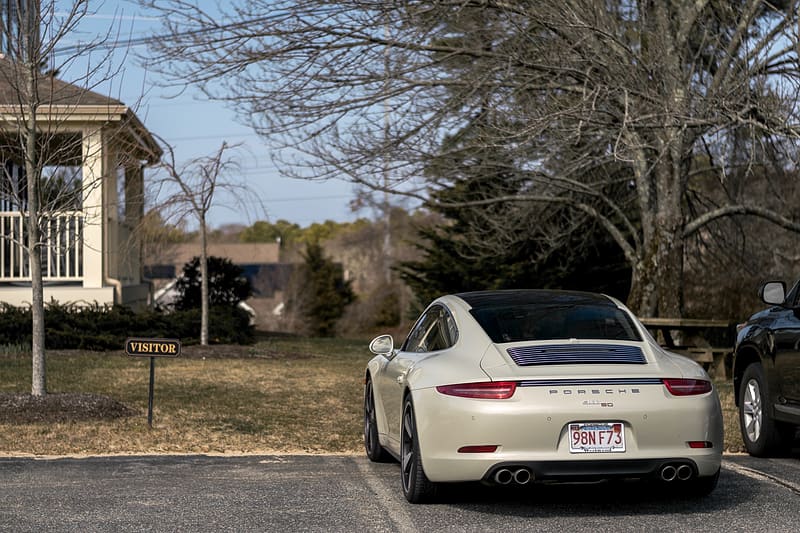
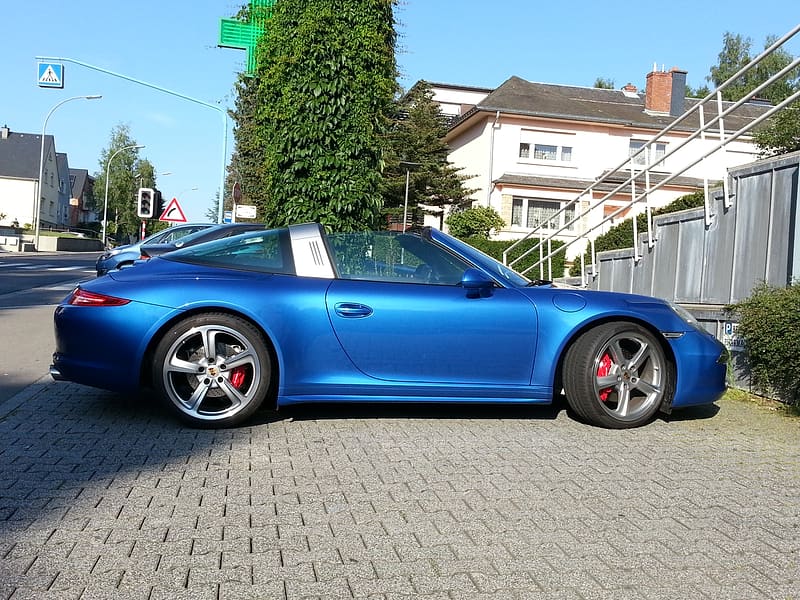
The original 911, shown as the 901 at the Frankfurt show in September 1963 and built from September 1964 as the successor to the 356. Styled by Ferdinand “Butzi” Porsche, it had an air-cooled 2.0-liter flat-six of 128 hp in the tail, a five-speed gearbox and small 2+2 seating. Peugeot claimed the rights to three-digit names with a zero in the middle, so it became the 911 after 82 cars had been built as 901s. From the 1969 model year the rear wheels moved 57 mm back, lengthening the wheelbase to tame oversteer.
How to spot one
Early 911s have gold “PORSCHE” and model lettering on the engine lid; the four-cylinder 912, which shares the body, has silver lettering.
A cheaper four-cylinder version of the 911, introduced for 1965 as 356 production ended. It used the 911 body with a detuned 89 hp version of the 356 SC’s 1.6-liter pushrod flat-four and a four-speed gearbox, with a five-speed optional. More than 32,000 were built from April 1965 to July 1969, and at first it outsold the 911.
How to spot one
Silver “PORSCHE” and “912” lettering on the engine lid instead of the 911’s gold, and a three-dial instrument panel unless the five-dial 911 panel was ordered.
The entry-level 911, launched in October 1967 with a 108 hp version of the 2.0-liter flat-six; the T stood for Touring. It effectively replaced the four-cylinder 912, and from the 1968 model year it could also be ordered with the Sportomatic clutchless manual.
For the 1968 model year the standard 128 hp 911 was made slightly more upscale and renamed the 911 L, for Luxus, with the 911 S’s ventilated disc brakes and a heated rear window. It was the top 911 sold in North America, where the 911 S could not meet emissions rules. The fuel-injected 911 E replaced it for 1969.
The high-performance 911, introduced for the 1967 model year with a 158 hp higher-compression version of the 2.0-liter engine on Weber carburetors. Fuchs forged alloy wheels with their five-leaf design were offered for the first time with it. For 1969 it switched to mechanical fuel injection and 168 hp.
How to spot one
The five-leaf Fuchs alloy wheels arrived with the 911 S, but they soon became an option on other 911s, so the wheels alone don’t prove a car is an S.
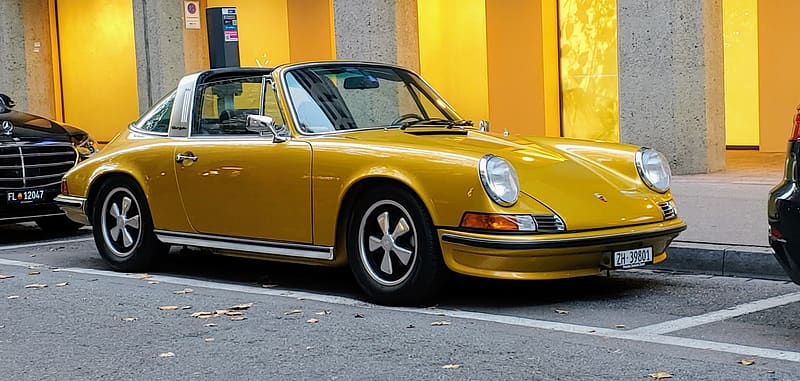
An open 911 with a removable roof panel and a fixed, stainless-steel-clad roll bar, added for the 1967 model year because Porsche feared US safety rules would outlaw full convertibles. The name comes from the Targa Florio road race in Sicily, which Porsche had won seven times since 1956. At first the rear window was zip-out plastic; a fixed glass rear window was offered alongside it from 1968.
How to spot one
A wide stainless-steel roll bar behind the doors; early cars have a soft, zip-out plastic rear window, later ones fixed glass.
A lightweight racing 911 built in 1967, of which only 20 were made. Thin aluminum doors, plastic door handles and a spartan interior with a bucket seat brought it to 810 kg, and its twin-plug 2.0-liter engine made 207 hp. Too few were built for the GT production class, so it raced against prototypes.
How to spot one
Smaller front and rear indicator lights and plastic door handles set it apart from a road 911.
For the 1970 model year every 911 engine grew to 2.2 liters: 123 hp in the carbureted T, 153 hp in the fuel-injected E and 178 hp in the S. These C and D series cars also got a lighter magnesium crankcase, a new gearbox with a larger clutch, an aluminum engine lid and ventilated disc brakes on all models. Porsche’s factory rally team used the E because of its wider spread of power.
How to spot one
The door handles have a pull lever hidden from sight instead of the earlier push button.
A racing version of the 911 S built to order around 1969–1972; sources give either 50 cars or 33, and no two are quite alike. Engines ranged from 2.2 to 2.5 liters with up to 266 hp, and some used thinner steel, aluminum or fiberglass panels to bring weight down to about 960 kg. It had success at the Daytona 6 Hours, the Sebring 12 Hours, the Nürburgring 1000 km and the Targa Florio.
How to spot one
It introduced the flared fenders later seen on many 911s, and often ran mismatched wheels: Fuchs at the front and wider Minilites at the rear.
For 1972 and 1973 all three 911s got a 2.4-liter engine (2,341 cc) and the new, stronger Type 915 gearbox with a conventional H shift pattern. The T made 128 hp on carburetors (138 hp with fuel injection in the US and Japan), the E 163 hp and the S 187 hp. The S also gained a small spoiler under the front bumper.
How to spot one
1972 cars have an oil filler flap on the right rear fender, which Porsche dropped after one year; 1973 cars have black horn grilles, black-trimmed indicator lenses and black engine-lid lettering instead of chrome and gold.
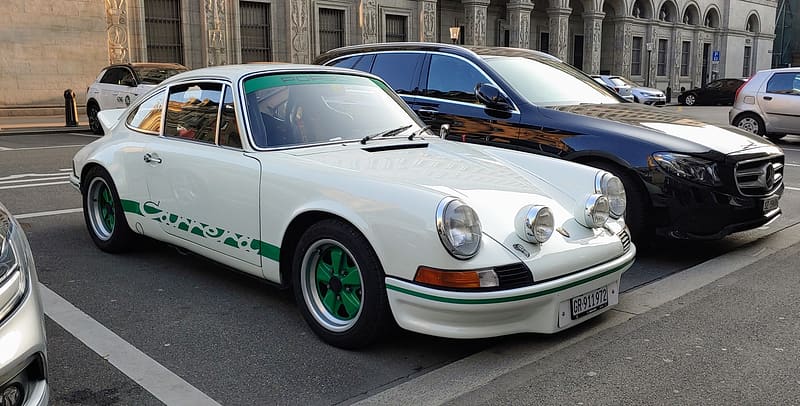
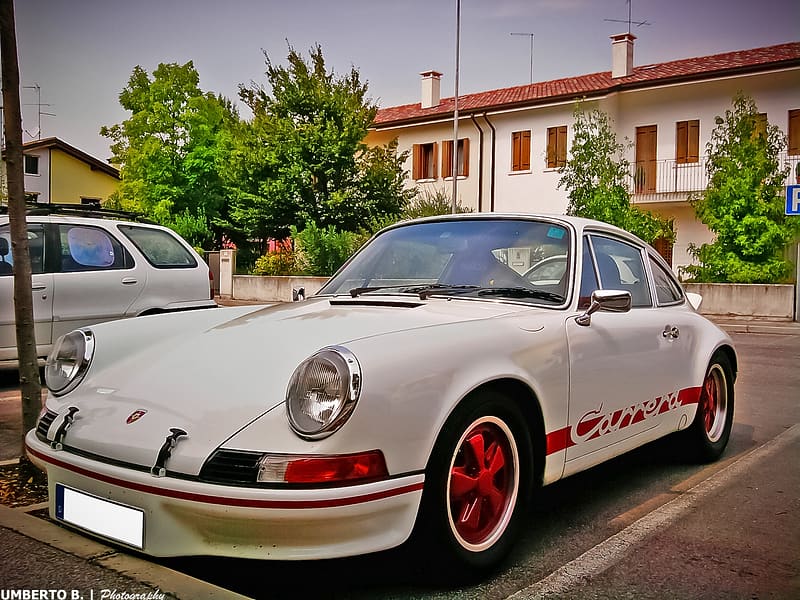
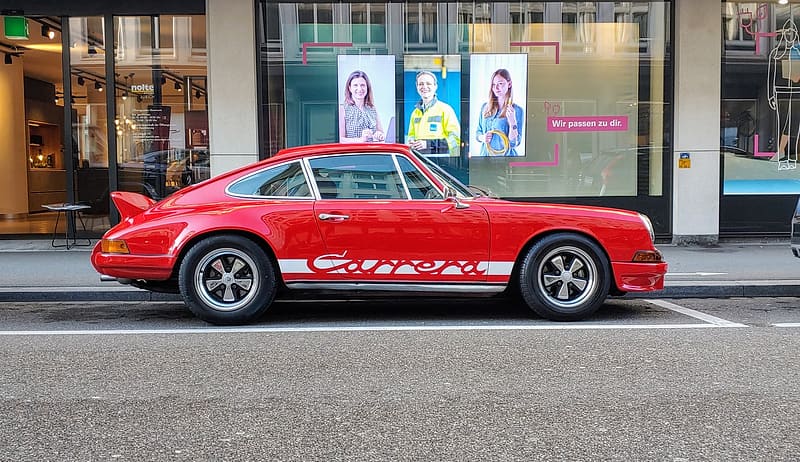
Built in 1972–1973 so Porsche could race in the FIA’s Group 4 GT class, which needed at least 500 road cars; 1,580 were made. RS stands for Rennsport, and the Carrera name came back from the 356 Carrera. Its 2.7-liter engine made 207 hp, with stiffer suspension, bigger brakes and wider rear wheels and tires. The Touring weighed 1,075 kg and the Lightweight about 100 kg less, thanks to thinner steel and glass.
How to spot one
A “ducktail” spoiler on the engine lid and wider rear fenders, on the slim chrome-bumper body; the 1974 Carrera 2.7 that followed also had a ducktail but wears the big impact bumpers.
The racing version that the Carrera RS 2.7 was built to homologate. Porsche gave 55 of the 1,580 Carrera RS cars the M491 conversion, with a 2.8-liter engine of 308 hp and wider arches, wheels and tires.
How to spot one
Much wider front and rear fender flares than the road RS, over wider wheels.
For 1974 the 911 got impact bumpers to meet US low-speed crash rules; they were blended in so well that they stayed for 15 years. The base 911 and the 911 S used a 2.7-liter engine with Bosch K-Jetronic fuel injection, making 148 and 173 hp, and kept the narrow rear fenders of the 2.4.
How to spot one
Big impact bumpers, which every 911 wore through 1989, but with narrow rear fenders, unlike the Carrera 2.7.
The top 911 of 1974 and 1975, mechanically close to the 1973 RS, with its 207 hp fuel-injected engine and the same 1,075 kg weight, offered as a coupe or a Targa. US cars could not have that engine for emissions reasons and used the 2.7 K-Jetronic engine with 173 hp, later reduced.
How to spot one
Impact bumpers with the wide RS rear fenders; 1974 cars outside Germany also have the ducktail spoiler.
The top non-turbo 911 of 1976 and 1977, with a naturally aspirated 3.0-liter engine derived from the 911 Turbo’s, using its die-cast aluminum crankcase and K-Jetronic injection. It made 197 hp and weighed 1,120 kg. Porsche built 3,687: 2,564 coupes and 1,123 Targas.
A one-year, US-only four-cylinder 911 for the 1976 model year, filling the gap between the 914 and the coming 924. It used the 911 body and chassis with a fuel-injected 2.0-liter Volkswagen Type 4 flat-four, as in the 914, making 90 hp; the E stands for Einspritzung, or fuel injection. Porsche built 2,099 between May 1975 and July 1976.
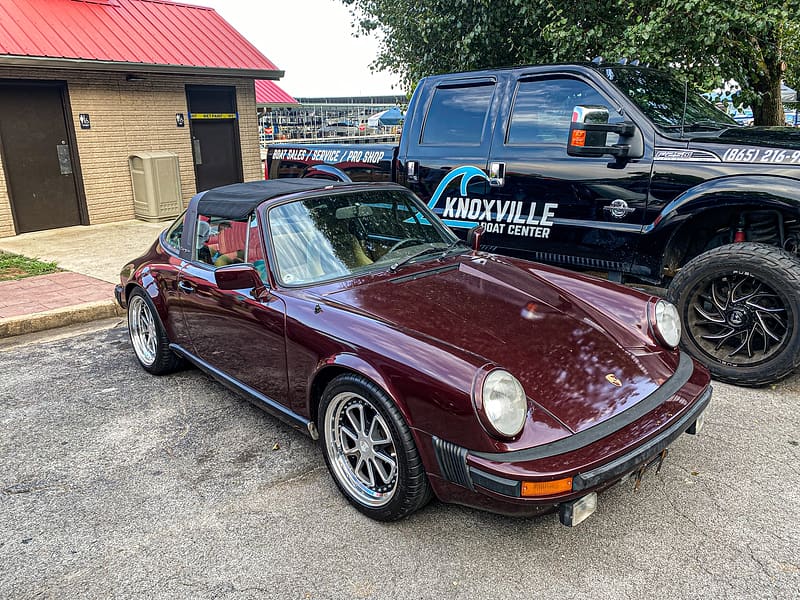
The main 911 from 1978 to 1983, in effect a detuned Carrera 3.0 with 178 hp; the SC name came back from the 356 SC. Outside the US power rose to 185 hp for 1980 and then 201 hp, while US cars kept 178 hp. Porsche had planned to replace the 911 with the 928, but strong sales kept it going; 58,914 SCs were sold.
How to spot one
It looks almost the same as the later Carrera 3.2, but the Carrera has fog lights built into the front spoiler and the SC doesn’t.
The first 911 cabriolet, launched in late 1982 as a 1983 model and Porsche’s first convertible since the 356 of the mid-1960s. A four-wheel-drive cabriolet concept had been shown at the 1981 Frankfurt show, but the production car was rear-drive. It sold 4,214 in its first year despite costing more than the Targa.
How to spot one
A fully folding fabric top with no fixed roll bar, unlike the Targa, and no fog lights in the front spoiler, unlike the later Carrera 3.2 Cabriolet.
Launched for 1984, reviving the Carrera name for the main 911. A new 3.2-liter engine with Bosch electronic engine management made 228 hp, or 204 hp in North America (214 hp from late 1986). From 1987 it got the Getrag G50 five-speed gearbox with a hydraulic clutch. Porsche built 76,473 Carrera 3.2s, 35,670 of them coupes.
How to spot one
Fog lights built into the front spoiler, which the earlier SC doesn’t have; otherwise the two look almost the same.
The Targa version of the Carrera 3.2, with a removable roof panel and a fixed roll bar, built from 1984 to 1989 with the same 3.2-liter engine. Porsche built 18,468. In the US it cost $33,450 at launch, between the coupe and the cabriolet.
How to spot one
The Targa roll bar behind the doors, with the Carrera’s fog lights built into the front spoiler.
The soft-top Carrera 3.2, built from 1984 to 1989; 19,987 were made. At $36,450 in the US at launch, it was the most expensive of the three body styles.
How to spot one
A folding fabric top with no roll bar, and fog lights in the front spoiler that the SC Cabriolet lacks.
A lightweight Carrera 3.2 for owners who wanted a track-inspired road car; Porsche built 340 from 1987 to 1989. Leaving out the radio, sunroof, air-conditioning, rear seats, power windows and sound deadening saved about 50 kg. The blueprinted engine revved to 6,850 rpm, and it had stiffer engine mounts, revised upper gear ratios, Bilstein dampers and a limited-slip differential.
How to spot one
No fog lights, no headlight washers and no rear wiper, all deleted to save weight.
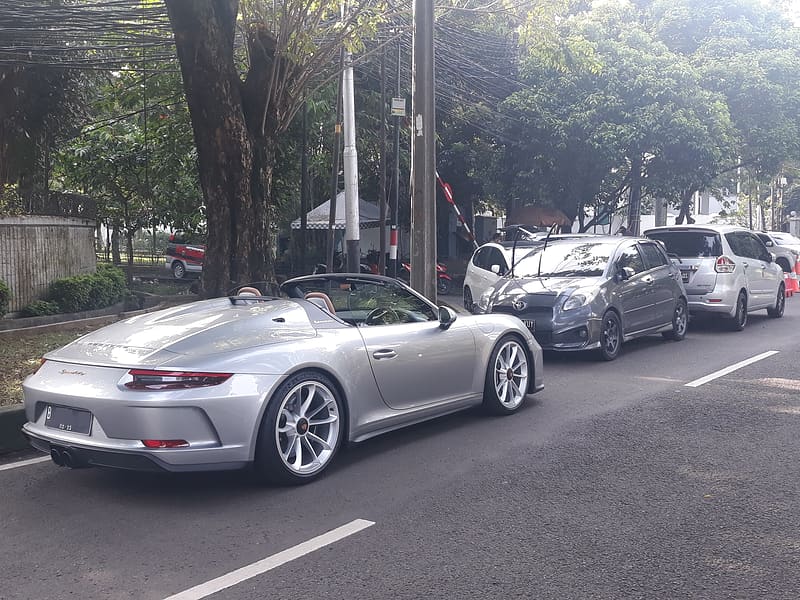
A low-roof, two-seat version of the Carrera 3.2 Cabriolet, recalling the 356 Speedster of the 1950s, built from January to July 1989. It started as a design study in 1983, and a prototype was shown at the 1987 Frankfurt show. Most had the Turbo-look wide body with the Turbo’s brakes, wheels and suspension; only 171 had the narrow body.
How to spot one
A low, steeply raked windshield and a hard cover with two humps behind the seats that hides the folded top.
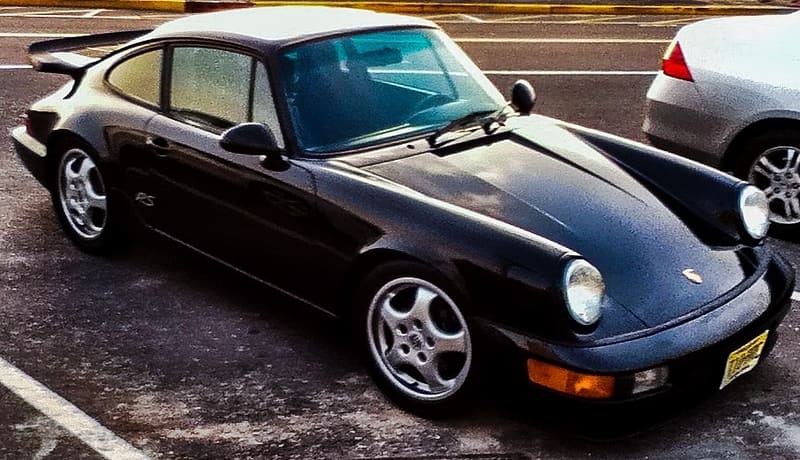
The 964, launched in 1989, was a heavily updated 911, about 85 percent new, with a 3.6-liter engine, coil-spring suspension, power steering and ABS. The Carrera 4 came first and was the first 911 sold with all-wheel drive, offered as a coupe, cabriolet and Targa. Porsche built 20,395.
How to spot one
Smooth bumpers flush with the body and a rear spoiler that rises above 80 km/h set every 964 apart from earlier 911s; the badge reads Carrera 4.
The rear-drive 964, added in 1990 after the Carrera 4, with the same 247 hp 3.6-liter engine. The 964 was the first 911 offered with Porsche’s Tiptronic automatic. Coupe, cabriolet and Targa versions were built, 34,398 cars in all.
How to spot one
The 964’s flush bumpers and pop-up rear spoiler, with a Carrera 2 badge.
A lightweight, rear-drive 964 for Europe, based on the Carrera Cup race car and recalling the 2.7 and 3.0 RS. Its engine made 256 hp, it rode 40 mm lower on stiffer suspension without power steering, and thinner glass and an aluminum hood helped bring it to about 1,217 kg. A stripped Clubsport version, 290 cars, added a roll cage and racing seats.
How to spot one
17-inch magnesium Cup wheels and a ride height 40 mm lower than a Carrera 2.
A cabriolet with the wide Turbo body, built for North America for 1992 and 1993 and named in the tradition of the 356 America Roadster. Mechanically it was a Carrera 2, but with the Turbo’s brakes and suspension and 17-inch Cup wheels. Only 250 were made.
How to spot one
A soft-top 964 with the Turbo’s wide rear fenders but the standard electric pop-up spoiler instead of the Turbo’s fixed wing.
Built in 1993 to mark 30 years since the 911’s 1963 debut, limited to 911 cars. It combined the wide Turbo body and wheels with the all-wheel-drive Carrera 4 and its normal 3.6-liter engine. It began a line of wide-body Carrera 4s that continued with the 993 and 996 Carrera 4S.
How to spot one
A wide-body Carrera 4 with the small pop-up spoiler, an anniversary script on the engine lid and paint in Viola, Polar Silver or Amethyst.
A homologation special built in 1993 so the 3.8 RSR could race; only 55 were made, just enough for the FIA minimum. It had the wide Turbo body and a 296 hp 3.8-liter version of the 964 engine, with weight cut by aluminum body panels, thinner glass and the loss of comfort equipment.
How to spot one
Wide like a 964 Turbo, but with a larger fixed two-tier rear wing marked “3.8” on its sides, on 18-inch Speedline modular wheels.
A simpler RS for the US, sold for 1993 and 1994 and based on the US Carrera 2 with its standard engine and gearbox. Power steering, cruise control, air-conditioning, sunroof and radio were deleted (the last three could be ordered back), and it had M030 sport suspension and 17-inch wheels. Standard colors were red, black and white; 701 were built.
How to spot one
A fixed “whale tail” spoiler on the narrow 964 body, “RS America” on the engine lid and an “RS” logo ahead of each rear wheel.
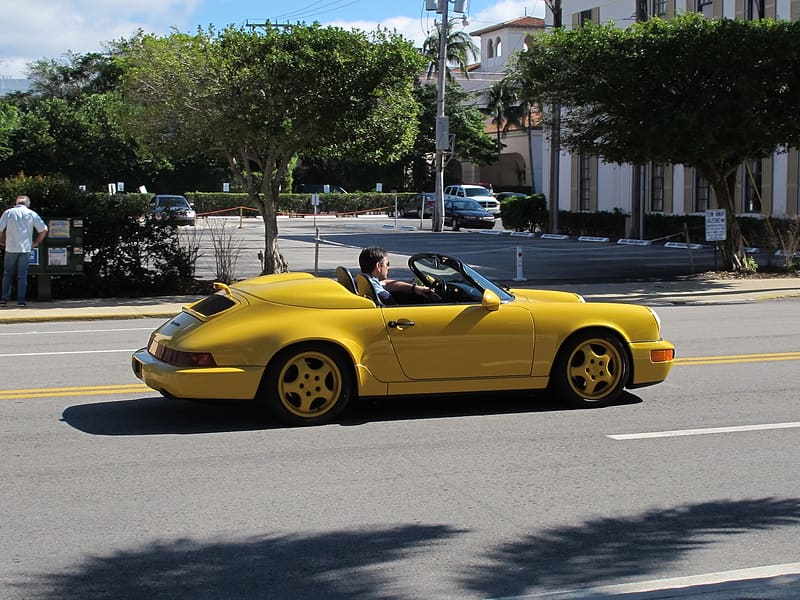
The second 911 Speedster, built on the narrow Carrera 2 rather than the Turbo-look body most 1989 Speedsters had. It sat between a Carrera 2 Cabriolet and the RS, with softer suspension than the RS but few comforts. Porsche planned 3,000 but built 936, 427 of them for the US and only 27 with right-hand drive.
How to spot one
A cut-down windshield and a twin-hump cover over the folded top, on the narrow body; only 20 were finished by Porsche Exclusive with the Turbo-look wide body.
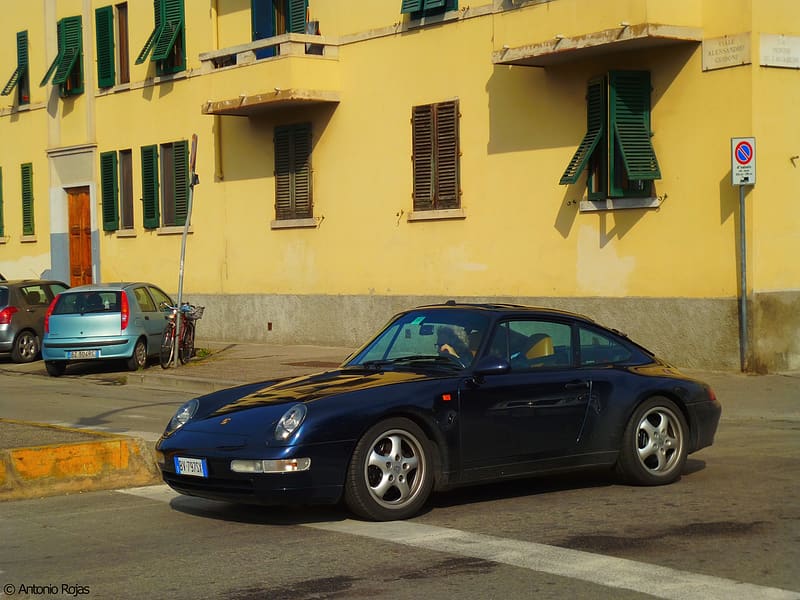
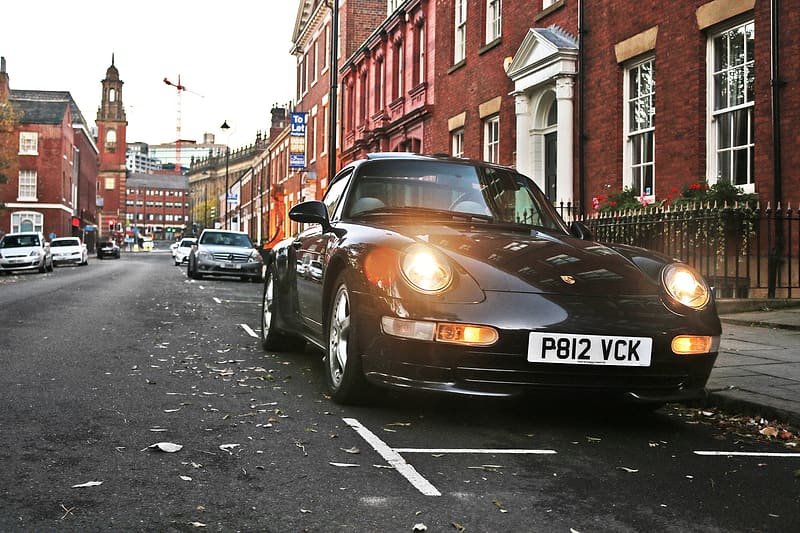
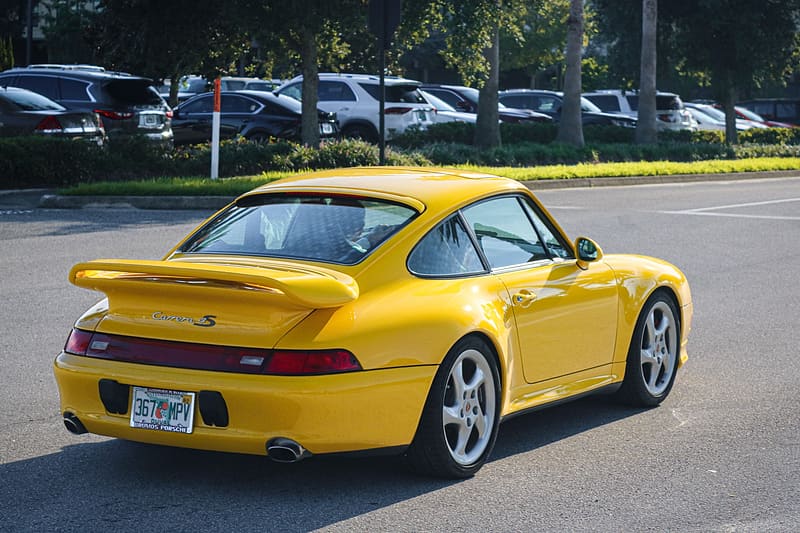
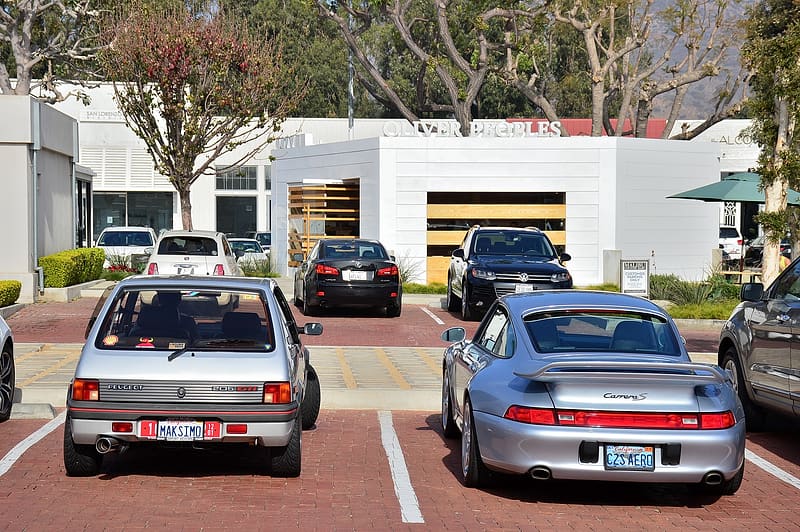
The 993 was the fourth-generation 911 and the last with an air-cooled engine. Designed by Tony Hatter, it kept the 964’s core structure but had more flared fenders, smoother bumpers and a new multi-link rear suspension that cured the old lift-off oversteer. The rear-drive Carrera’s 3.6-liter engine made 268 hp, later 281 hp with the VarioRam intake, and a six-speed manual was standard.
How to spot one
Orange turn signals front, side and rear, black brake calipers, a black Carrera badge and teardrop-shaped mirrors; early cars ran on 16-inch wheels.
The 993 convertible, introduced alongside the coupe in April 1994 for the 1995 model year. Its electric, hand-stitched top was reinforced with metal panels and came with an automatic wind blocker. At 1,420 kg it weighed about 50 kg more than the coupe.
How to spot one
A small spoiler on the engine lid carries the third brake light.
The all-wheel-drive 993, built as a coupe and cabriolet. It replaced the 964’s center differential with a lighter viscous coupling, like the 959’s, that sent 5 to 50 percent of the power to the front wheels. No Tiptronic was offered.
How to spot one
Clear front and side turn signals, red rear turn signals, silver brake calipers and a silver Carrera 4 badge; the wheel center caps carry a Carrera 4 logo instead of the Porsche crest.
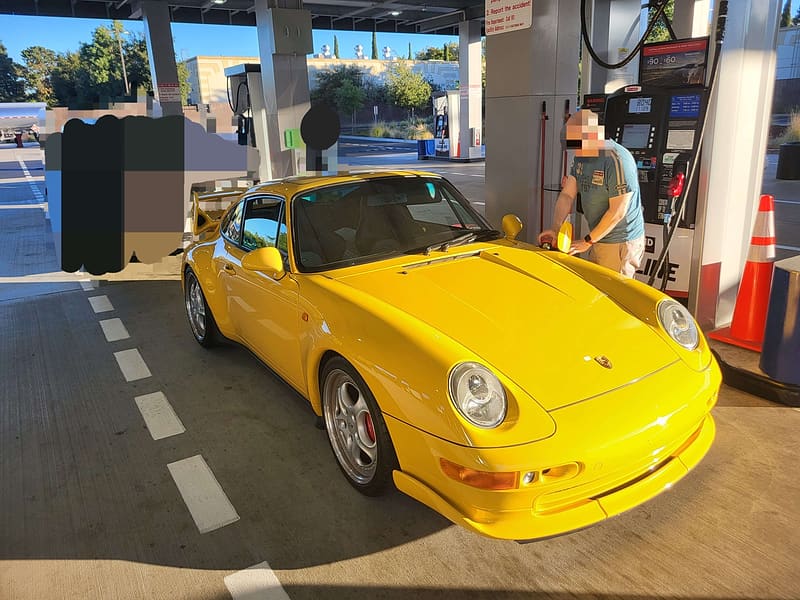
A lightweight 993 built in 1995 and 1996, with a 296 hp 3.8-liter engine, the Turbo’s brakes, a limited-slip differential and lower, stiffer suspension. A seam-welded body, aluminum hood, thinner glass and no rear seats brought it to 1,280 kg. Porsche built 1,014, including 227 track-focused Clubsports; it was not approved for the US.
How to spot one
A large fixed rear wing, small flaps on the front bumper, three-piece 18-inch wheels and no headlight washers; the Clubsport has an even bigger wing and a deeper chin spoiler.
Porsche never offered a 993 Speedster, but the factory built two. A dark green one with Tiptronic and 17-inch wheels was made in 1995 for Ferdinand Alexander Porsche’s 60th birthday; a silver wide-body car with a manual gearbox was rebuilt from a cabriolet for Jerry Seinfeld in 1998.
How to spot one
Aftermarket coachbuilders converted a few 993 cabriolets into Speedsters, so a 993 Speedster seen on the street is almost certainly not one of the two factory cars.
Introduced for 1996, the 993 Targa replaced the removable panel and roll bar with a large glass roof that slides back under the rear window, a design carried on by the 996 and 997. It was based on the Cabriolet body, and the heavier roof raised its center of gravity.
How to spot one
A coupe-like profile with a tinted glass roof and no Targa bar, usually on the two-piece 17-inch wheels made for it.
Introduced for 1996, the Carrera 4S put the naturally aspirated 3.6-liter engine and all-wheel drive in the Turbo’s wide body, on slightly lowered suspension. The last air-cooled 911 built for road use, completed on March 31, 1998, was a Riviera Blue Carrera 4S owned by Jerry Seinfeld.
How to spot one
Turbo-width rear fenders but the Carrera’s pop-up rear spoiler instead of the Turbo’s fixed whale tail, a red reflective strip with the Porsche name between the taillights, and a silver Carrera 4 badge with a titanium-colored S.
The rear-drive companion to the Carrera 4S, built for the 1997 model year and a short 1998 run, with the Turbo’s wide body and the 281 hp naturally aspirated engine. Lighter than the 4S, it was slightly quicker. Porsche built 3,714, 1,752 of them for North America.
How to spot one
The wide Turbo body with the pop-up spoiler, a body-colored two-part grille on the engine lid, orange turn signals and a black Carrera badge with a titanium-colored S.
The 996 of 1997 was the first all-new 911 since the original and the first with a water-cooled engine, a 3.4-liter flat-six with four valves per cylinder and 296 hp. Designed by Pinky Lai, it was 185 mm longer than the 993 and shared its front end, front suspension and engine design with the cheaper Boxster to save money. Coupe, cabriolet and all-wheel-drive Carrera 4 versions were offered.
How to spot one
“Fried egg” headlights with the amber turn signals inside the same teardrop-shaped unit, much like the Boxster’s.
A special edition of the Carrera 4 coupe for the year 2000, limited to 911 cars. It had natural leather and dark burr maple inside and a numbered plate on the center console, with a Tiptronic or six-speed manual.
How to spot one
Color-shifting Violet Chromaflair paint, polished Turbo-look wheels and a special “911” badge on the engine lid.
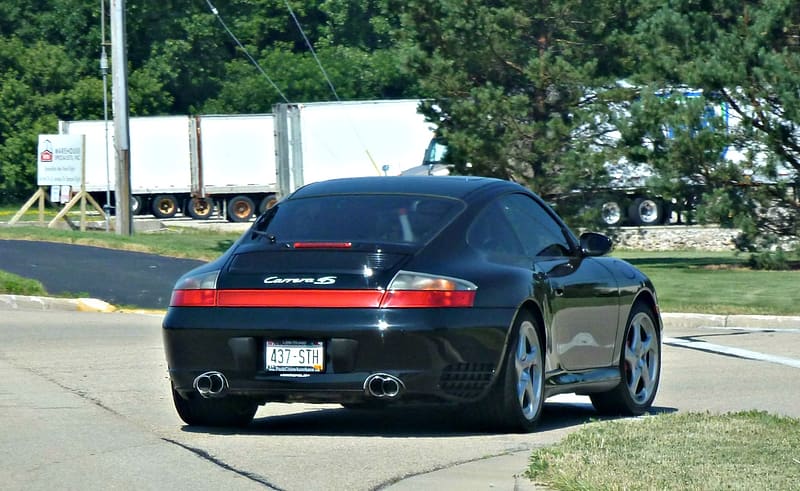
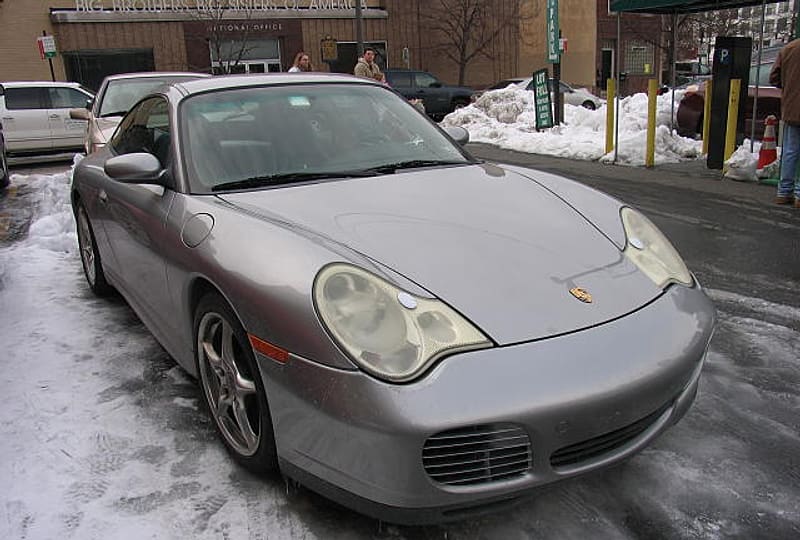
For 2002 the 996 was facelifted and its engine grew to 3.6 liters, adding 11 kW (15 hp) for 316 hp. The update brought Turbo-style headlights after Carrera owners complained their cars looked like the cheaper Boxster. The narrow-body Carrera 4 coupe had ended in 2001.
How to spot one
Headlights shaped like the 996 Turbo’s instead of the earlier “fried egg” units.
The 996 Targa arrived in 2002 with a sliding glass roof like the 993 Targa’s. Its rear window also opens as a hatch, giving access to the luggage space behind the seats.
How to spot one
A glass roof running back to the rear window, with no Targa bar.
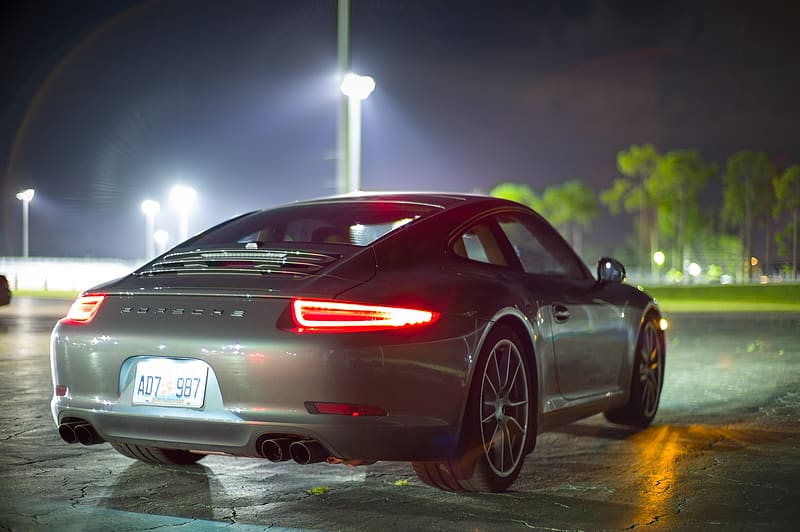
Built for the 2004 model year to mark 40 years of the 911, limited to 1,963 cars after the year it was launched. It had the X51 power kit with 340 hp, a limited-slip differential, sport suspension, the Turbo’s front end and radiators, and natural gray leather.
How to spot one
GT Silver Metallic paint only, the Turbo’s nose, polished five-spoke wheels found on no other model, GT3 side skirts and a “40 Jahre 911” logo on the engine lid.
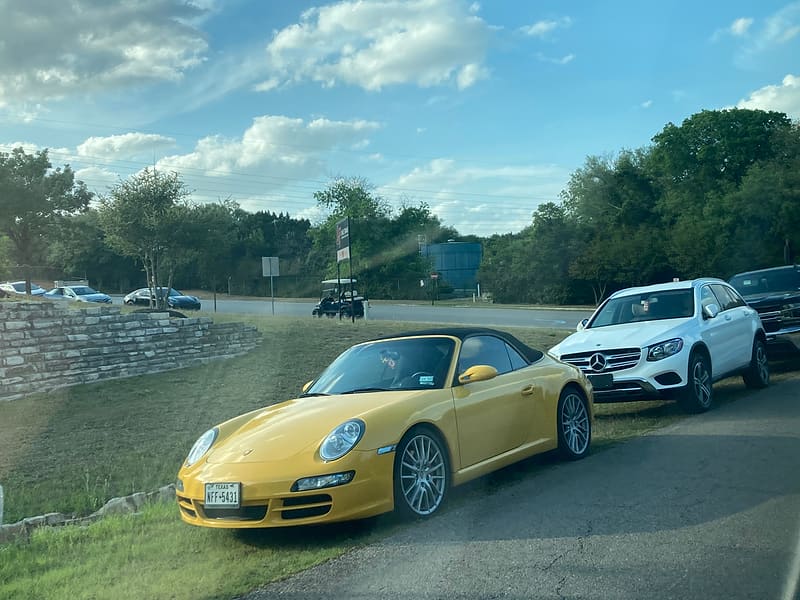
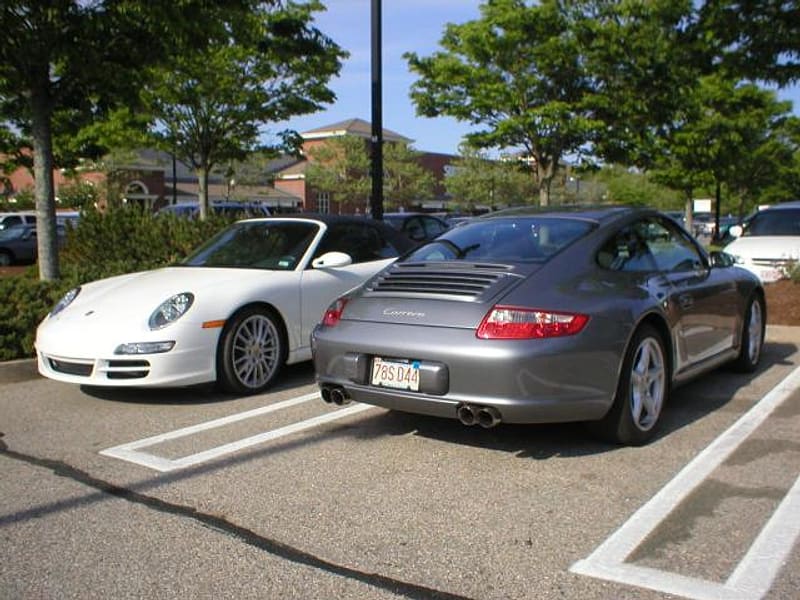
The 997 went on sale in 2004 for the 2005 model year, an evolution of the 996 with new styling by Grant Larson and a new interior. The Carrera kept a 3.6-liter engine, now 321 hp, on 18-inch wheels; the all-wheel-drive Carrera 4 reached customers from November 2005.
How to spot one
Oval headlights with separate turn signal units, like pre-996 911s, in place of the 996’s “fried egg” lights.
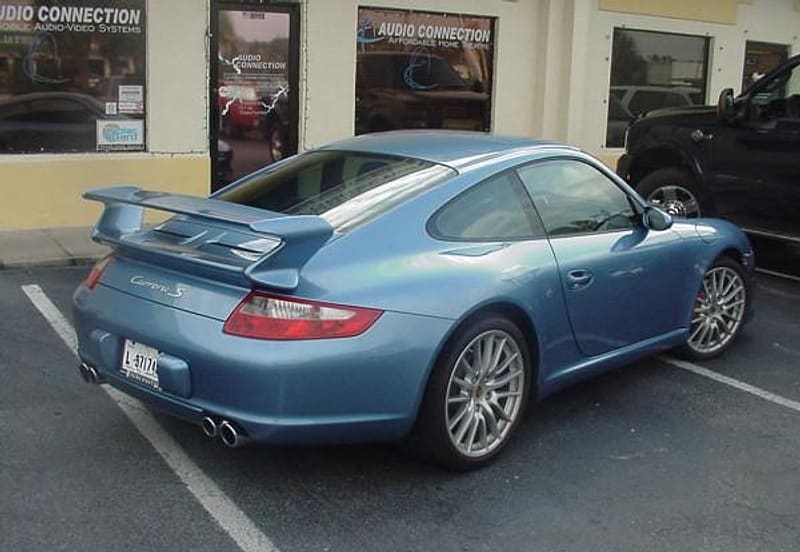
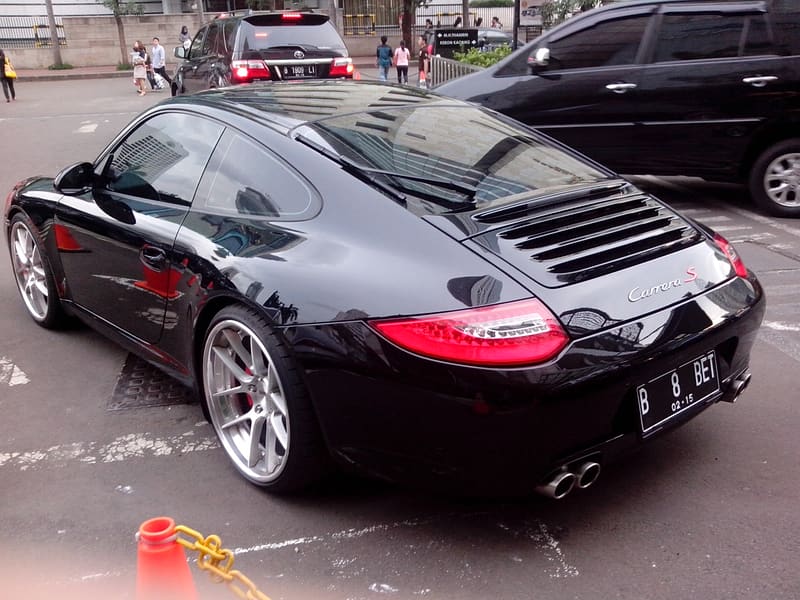
New with the 997, the S models had a 3.8-liter engine with 355 hp and came with PASM adaptive dampers on lowered suspension, 19-inch wheels, bigger brakes, a sports exhaust and bi-xenon headlights. The all-wheel-drive 4S followed the Carrera S.
How to spot one
19-inch wheels as standard, where the 997 Carrera had 18-inch wheels.
A 50-car run of the Carrera S coupe with the X51 power kit (376 hp), made for the 50th anniversary of the Porsche Club of America and unveiled at the club’s Porsche Parade in Hershey, Pennsylvania. Car 001 went to the Porsche Museum, one was won in a sweepstakes and the other 48 were sold to randomly chosen US and Canadian club members, at $99,911.
How to spot one
Azzurro California blue paint, similar to a 356 color, with commemorative badges.
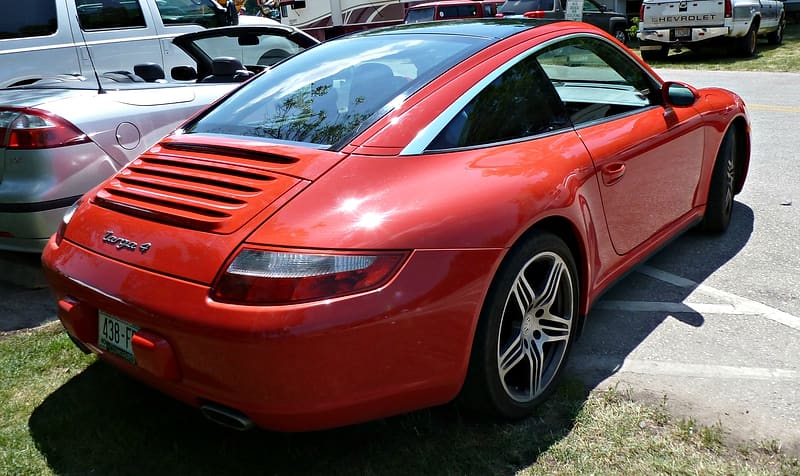
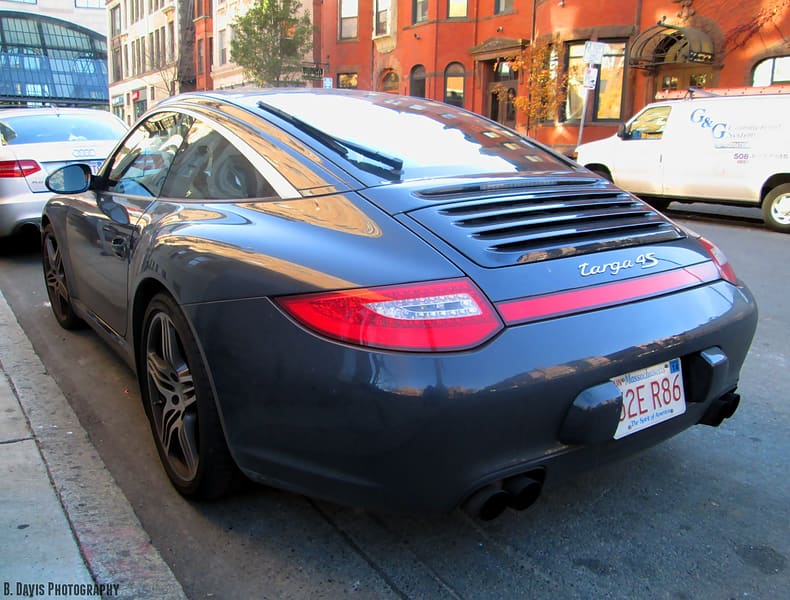
Introduced in 2006 for the 2007 model year, the 997 Targa kept the sliding glass roof, which drops 25 mm and slides back under the rear window at any speed. Unlike earlier Targas it came only with all-wheel drive, and the roof added about 60 kg.
How to spot one
A glass roof running back to the rear window; when it is open a small glass deflector rises above the windshield. Cars from 2009 on, like other all-wheel-drive 997s, have a reflective strip between the taillights.
The 2009 update of the 997, shown at the 2008 Paris show. A new direct-injection 3.6-liter engine made 340 hp, and Porsche’s PDK dual-clutch gearbox replaced the Tiptronic automatic. The Carrera started at $76,300 in the US.
How to spot one
LED daytime running lights, larger front air intakes, LED taillights of a new design and larger mirrors than the 2005–2008 cars.
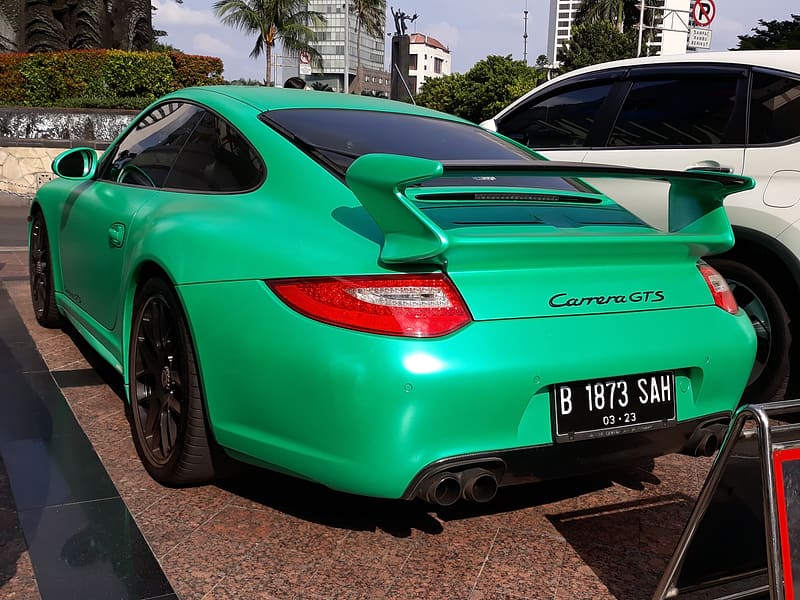
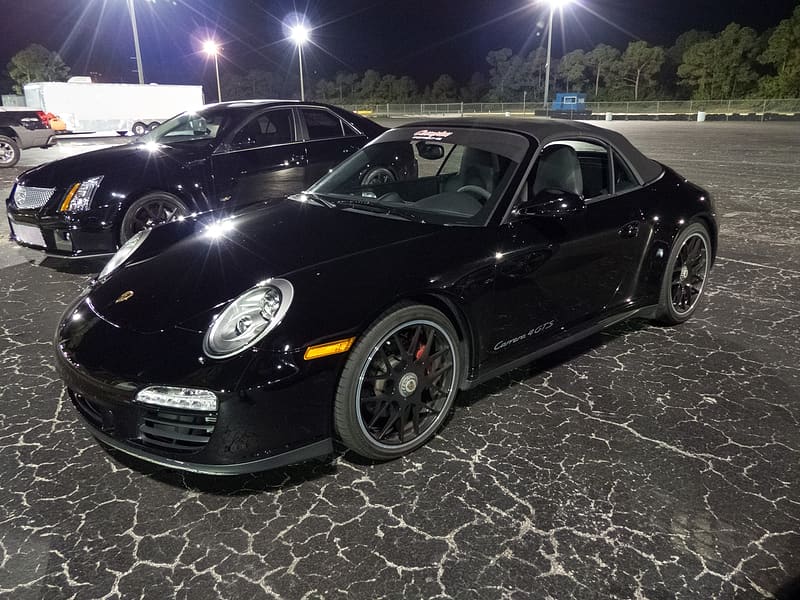
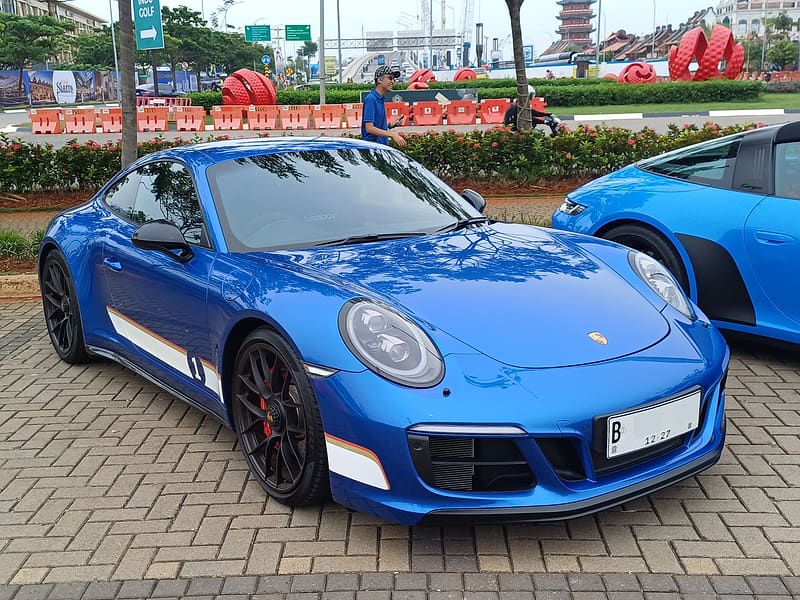
Slotted between the Carrera S and the GT3, the Carrera GTS used a 402 hp version of the 3.8-liter engine and came as a coupe or cabriolet. It was the only rear-drive Carrera with the wide body and track; the all-wheel-drive Carrera 4 GTS followed in May 2011. Center-lock wheels and Alcantara trim were standard.
How to spot one
Wide rear fenders on a rear-drive car and center-lock wheels; the Carrera 4 GTS adds a reflective strip between the taillights.
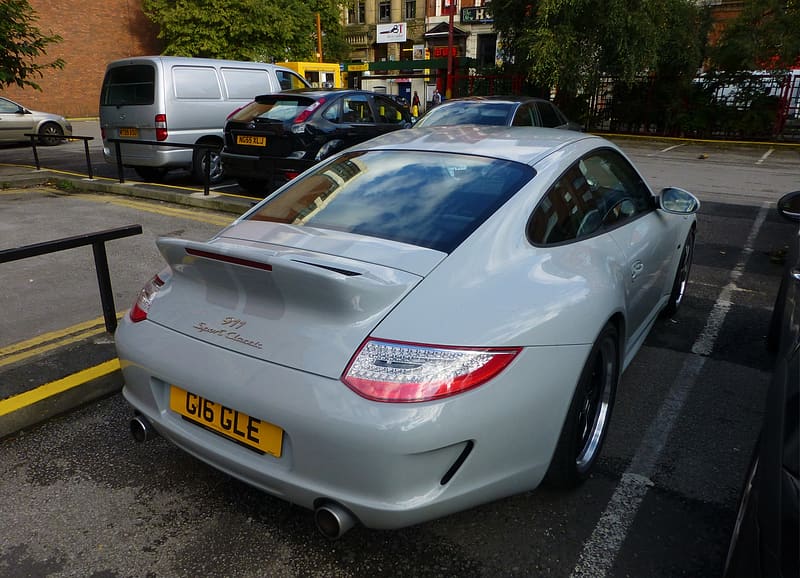
A 250-car special edition of the Carrera S coupe, inspired by the 1973 Carrera RS 2.7 and shown at the 2009 Frankfurt show; all were sold within 48 hours. Its 3.8-liter engine made 402 hp with a new intake, and it came only with a six-speed manual, carbon-ceramic brakes and 20 mm lower suspension.
How to spot one
A “double bubble” roof, a fixed ducktail spoiler, rear fenders 44 mm wider, black 19-inch Fuchs-style wheels and Sport Classic Grey paint.
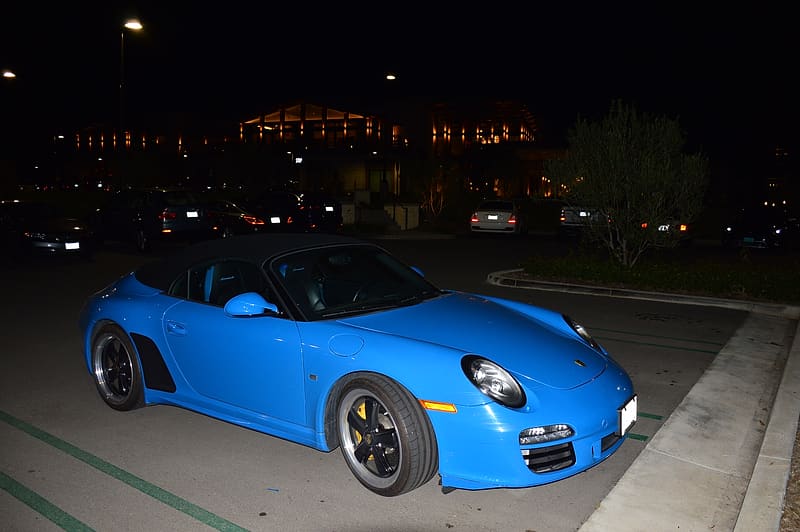
Built in 2011 in a run of 356 cars, a number taken from the Porsche 356 of the 1950s. It used the Carrera GTS engine with 402 hp and came only with the PDK gearbox. It was the third production 911 Speedster, after the 1989 and 964 cars.
How to spot one
A windshield 70 mm shorter than a 997 Cabriolet’s and a humped cover behind the seats, painted Pure Blue (developed for it) or Carrera White, apart from a few paint-to-sample cars.
A limited edition of the rear-drive 997 Carrera coupe and cabriolet, capped at 1,911 cars, with the 340 hp 3.6-liter engine and extra standard equipment. About a quarter went to the US, where the coupe cost $82,250.
How to spot one
Black paint (Basalt Black Metallic optional), two-tone 19-inch Turbo II wheels with black brake calipers and a gray top-tinted windshield; cabriolets have a black top.
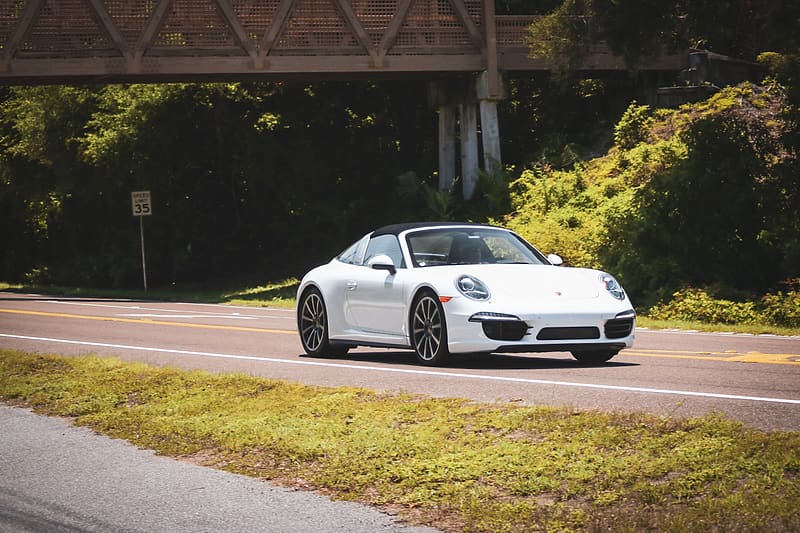
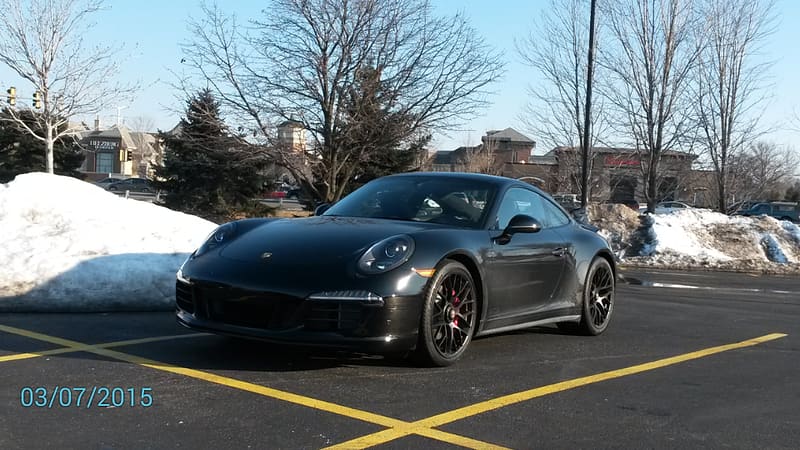
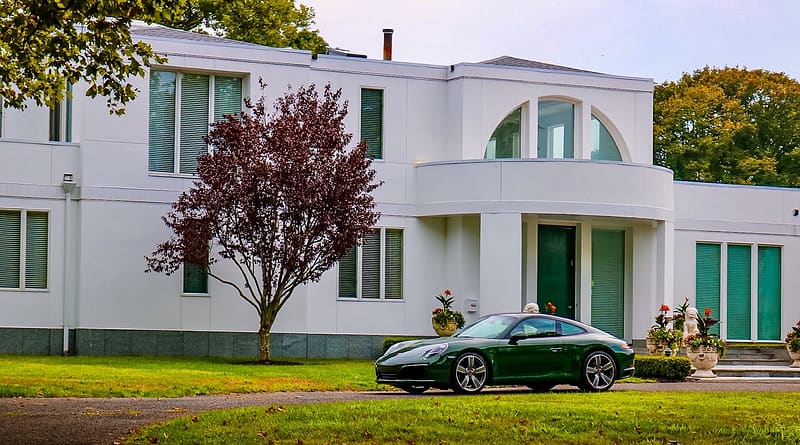
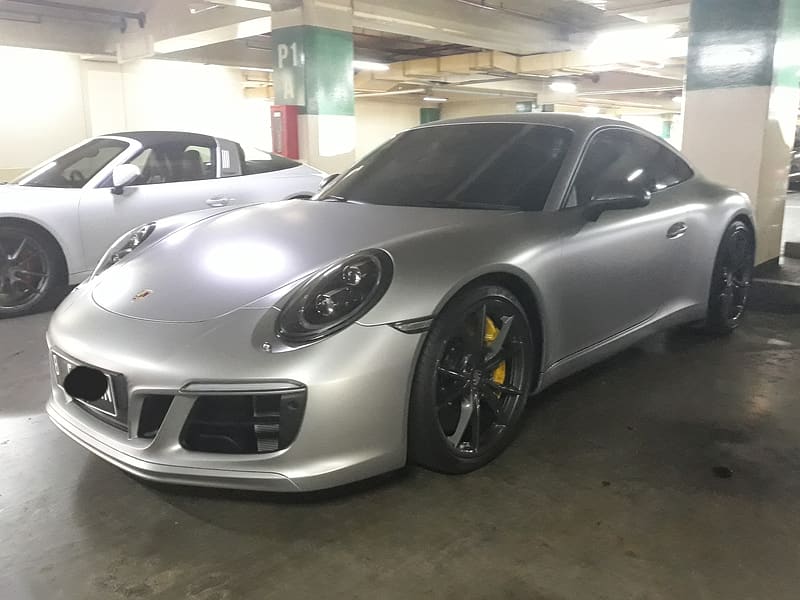
The 991, unveiled at the Frankfurt show in September 2011, was only the third all-new 911 platform since the original. Its wheelbase grew by 100 mm, and more aluminum and high-strength steel cut weight to 1,380 kg for a manual Carrera. The Carrera’s 3.4-liter engine made 345 hp and the Carrera S’s 3.8-liter 395 hp, with a seven-speed manual or PDK.
How to spot one
It lacks the four-point running lights, vertical engine-lid louvres and four-point brake lights of the facelifted 991.2 that followed in late 2015.
The all-wheel-drive 991s, added at the Paris show in September 2012, with the same 345 hp 3.4-liter and 395 hp 3.8-liter engines as the Carrera and Carrera S.
How to spot one
Rear fenders 22 mm wider over wider tires, and a red light band joining the two taillights.
The all-wheel-drive 991s, added at the Paris show in September 2012, with the same 345 hp 3.4-liter and 395 hp 3.8-liter engines as the Carrera and Carrera S.
How to spot one
Rear fenders 22 mm wider over wider tires, and a red light band joining the two taillights.
Revealed in May 2012, a Carrera S with power raised from 400 to 430 hp and a ducktail spoiler. Only 13 were made worldwide.
How to spot one
Brewster Green paint, silver-over-dark-green five-spoke wheels, yellow brake calipers, chrome window trim, the ducktail and Club Coupe lettering on the sides.
Shown at the 2013 Frankfurt show for the 2014 model year to mark 50 years of the 911, limited to 1,963 numbered cars and sold only to existing Porsche owners. It was a Carrera S with the wider Carrera 4S body, PASM and torque vectoring, 10 mm lower suspension and 395 hp (424 hp with the optional power kit). Inside it has green-faced gauges and houndstooth seat inserts.
How to spot one
The wide body on a rear-drive car, 20-inch wheels styled after classic Fuchs wheels, chrome on the engine-lid louvres and window trim and a “911 50” badge on the tail, in Geyser Grey, Graphite Grey or black.
Introduced at the Detroit show in January 2014, the 991 Targa brought back the look of the original Targa, with a wide bar behind the doors and a glass dome at the rear, and an electrically stowed roof section above the seats. It came only with all-wheel drive.
How to spot one
A wide roll bar behind the doors and a big wraparound rear window, unlike the all-glass roofs of the 993, 996 and 997 Targas.
Introduced at the Los Angeles show in November 2014 between the Carrera S and the GT3, with 424 hp, the Sport Chrono package, sports exhaust, 10 mm lower suspension and torque vectoring. A Targa 4 GTS followed in January 2015.
How to spot one
A Sport Design front spoiler and mirrors, 20-inch center-lock wheels and GTS badges.
Made for the 2016 model year to mark the 60th anniversary of the Porsche Club of America. Sixty were built and sold only to club members, at $136,060 before delivery.
How to spot one
Club Blau paint, a ducktail spoiler and 20-inch wheels styled after classic Fuchs wheels.
A special edition of the Carrera S celebrating Porsche’s Le Mans wins; 235 were built, 100 of them for North America. It came with the sports exhaust, black-tinted LED headlights and black badges.
How to spot one
Black graphics along the sides spelling out “Porsche Intelligent Performance” and on the hood, roof and spoiler, on gloss-black Turbo wheels.
The facelifted 991, launched in late 2015, gave every Carrera a 3.0-liter twin-turbo flat-six, the first time the base 911 was turbocharged. The Carrera made 365 hp and the Carrera S 414 hp, and rear-axle steering became an option.
How to spot one
Four-point LED running lights in the headlights, vertical louvres in the engine lid, four-point brake lights and door handles without the recessed covers.
Announced in October 2017, the Carrera T revived the idea of the 1968 911 T: a rear-drive Carrera with the 365 hp engine, a shorter final drive, a mechanical limited-slip differential, 20 mm lower suspension and the Sport Chrono package. Lightweight rear glass, less sound insulation and no rear seats made it 20 kg lighter than a comparable Carrera, at 1,425 kg.
How to spot one
Agate Grey mirrors, “911 Carrera T” logos, slats in the engine-lid grille, 20-inch Titan Grey Carrera S wheels and black tailpipes in the center.
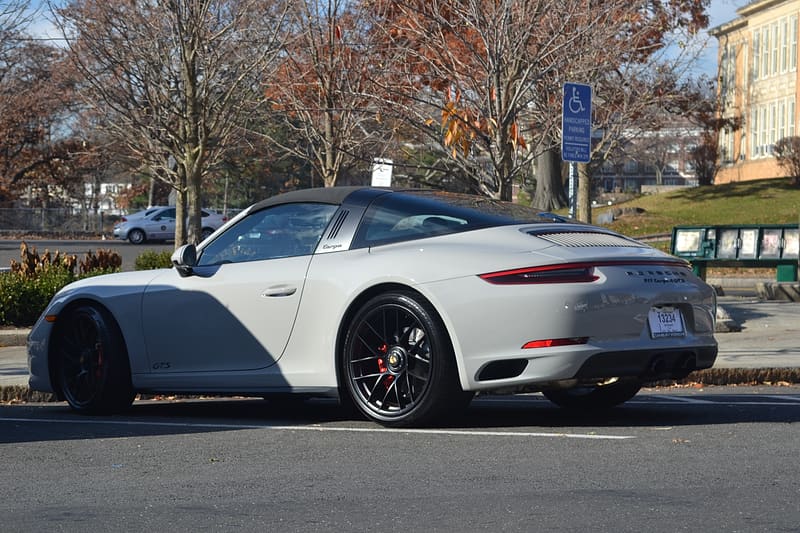
Five 991.2 GTS models, rear- and all-wheel-drive coupes and cabriolets plus the Targa 4 GTS, went on sale in early 2017 with 444 hp, 30 more than the Carrera S. All could top 300 km/h.
How to spot one
A Sport Design nose with a low spoiler, smoked taillights, a black engine-lid grille, black twin tailpipes in the center, satin-black 20-inch center-lock wheels and GTS logos on the doors. The Targa 4 GTS has the first black Targa bar.
Shown as a concept at the 2018 Paris show for Porsche’s 70th anniversary and in final form at the New York show in April 2019, limited to 1,948 cars after the year the first Porsche, the 356 “Number 1,” was registered. It combined the GT3 chassis and its 503 hp 4.0-liter engine with the Carrera 4 Cabriolet body and a six-speed manual. The last 991 built, in December 2019, was a Speedster.
How to spot one
A shorter windshield frame and side windows, a twin-hump cover over the folded top, and carbon-fiber fenders, hood and engine cover; a Heritage Design package was optional.
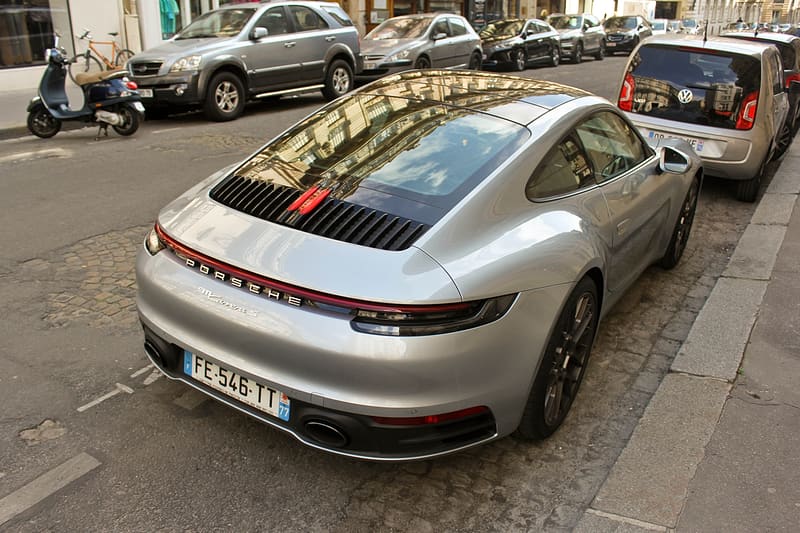
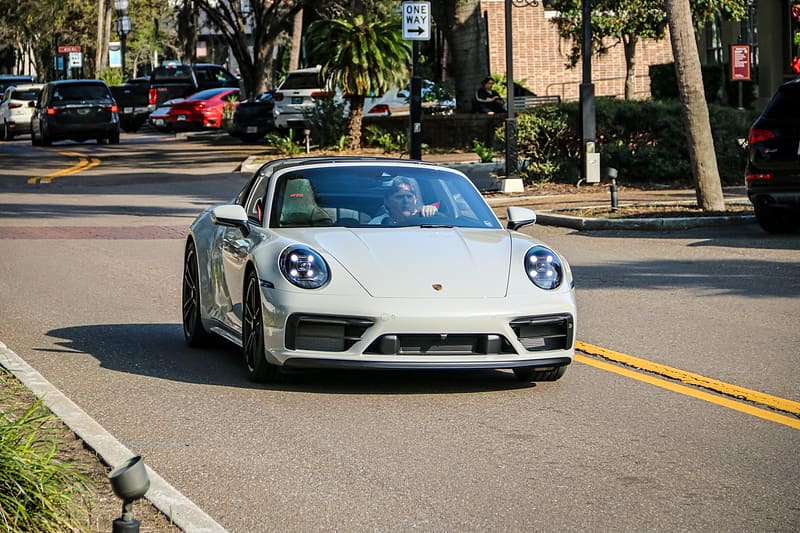
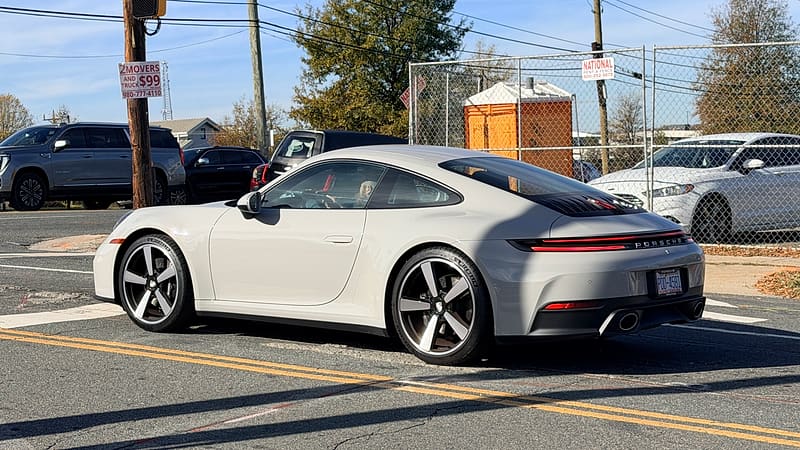
The 992 generation was unveiled in November 2018, and the base Carrera and Carrera 4 followed in July 2019 with a 380 hp twin-turbo 3.0-liter engine and an eight-speed PDK. Every 992 has the wide rear body that earlier generations kept for faster models, plus a full-width light bar at the rear.
How to spot one
Compared with the Carrera S, it has one exhaust tip on each side instead of two, and wheels an inch smaller: 19 inches in front and 20 at the rear.
The first 992s, shown at the 2018 Los Angeles show, with a 444 hp twin-turbo 3.0-liter engine and an eight-speed PDK; a seven-speed manual was added later. Electric pop-out door handles, LED headlights and a dashboard echoing the classic 911 were new for this generation.
How to spot one
Two exhaust tips on each side and 20-inch front and 21-inch rear wheels, an inch larger than the base Carrera’s.
The first special edition of the 992: a Carrera 4S made in 2020 for Belgium to honor Jacky Ickx, the six-time Le Mans winner, on his 75th birthday. Only 75 were made, conceived with the Belgian importer D’Ieteren.
How to spot one
X Blue paint, the first paint-to-sample color on a 992, with blue-and-white accented 20/21-inch Carrera Classic wheels and B-pillar badges bearing the Belgian flag and Ickx’s signature.
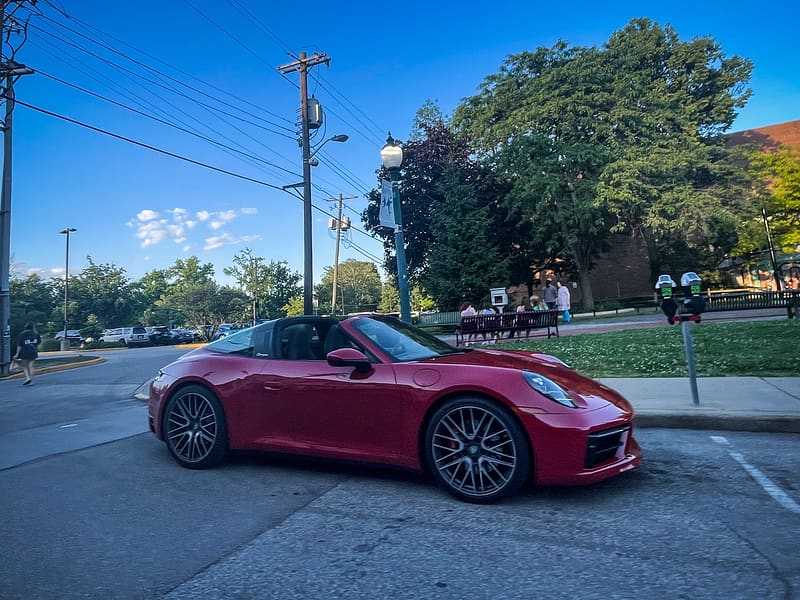
Revealed on May 18, 2020, the 992 Targa has an automatic roof that stows in 19 seconds, with the wide roll bar and wraparound rear window of the 1965 original. It comes only with all-wheel drive: 380 hp in the Targa 4 and 444 hp in the 4S.
How to spot one
A wide bar behind the doors and a wraparound rear window.
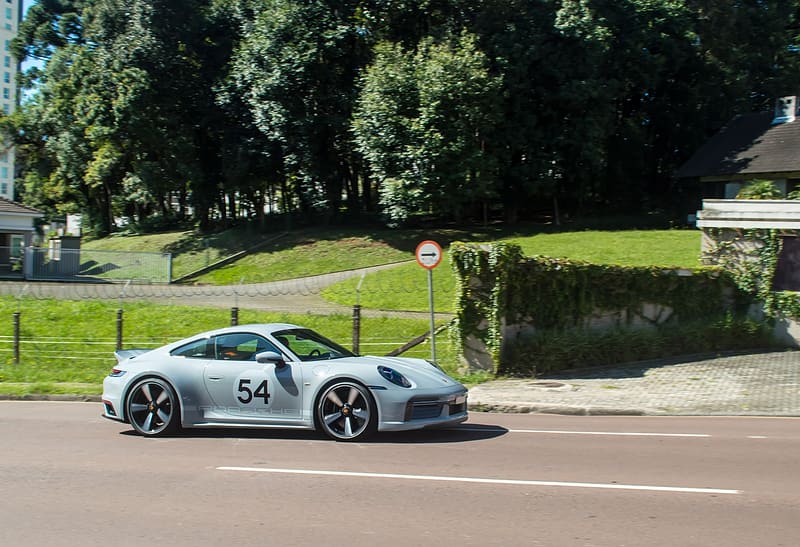
The first of four planned Heritage Design models, a Targa 4S revealed in June 2020 with styling cues from 1950s Porsches and limited to 992 cars. It could be ordered with the seven-speed manual or PDK.
How to spot one
Spear-shaped graphics on the front fenders, motorsport-style graphics on the flanks, gold Porsche lettering and the 1963 Porsche crest on the hood and wheel centers.
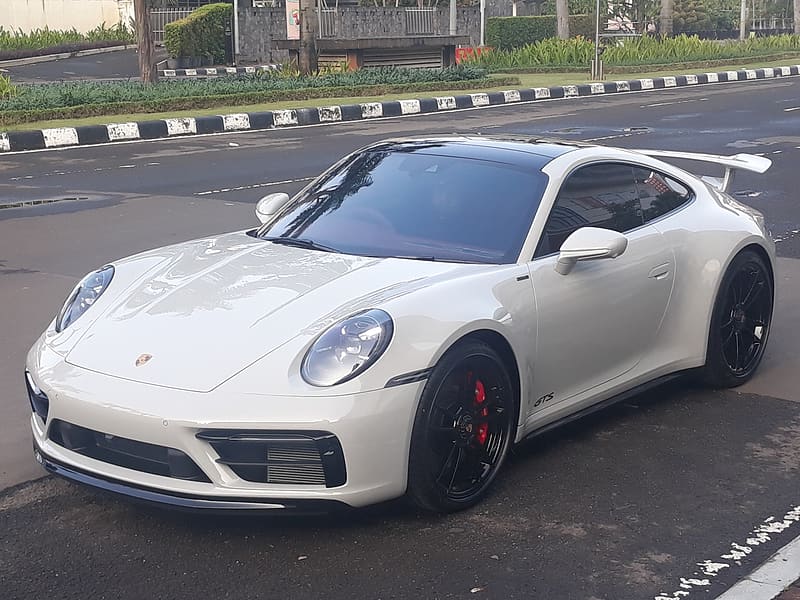
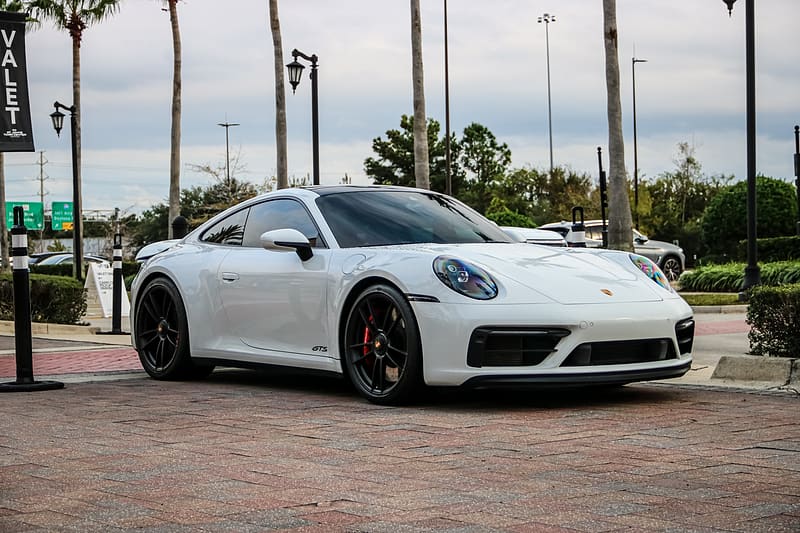
Revealed in June 2021, the 992 GTS models (Carrera GTS and Carrera 4 GTS coupes and cabriolets, and the Targa 4 GTS) have a 473 hp version of the twin-turbo 3.0-liter. They could be had with the seven-speed manual, and an optional Lightweight Design package saved up to 25 kg.
How to spot one
Satin-black front spoiler lip, center-lock wheels, engine-lid louvres and GTS script, with darkened headlight surrounds and taillights unique to the GTS.
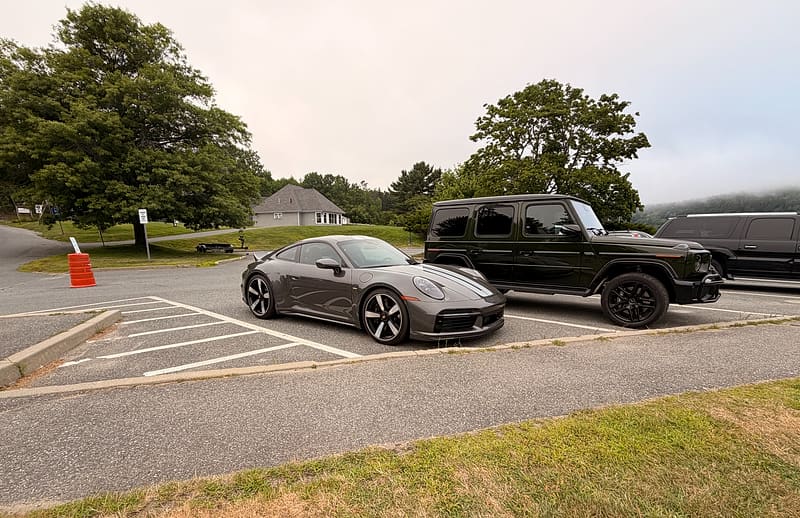
Revealed in October 2022 and slotted between the Carrera and Carrera S, the 992 Carrera T combined the 380 hp engine with a seven-speed manual for the first time (PDK was optional). Less sound insulation, no rear seats, lighter glass and a lighter battery made it 35 kg lighter than a Carrera, at 1,470 kg.
How to spot one
Agate Grey mirror trim, door and rear logos and engine-lid trim strips, Titanium Grey 20/21-inch Carrera S wheels and high-gloss black tailpipes.
Revealed in April 2022 and limited to 1,250 cars, the second Sport Classic is based on the 911 Turbo but has rear-wheel drive and only a seven-speed manual. Its 3.7-liter twin-turbo engine was detuned to 542 hp because the manual gearbox could not take the Turbo’s power and torque.
How to spot one
The wide Turbo body without the Turbo’s rear-fender intakes, a ducktail spoiler with built-in air ducts and a carbon-fiber hood.
Made in 2022 to mark 50 years of Porsche Design, the brand founded by Ferdinand Alexander Porsche. Based on the Targa 4 GTS with 473 hp, it was limited to 750 cars, each sold with a matching Porsche Design watch.
How to spot one
Black paint with a satin Platinum Targa bar, wheels and “Porsche Design” door decals, and a badge on the engine-lid slats.
The updated 992 launched on May 28, 2024. The Carrera kept a 3.0-liter twin-turbo engine, now 389 hp, with the eight-speed PDK, and at first came only with rear-wheel drive and no manual.
How to spot one
Matrix LED headlights with the four-point graphic and no separate front driving lights, a new rear light strip with an integrated “PORSCHE” logo, a five-fin engine-lid grille that blends into the rear window, and a license plate mounted higher.
The updated Carrera S arrived in January 2025 with 473 hp, and the all-wheel-drive Carrera 4S and Targa 4S followed in July 2025 with the same engine. With the Sport Chrono package it reaches 100 km/h in 3.3 seconds.
How to spot one
The 2024 update’s headlights with no separate driving lights and the rear light strip with an integrated “PORSCHE” logo.
Revealed on May 28, 2024, the Carrera GTS was the first production 911 with a hybrid drive. A new 3.6-liter flat-six, an electric motor built into the eight-speed PDK and a 1.9 kWh battery give 534 hp. It comes as a coupe, cabriolet and Targa, with rear- or all-wheel drive, and reaches 100 km/h in 3.0 seconds.
How to spot one
Five vertical active cooling flaps in the front bumper, plus the 2024 update’s headlights with no separate driving lights and the rear light strip with an integrated “PORSCHE” logo.
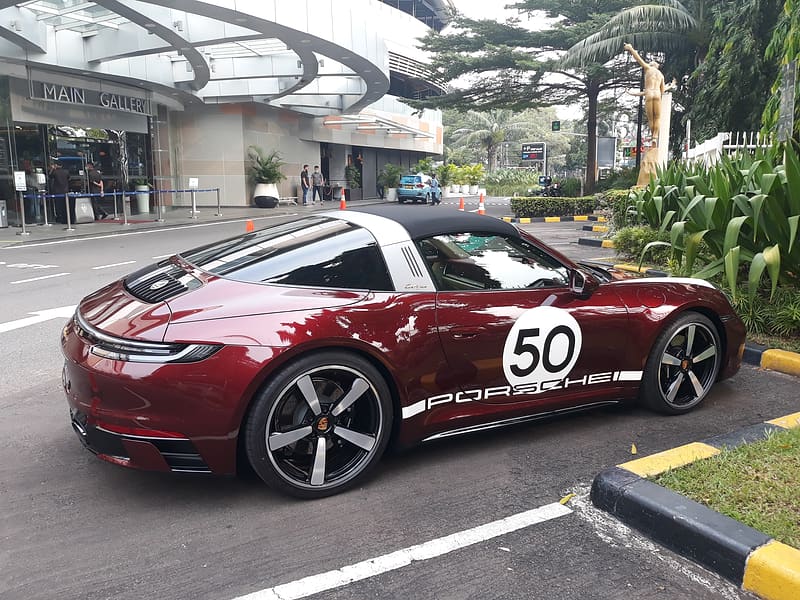
Announced on April 23, 2025, the third Heritage Design model is based on the rear-drive Carrera GTS Cabriolet and celebrates Porsche styling of the 1970s and early 1980s. It is limited to 1,500 cars; US deliveries began in late summer 2025 at $240,000.
How to spot one
Olive Neo green paint, three stripes along the hood, a black top with contrasting stripes, Porsche lettering and a “lollipop” number roundel on the sides, and Sport Classic center-lock wheels.
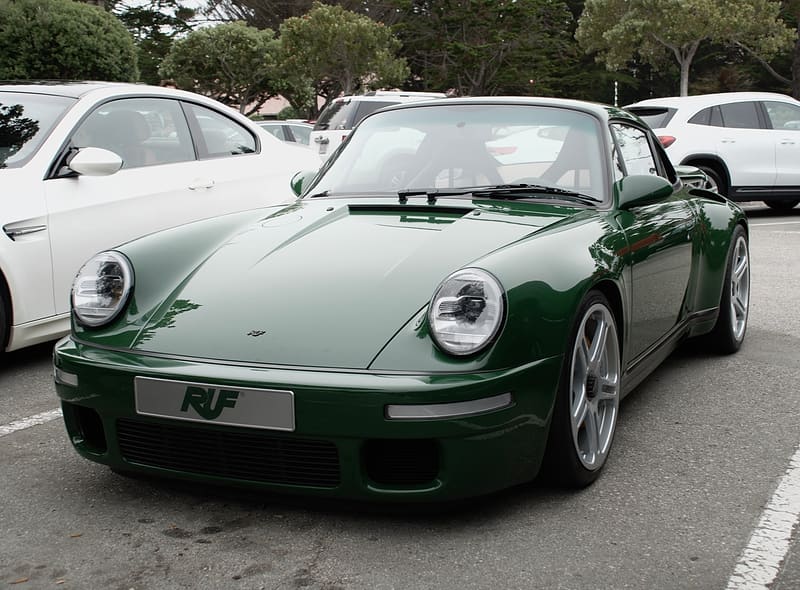
A RUF build on the Porsche 992 Sport Classic. Its owner reports that it is a genuine RUF tuner build and one of three built (as told to the spotter who found it, WIcarspotter, in 2026); RUF has not published the program. The car underneath is Porsche's Sport Classic: revealed in April 2022 and limited to 1,250 cars, it has the 911 Turbo's wide body and 3.7-liter twin-turbo flat-six, here with 543 hp and 442 lb-ft from the factory, sent to the rear wheels through a seven-speed manual only, under a ducktail and a double-bubble carbon roof. US price: $272,300 before destination, RUF's work extra. RUF, in Pfaffenhausen, Germany, does its 992 work only at its own factory: performance upgrades for every 992 (the Turbo-engined cars up to 885 hp), a RUF sports exhaust and RUF wheels, and the cars it builds carry the RUF crest in place of Porsche's. What was done to these three beyond the crest has not been published.
How to spot one
First, a 992 Sport Classic: the wide Turbo body without the Turbo's rear-fender intakes, a ducktail with built-in vents, the double-bubble roof and, on most cars, twin gray stripes and Fuchs-style wheels. Then the crest on the hood: RUF's shield reads PFAFFENHAUSEN across the top, with RUF in the center where Porsche's horse would be. Look for RUF script on the engine lid and RUF's own wheels too. A Sport Classic with Porsche's crest is the regular 992 Sport Classic. With only three built, a RUF crest on a Sport Classic is a rare find.
The 2018 SCR is the naturally aspirated sister of the CTR Anniversary, on the same RUF carbon-fiber monocoque with an integrated roll cage. It was shown at the 2018 Geneva show, 40 years after RUF's first SCR, a 1978 911 SC bored to 3.2 liters with 215 PS. The new car's 4.0-liter flat-six, based on the 911 GT3 RS 4.0 engine, makes 510 PS (503 hp) at 8,270 rpm and drives the rear wheels through a 6-speed manual, for 199 mph. About 70 were built from 2020, starting at about $742,000.
How to spot one
The same 964-like carbon body as the CTR Anniversary, but with a small ducktail spoiler on the decklid instead of a whale tail, and broader rear fenders like a 964 Turbo's. The nose has large corner intakes and a mesh center grille, the rear has a red LED strip across the tail and an oval exhaust at each bumper corner. The 1978 SCR is a real 911 SC with a whale tail, a deep chin spoiler and round brake ducts in the bumper.
The CTR Anniversary marks 30 years of the CTR and is the first RUF built on a chassis entirely of its own design: a carbon-fiber monocoque with steel front crash structure and roll cage, under a carbon body shaped like a 964-era 911. RUF unveiled it at the Geneva show in March 2017. Its RUF-built 3.6-liter twin-turbo flat-six makes 710 PS (700 hp) and 880 Nm, driving the rear wheels through a manual gearbox, for a claimed 224 mph. Production is 50 cars at Pfaffenhausen, priced at about $1.01 million in 2017. No. 25 sold for $3,360,000 at RM Sotheby's Monterey in 2025.
How to spot one
It looks like a narrow 964-era 911, but the whole body is carbon with a smooth, flush finish. Look for the 1987 CTR's cues: intakes in the top of the rear fenders, flush fascias, a whale-tail wing and center-lock 19-inch five-spoke wheels. The 2018 SCR shares this body but wears a small ducktail instead of the whale tail.
The RT 35 was RUF's first car on the 991 and is named for 35 years of RUF turbo cars; it was shown at the 2012 Geneva show next to Alois Ruf's 1977 Turbo 3.3. Its 3.8-liter twin-turbo flat-six makes 630 PS (621 hp) and 825 Nm, with a dual-clutch gearbox at launch and later a 6-speed manual option. The 2013 RT 35 S raised output to 650 PS (641 hp) and added a fixed rear wing and integrated roll cage, and a Roadster with a power top followed the same year. RUF quotes 210 mph for both the S and the Roadster.
How to spot one
A 991 with RUF's front spoiler with its own air outlet, aero sport mirrors, integrated rear fender flares and intercooler intakes in the rear fenders, on 20-inch RUF five-spoke wheels. The RT 35 S carries a fixed wing on a fixed rear spoiler. Unlike a 991 Turbo, the badges on the nose and tail say RUF, not Porsche.
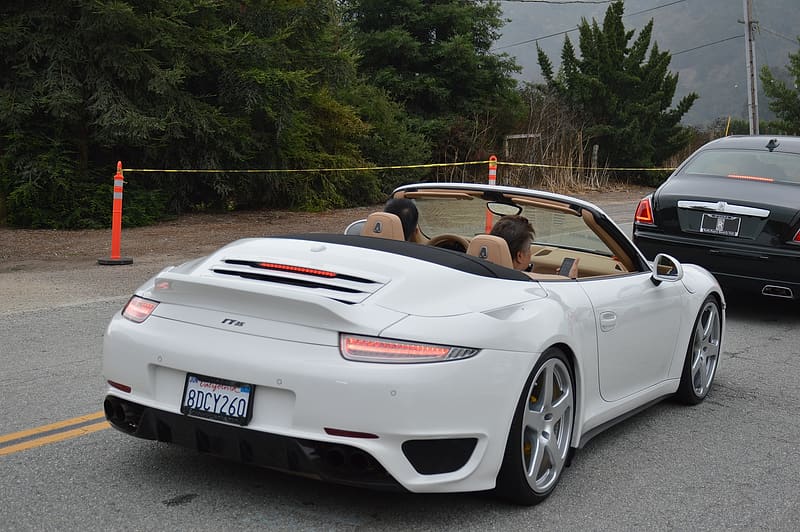
The RT 12 was RUF's first car on the 997, shown at the Essen Motor Show in November 2004 and built on the wide 997 Carrera body. RUF quoted 650 PS (641 hp) from a 3.8-liter twin-turbo flat-six derived from the 996 Turbo engine, with a 6-speed manual and, on all but two cars, all-wheel drive; Wikipedia gives 219 mph. Thirteen were built. The 2009 RT 12 S (685 PS) added a roll cage, ceramic brakes and a new aero kit, and the lighter 2011 RT 12 R (730–750 PS) was aimed at track days. One optioned 2006 car's build sheet came to nearly $350,000; it sold for $533,000 in 2022.
How to spot one
Look for air tunnels on top of the rear haunches feeding the turbos, where a 997 Turbo has its intakes low in the sides of the rear fenders. RUF front and rear valances, RUF or OZ five-spoke wheels and RUF badges replace the Porsche pieces; some cars have a power-retractable rear wing. The RT 12 R has a fixed spoiler topped by a fixed carbon wing.
The CTR2 is the 993-generation follow-up to the Yellowbird, built from narrow-body 993 shells that Porsche supplied as bodies in white. Its air-cooled 3.6-liter twin-turbo flat-six made 520 PS (513 hp), later 580 PS (572 hp), and RUF claimed 217 mph, briefly the fastest road car of the mid-1990s. Rear drive was standard with all-wheel drive optional, and it came with a Kevlar body, an integrated roll cage and, RUF says, the first carbon brake discs and 19-inch forged magnesium wheels on a road car. It listed at $315,000. The wide-body CTR2 Sport grew out of two cars built for the 1997 Pikes Peak hill climb (702 hp); RM Sotheby's sold one for about $778,000 in 2020, and a standard car brought $2,645,000 at Gooding in 2025.
How to spot one
A narrow 993 Carrera body with a tall bi-functional rear wing whose base doubles as the intake for the two intercoolers. The rear bumper is RUF's own, with twin exhaust pipes in the center and extra cooling vents. The CTR2 Sport adds wide composite fenders, side-sill extensions and a two-level rear wing.
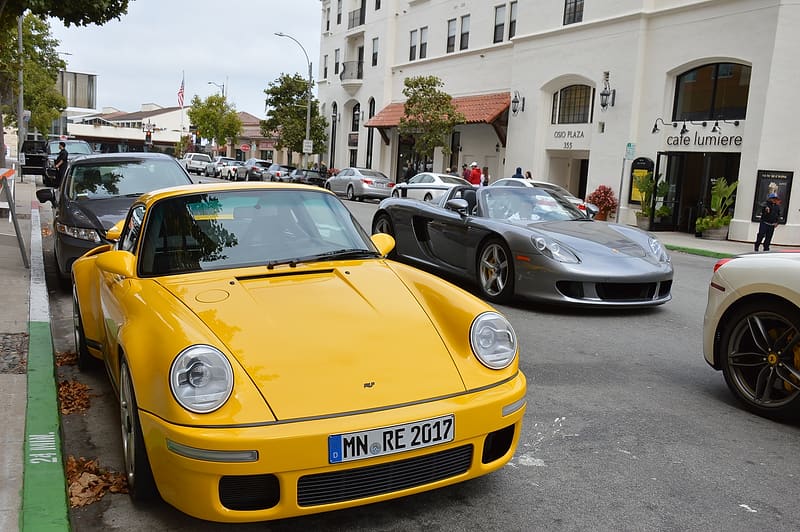
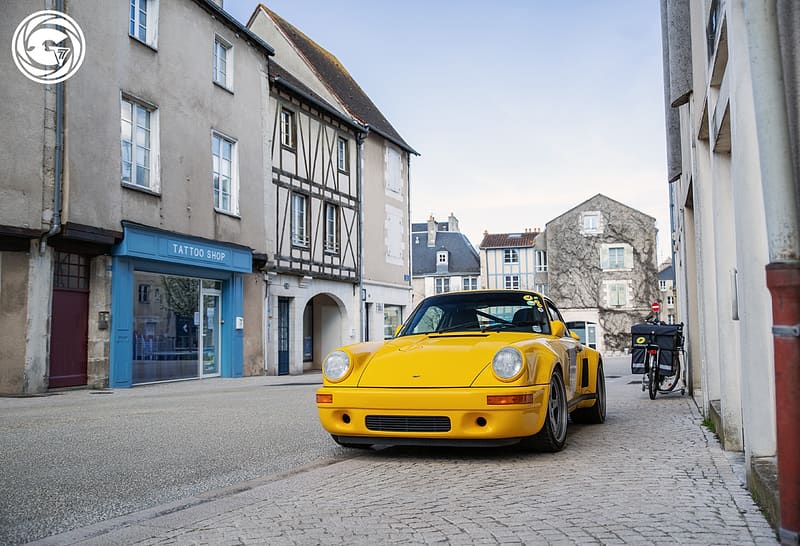
The CTR (Group C Turbo RUF) is RUF's twin-turbo 911, launched in 1987 and built on the narrow-body 911 Carrera 3.2 rather than the heavier 930 Turbo. Its 3.4-liter flat-six makes 469 PS (463 hp), and with aluminum doors and lids it weighs about 1,150 kg. In Road & Track's 1987 "World's Fastest Cars" test at Ehra-Lessien it reached 211 mph, beating the Porsche 959, and the magazine's staff nicknamed the yellow car "Yellowbird." RUF built 29 from bodies bought from Porsche, and a further 20–30 customer cars were converted. Launch price was $142,900. RUF later built a few CTRs on the 964, including two all-wheel-drive Carrera 4s for the Beddor brothers in 1992–93 (one sold for $346,000 in 2021).
How to spot one
A narrow Carrera body with no rain gutters along the roof, flared rear arches and NACA ducts cut into the top of the rear fenders to feed the intercoolers. Look for a single 935-style door mirror, smooth fiberglass or polyurethane bumpers and 17-inch Speedline wheels. A BTR is often on the wide Turbo body with a whale tail; a 964 CTR looks almost like a stock 964 to most eyes.
RUF-built and RUF-modified 911s that have no page of their own: the 1978 SCR (a 911 SC bored to 3.2 liters with 215 PS, a whale tail and RUF five-spoke wheels), the 964-based RCT of 1992–93 (370 PS turbo, later the 3.8-liter RCT EVO), the 1991 BR and CR models, the few 964-based CTRs, the 2016 SCR 4.2, and Porsches fitted with RUF kits and wheels. Cars that RUF built from bare bodies carry RUF's own W09 serial number; conversions of customers' cars keep their Porsche number.
How to spot one
RUF badges in place of the Porsche crest, RUF's own five-spoke wheels, and on many cars a slimmer, smoother body than the Porsche it started from.
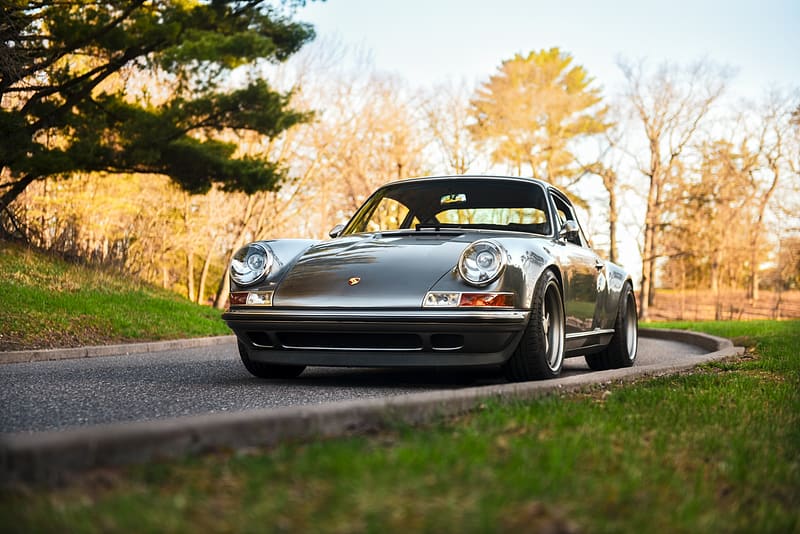
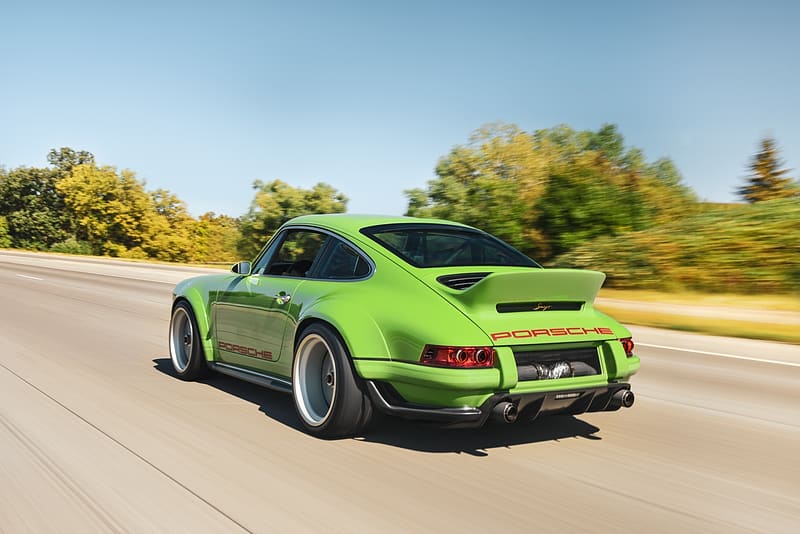
Singer Vehicle Design of Los Angeles, founded in 2009 by Rob Dickinson, rebuilds customer-owned 964-generation Porsche 911s (1989–94) with early-911 styling; the program was first called "Porsche 911 Reimagined by Singer" and is now the Classic Study. Each car is stripped to the chassis, strengthened, and rebodied mostly in carbon fiber (the doors stay steel). Engines came from Cosworth, Ed Pink and Williams: an early 3.6 L Cosworth flat-six of 270 hp, a 3.9 L Cosworth of 380 hp (evo, 2013), and later a 4.0 L of 390 hp. The 300th Classic Study, a 1990 Targa, was revealed in February 2024, and RM Sotheby's puts the run at about 450 cars, with orders closed. Recent auction sales: $1,225,000 (RM Sotheby's, Las Vegas 2024) and $1,073,750 (RM Sotheby's, Abu Dhabi 2025).
How to spot one
It looks like an early long-hood 911 but is built on a 964. Look for the fuel filler moved to the center of the front hood and the oil filler moved to the rear quarter panel behind the passenger door, both Singer trademarks. Most have deep-dish Fuchs-style (or RSR-style) 17-inch wheels, racing side stripes, decklid lettering, and bright trim in polished aluminum or optional nickel plating, and Hella xenon headlights; the carbon panels give very tight, even panel gaps.
The Dynamics and Lightweighting Study is Singer's hardcore 964-based 911, engineered with Williams Advanced Engineering in Oxfordshire and announced in November 2017, then shown at the 2018 Goodwood Festival of Speed. Its air-cooled 4.0 L flat-six with four-valve heads, developed with advice from Hans Mezger, makes 500 hp and revs to 9,000 rpm; it drives through a magnesium six-speed Hewland manual. An all-carbon-fiber body plus magnesium and titanium parts bring the weight to about 990 kg. Singer planned 75 cars at a base price of about $1.8 million; DLS no. 73 of 75 sold on Bring a Trailer for $3,000,000 in June 2025, and RM Sotheby's offered the first car (EP1) with a $3.25–3.75 million estimate.
How to spot one
Much wider than a Classic Study, with 934 RSR-style flared arches, large oil-cooler openings in the nose, an exposed carbon front splitter and an exposed rear diffuser. The tail has a fixed ducktail plus a small roof wing, and it sits on 18-inch center-lock forged magnesium BBS wheels styled like Fuchs. A Classic has slim arches and no splitter or diffuser, and a Turbo Study has a whale tail instead of a ducktail.
Singer's first turbocharged car, announced in February 2022, honors the 1970s Porsche 930 Turbo but is again built on a customer's 964-generation 911. Its 3.8 L air-cooled twin-turbo flat-six with an air-to-water intercooler makes 450 hp as standard or 510 hp in sportier spec, through a six-speed manual. It is aimed at touring, with carbon-ceramic brakes on some cars and power-adjustable heated seats. More than 70 customers had reserved cars at launch; it debuted at the 2022 Goodwood Festival of Speed, first deliveries came in 2024, and a slant-nose version is limited to 25. Singer does not publish prices.
How to spot one
Look for the wide 930 Turbo body and big whale-tail rear wing, both in carbon fiber, with black trim. The "shark fin" ahead of the rear wheels is reshaped into an air intake, and the fuel filler sits in the center of the hood like on other Singers. A Classic Study has narrow arches and a ducktail; a DLS or DLS Turbo has a splitter, diffuser and race-car arches.
The Dynamics and Lightweighting Study – Turbo, shown in June 2023 and seen at that year's Goodwood Festival of Speed, is Singer's homage to the Porsche 934/5 race car, built on a stripped, restored and strengthened 964 chassis. Its 3.8 L four-valve twin-turbo flat-six with electronic wastegates, water-based intercooling and an electric fan makes around 700 hp at over 9,000 rpm, through a six-speed manual to the rear wheels. The body is all carbon fiber, and owners choose a track or a road aero package (the nose and tail are removable and swappable). Wikipedia gives a run of 99 cars; Singer does not publish the price.
How to spot one
The track version wears a tall, adjustable high-downforce rear wing and a bigger front splitter, on 934/5-style center-lock wheels; the road version has a ducktail and a lower-drag nose on Spyder-design wheels. Both run 19-inch front and 20-inch rear wheels. The 2018 DLS has 18-inch Fuchs-style wheels and a ducktail; the Turbo Study has a 930-style whale tail and no splitter.
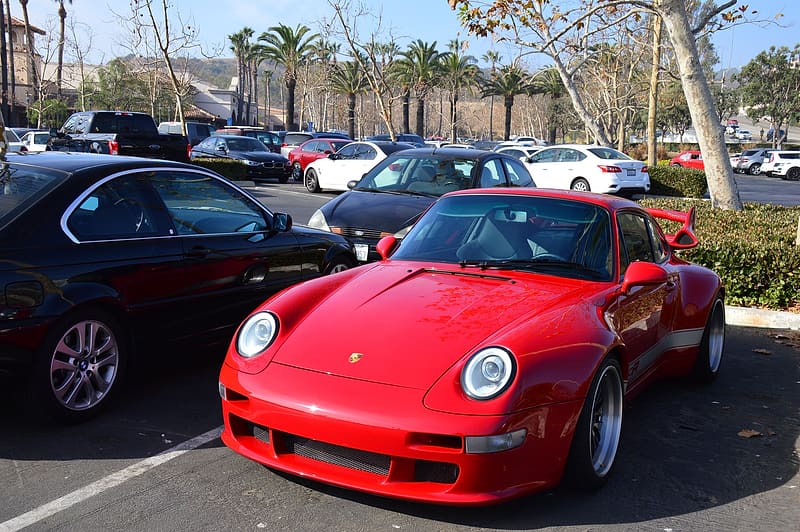
Gunther Werks of Southern California revealed the 400R at The Quail in August 2017 as a "remastered" version of the 993-generation 911, the last air-cooled 911. Every panel except the doors is carbon fiber, the track is widened to 1,600 mm, and the original engine is rebuilt by Rothsport Racing as a 4.0 L flat-six making over 400 hp (438 hp on PistonHeads' spec sheet). It weighs about 1,211 kg. Only 25 coupes were built, all delivered, starting at $525,000 plus the donor car. The first car, the "Chelsea Grey Commission", failed to sell on Bring a Trailer at $1.15 million and then sold for $1,022,500 at RM Sotheby's Miami in 2024.
How to spot one
It reads as a 993 with GT2-style flared arches but no exposed rivets, about 30 mm wider at the front, with tighter panel gaps than any factory car. Look for the black Bi-LED headlights with "GW" lens graphics and a full-width LED light bar across the tail, which no factory 993 has. Wheels are deep-dish five-spoke forged wheels in a Fuchs-inspired style; rear spoilers vary (a retro Carrera RS-style decklid spoiler on Sport Touring cars, a tall X21 EVO wing or ducktail on others), and the sills say "1 of 25".
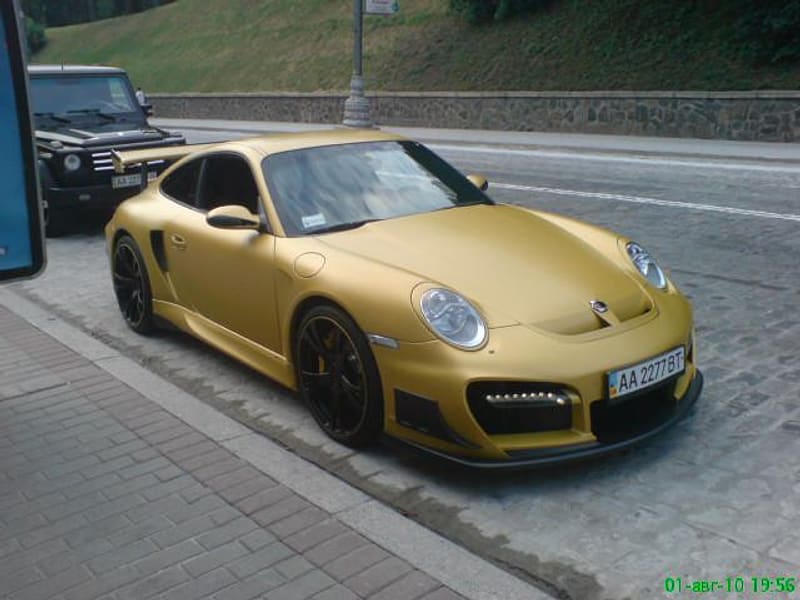
TechArt, founded in 1987 in Leonberg, Germany, is a Porsche specialist. Its GTstreet and GTstreet R cars, built on the 911 Turbo, add a large wing and a full aero kit; it also tunes other Porsches.
How to spot one
TechArt badges, a front apron with extra openings, a big fixed rear wing on the GTstreet models, and TechArt Formula wheels.
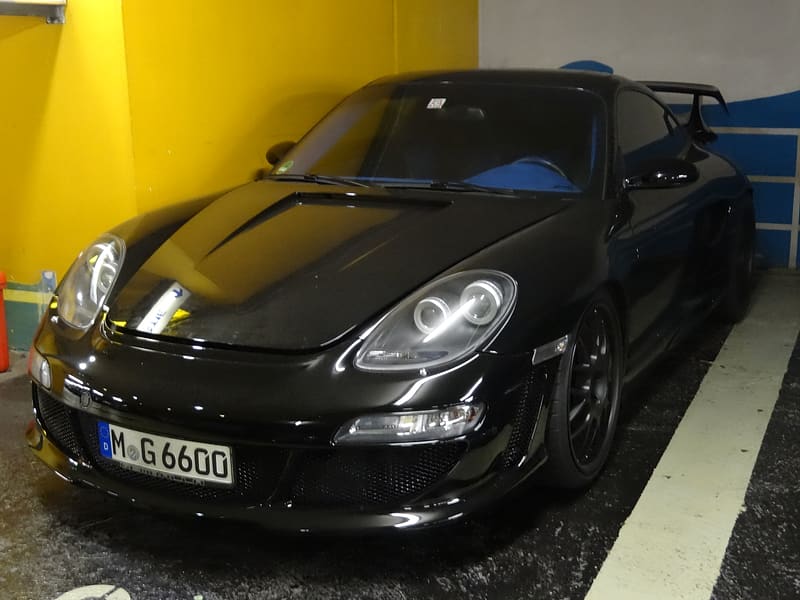
Gemballa, founded by Uwe Gemballa in 1981 in Leonberg, Germany, is known for heavily restyled, more powerful Porsches, and also built a small series of restyled Enzos.
How to spot one
Reshaped bumpers with extra openings, carbon panels and scoops, and Gemballa lettering where the factory badges were.
Vittorio Strosek, who trained with the designer Luigi Colani, ran what was then the biggest Porsche tuner and drew rounded widebody conversions for the 964 and later 911s. His Mega Speedster (1994) widened the 964 Speedster with Turbo-style fenders, small projector headlights set into the front fenders, sills that flow into the rear arches with an air intake, and a smaller rear bumper; 15 were built, against 936 factory 964 Speedsters. One sold at Bonhams in 2016 for about $144,000. Strosek's 964 Carrera 4 "Version II" widebody coupe is rarer still.
How to spot one
A 911, often a Speedster or Cabriolet, with smooth, rounded wide fenders, tiny projector headlights in place of the round lamps, sills that run straight into the rear arches with an intake, and organic air intakes under the license plate. A factory 964 Turbo-look keeps the round headlights.
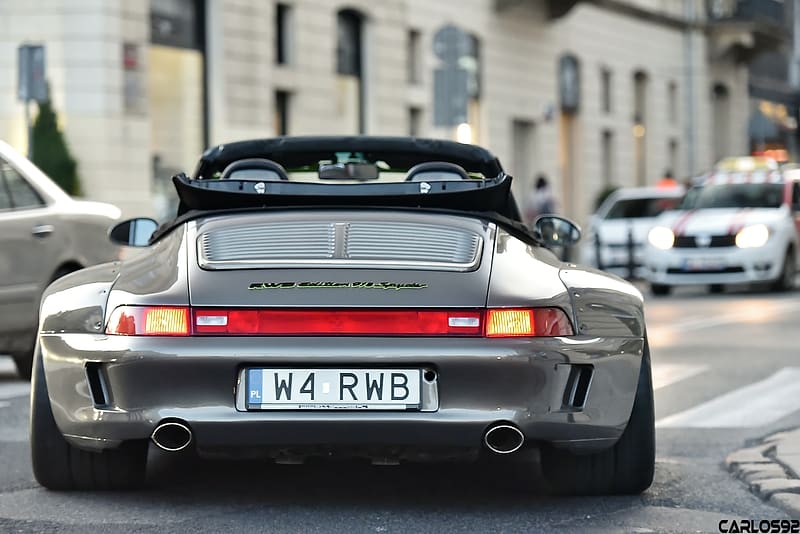
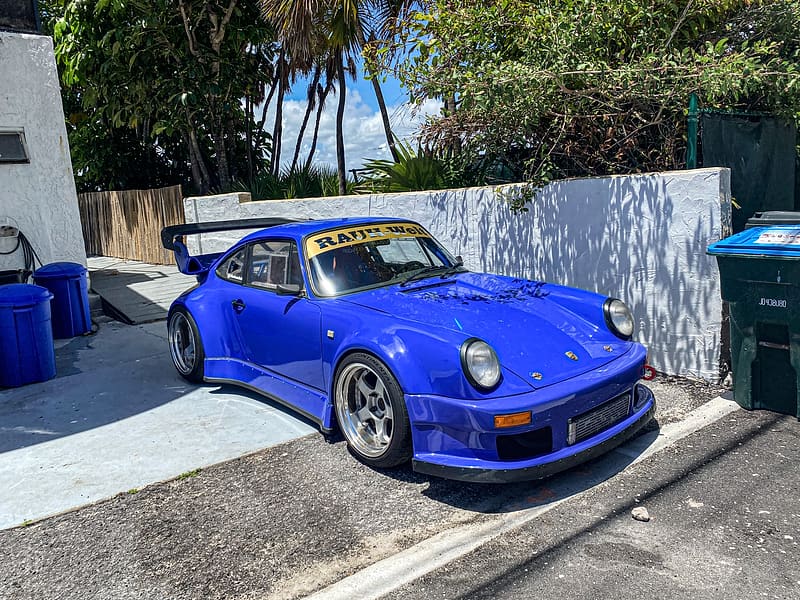
RAUH-Welt BEGRIFF ("rough world concept") is Akira Nakai's one-man body shop in Chiba, Japan, near Kashiwa. Nakai came from a street-drifting crew called Rough World, where he drove a Toyota AE86, and worked at a Porsche body shop in the late 1990s; his first Porsche, a damaged 930 Turbo he named "Stella Artois" after his favorite beer, became the first RWB. He cuts the fenders of each car by hand, without templates, and bolts on wide flares, bumpers, side skirts and a wing; the engine and running gear stay the owner's. He builds every car himself, flying to the customer's country and finishing a car in a few days, and every car gets a name of its own. Owners race with him at Idlers meetings, Japan's amateur race series, including its 12-hour race. Around 2016 the kit with Nakai's installation cost "north of $25,000", before paint, wheels and suspension. The 930 kit is where RWB began: Stella Artois, Nakai's own 930 Turbo, still races at Idlers meetings.
How to spot one
Wide fender flares bolted over cut-open fenders, their edges lined with exposed rivets or bolts, a car slammed to the ground on very wide, deep-dish wheels, a "RAUH-Welt" banner across the top of the windshield, "RWB" in big letters on the engine lid or wing with "Zweite Entwicklung" ("second development") under it and again on the front lip (early cars say "Sekund Entwicklung"), and the car's own name painted on its sides or tail. The 930 kit sits on the 1974–89 G-body 911: impact bumpers reworked by RWB, round headlights in upright fenders, the wide Turbo-style rear with flares riveted over it and a whale tail or a tall wing. A 964 has smooth plastic bumpers with the lights set into the bumper corners.
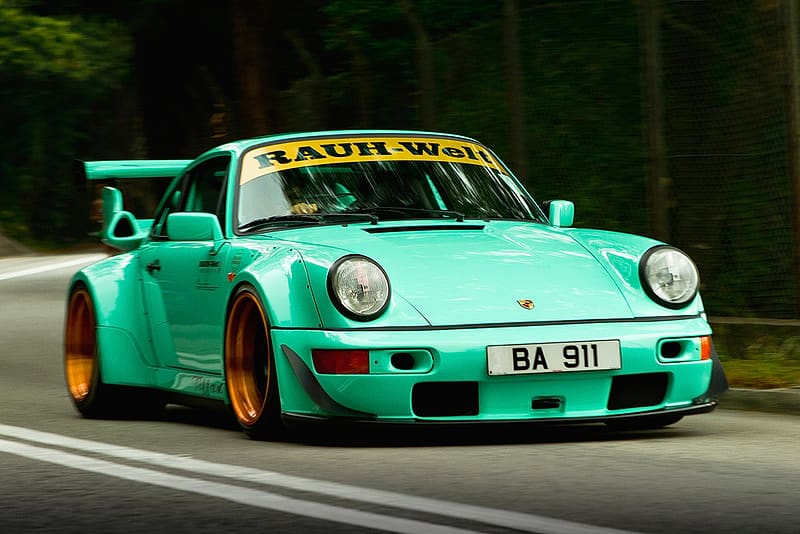
RAUH-Welt BEGRIFF ("rough world concept") is Akira Nakai's one-man body shop in Chiba, Japan, near Kashiwa. Nakai came from a street-drifting crew called Rough World, where he drove a Toyota AE86, and worked at a Porsche body shop in the late 1990s; his first Porsche, a damaged 930 Turbo he named "Stella Artois" after his favorite beer, became the first RWB. He cuts the fenders of each car by hand, without templates, and bolts on wide flares, bumpers, side skirts and a wing; the engine and running gear stay the owner's. He builds every car himself, flying to the customer's country and finishing a car in a few days, and every car gets a name of its own. Owners race with him at Idlers meetings, Japan's amateur race series, including its 12-hour race. Around 2016 the kit with Nakai's installation cost "north of $25,000", before paint, wheels and suspension. The 964 (1989–94) is, with the 993, the body RWB is best known for; Hoonigan co-founder Brian Scotto's car is a 964. A 1993 964 Carrera 2 built at RWB's home shop in 2022 sold for $241,000 in 2023.
How to spot one
Wide fender flares bolted over cut-open fenders, their edges lined with exposed rivets or bolts, a car slammed to the ground on very wide, deep-dish wheels, a "RAUH-Welt" banner across the top of the windshield, "RWB" in big letters on the engine lid or wing with "Zweite Entwicklung" ("second development") under it and again on the front lip (early cars say "Sekund Entwicklung"), and the car's own name painted on its sides or tail. The 964 has round, upright headlights, smooth bumpers with the turn signals set into the front corners, and a red light bar across the tail between the taillights. A 993 has sloped, flatter headlights and taillights that wrap into the fenders.
RAUH-Welt BEGRIFF ("rough world concept") is Akira Nakai's one-man body shop in Chiba, Japan, near Kashiwa. Nakai came from a street-drifting crew called Rough World, where he drove a Toyota AE86, and worked at a Porsche body shop in the late 1990s; his first Porsche, a damaged 930 Turbo he named "Stella Artois" after his favorite beer, became the first RWB. He cuts the fenders of each car by hand, without templates, and bolts on wide flares, bumpers, side skirts and a wing; the engine and running gear stay the owner's. He builds every car himself, flying to the customer's country and finishing a car in a few days, and every car gets a name of its own. Owners race with him at Idlers meetings, Japan's amateur race series, including its 12-hour race. Around 2016 the kit with Nakai's installation cost "north of $25,000", before paint, wheels and suspension. On the 993 (1995–98) RWB's widest "super wide body" is a wink at the 993 GT2 race cars. "Baymax", a 1997 Carrera 2 Nakai built in four days at RWB Los Angeles in June 2016, wears the double-deck wing, 18x11 front and 18x13.5 rear wheels, and "Idlers" on its tires; "Hideyoshi", a 1995 Carrera rebuilt in two days in Dubai in 2016, is named after a 16th-century samurai.
How to spot one
Wide fender flares bolted over cut-open fenders, their edges lined with exposed rivets or bolts, a car slammed to the ground on very wide, deep-dish wheels, a "RAUH-Welt" banner across the top of the windshield, "RWB" in big letters on the engine lid or wing with "Zweite Entwicklung" ("second development") under it and again on the front lip (early cars say "Sekund Entwicklung"), and the car's own name painted on its sides or tail. The 993 has sloped, flatter headlights and a smoother nose; RWB's 993 bumper has big square intakes and canards at the corners, and the taillights wrap into the rear fenders. A 964 has round, upright headlights. A 993 GT2 has smooth, molded arches, never rivets.
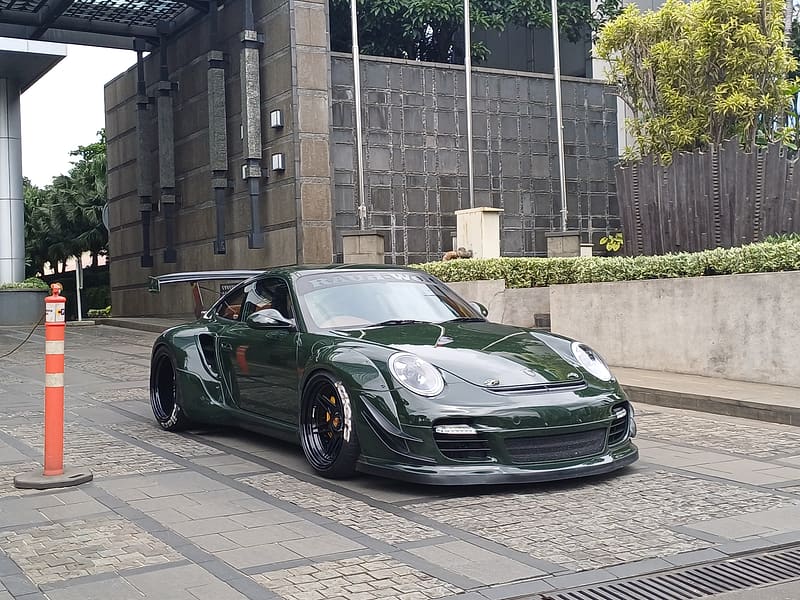
RAUH-Welt BEGRIFF ("rough world concept") is Akira Nakai's one-man body shop in Chiba, Japan, near Kashiwa. Nakai came from a street-drifting crew called Rough World, where he drove a Toyota AE86, and worked at a Porsche body shop in the late 1990s; his first Porsche, a damaged 930 Turbo he named "Stella Artois" after his favorite beer, became the first RWB. He cuts the fenders of each car by hand, without templates, and bolts on wide flares, bumpers, side skirts and a wing; the engine and running gear stay the owner's. He builds every car himself, flying to the customer's country and finishing a car in a few days, and every car gets a name of its own. Owners race with him at Idlers meetings, Japan's amateur race series, including its 12-hour race. Around 2016 the kit with Nakai's installation cost "north of $25,000", before paint, wheels and suspension. Nakai built only air-cooled 911s until the late 2010s, when RWB moved on to the water-cooled 997 (2005–12); flatsixes wrote in 2022 that he is "migrating" to the 996 and 997. The first 997 built outside Japan was finished in Saskatoon, Canada, in 2023.
How to spot one
Wide fender flares bolted over cut-open fenders, their edges lined with exposed rivets or bolts, a car slammed to the ground on very wide, deep-dish wheels, a "RAUH-Welt" banner across the top of the windshield, "RWB" in big letters on the engine lid or wing with "Zweite Entwicklung" ("second development") under it and again on the front lip (early cars say "Sekund Entwicklung"), and the car's own name painted on its sides or tail. The 997 has oval headlights and a modern body; look for flares riveted over its fenders, a low nose with canards and a big wing on uprights. A Liberty Walk 997 also has riveted flares, but a "LB" logo and Liberty Walk lettering instead of the RAUH-Welt banner.
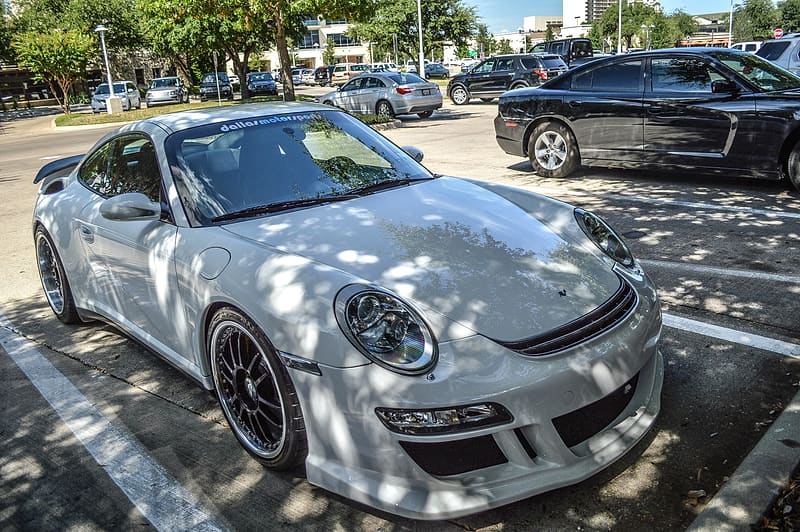
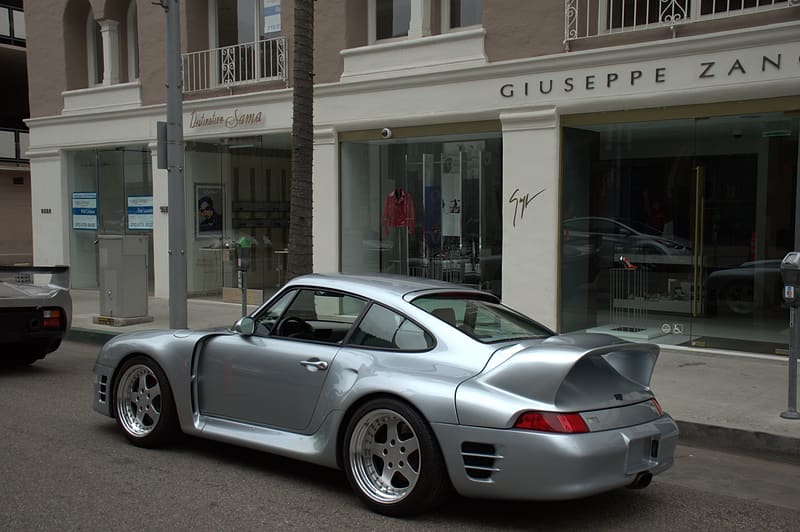
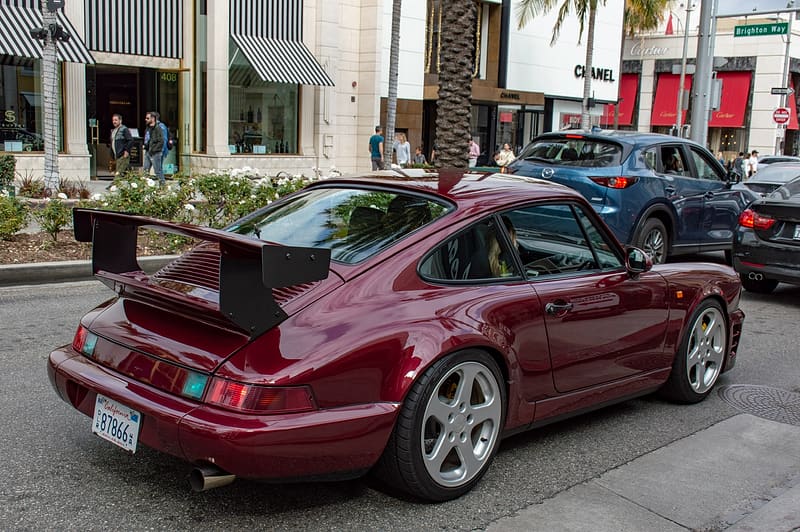
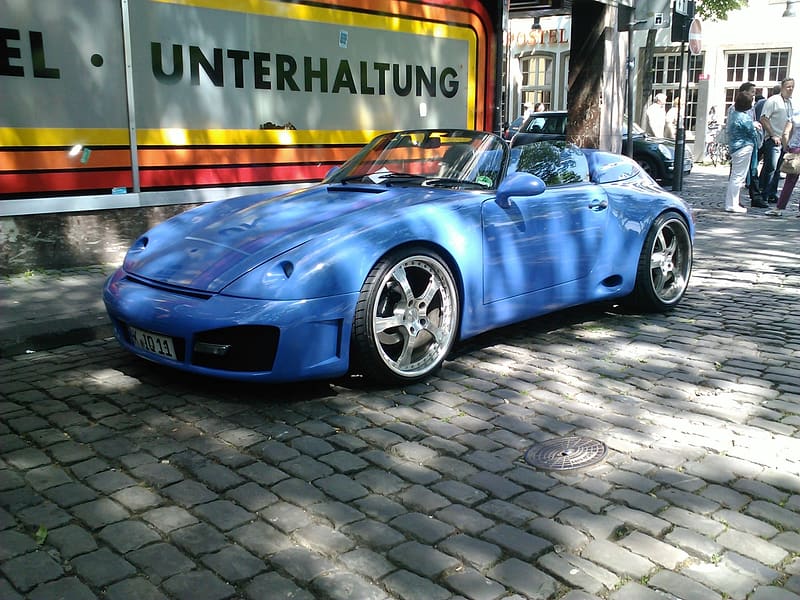
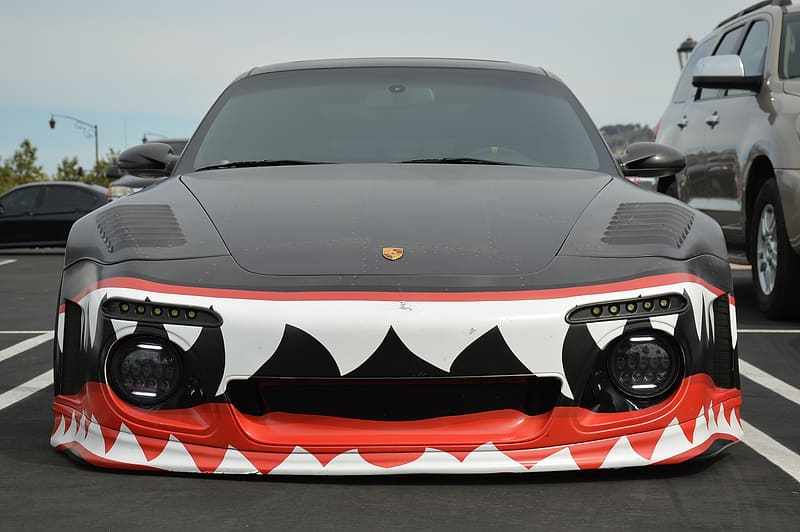
Cars changed by their owners or by a shop we don't list: aftermarket body kits (new bumpers, side skirts, wings, wider fenders), custom wide bodies, and one-off builds. They're grouped here until someone names the tuner or the build.
How to spot one
Bumpers, wings or fender flares the factory never made, a much lower stance, or wheels and details that don't match any version. Know who did it? Suggest it on the spot's page.
Most spotters just write “911”. 3,713 of these have a clue in the description and wait in Help identify: when three spotters agree, the spot gets its variant.
534 of 4,248 sorted (13%) · 3,713 questions waiting