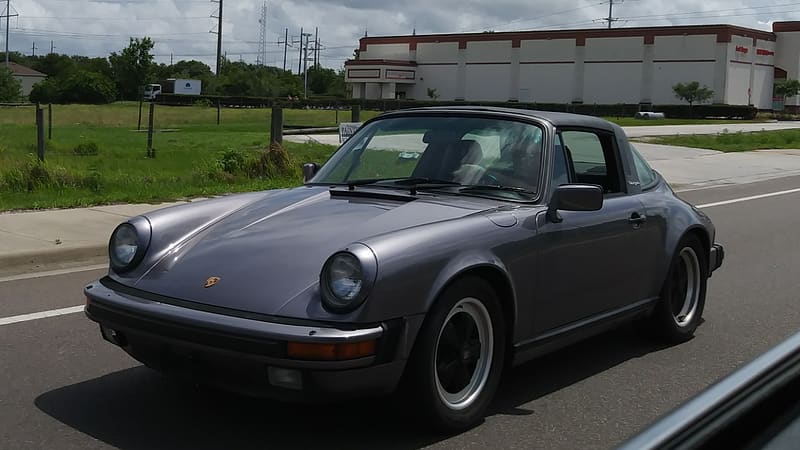
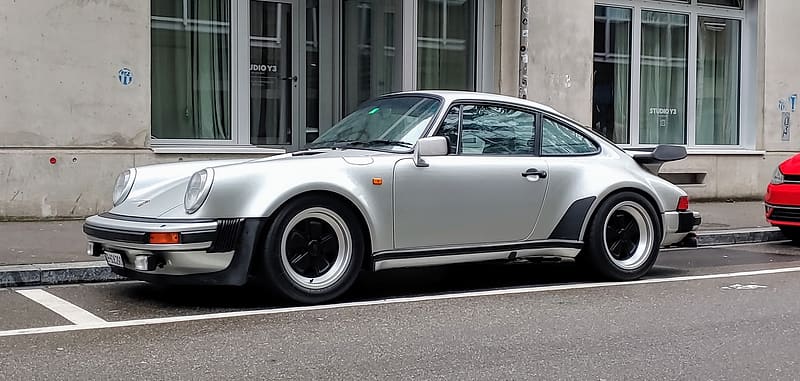
Porsche’s first production 911 Turbo, shown at the Paris Auto Show in October 1974 and sold from spring 1975. Its turbocharged 3.0-liter flat-six made 256 hp and drove the rear wheels through a four-speed manual, and flared wheel arches covered wider rear tires. Wikipedia counts 2,819 built through 1977.
How to spot one
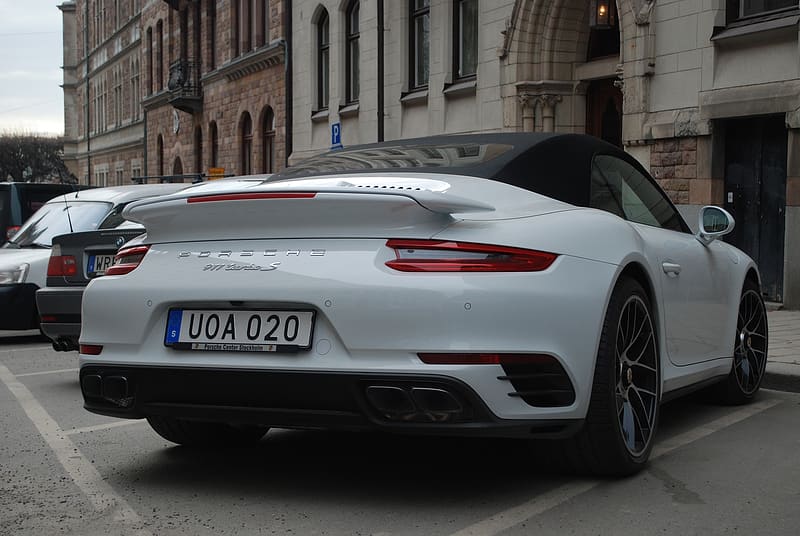
Flared fenders and a “whale tail” rear spoiler; the 1978-on 3.3 has a raised, reshaped “tea tray” spoiler that makes room for the intercooler.
For 1978 Porsche enlarged the engine to 3.3 liters and added an intercooler, which Porsche calls a first for a production car, along with brakes derived from the 917 race car. Power rose to 296 hp. Emissions rules kept it out of the US and Japan from 1980 until 1986, when it returned there with 282 hp; Wikipedia counts 18,770 built through 1989.
How to spot one
The rear spoiler is the raised “tea tray” that houses the intercooler, rather than the 3.0’s lower “whale tail”.
A factory performance option offered from 1983, known as WLS (Werksleistungssteigerung, factory power increase). It raised output to 325 hp and added a four-pipe exhaust and an extra oil cooler, which needed a reshaped front spoiler.
How to spot one
A four-pipe exhaust, extra vents in the rear fenders and modified sills.
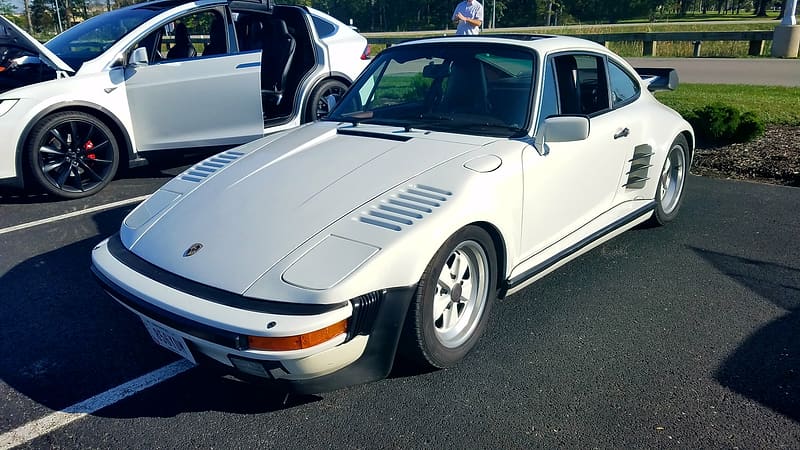
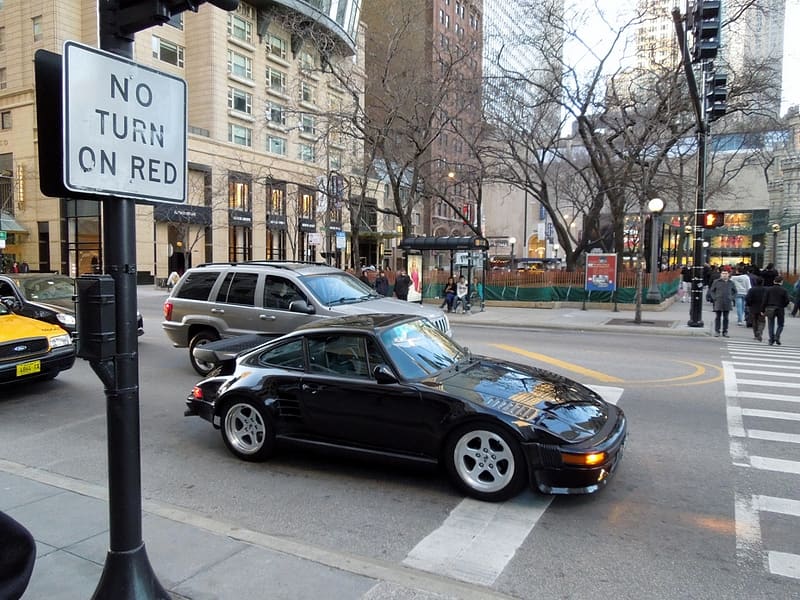
A 930 with a sloped nose in the style of the 935 race car. It grew from a 1982 commission by TAG Heuer co-owner Mansour Ojjeh for a road-legal 935; each car’s front fenders were reshaped by hand, and it cost up to 60 percent more than a regular Turbo. Wikipedia counts 948 built, 160 of them for the US.
How to spot one
A flat, sloping front with pop-up headlights in place of the 911’s upright round lamps.
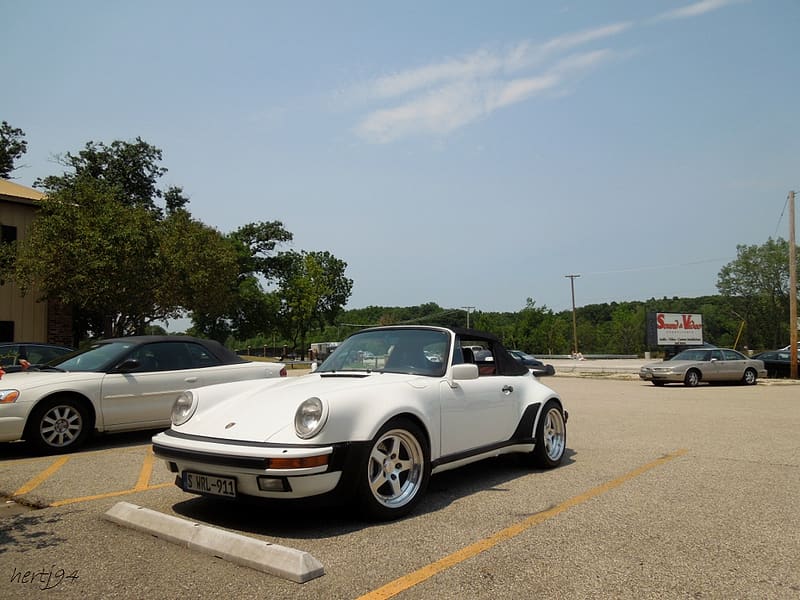
Open versions of the 930 came late in its life: Wikipedia ties them to the Turbo’s 1986 return to the US and Japan, and Porsche calls the 1987 car the first 911 Turbo Cabriolet. US cars had an emissions-controlled engine with 282 hp.
How to spot one
A 930 with the Turbo’s flared fenders and tea-tray spoiler but a removable targa roof panel or a folding fabric top.
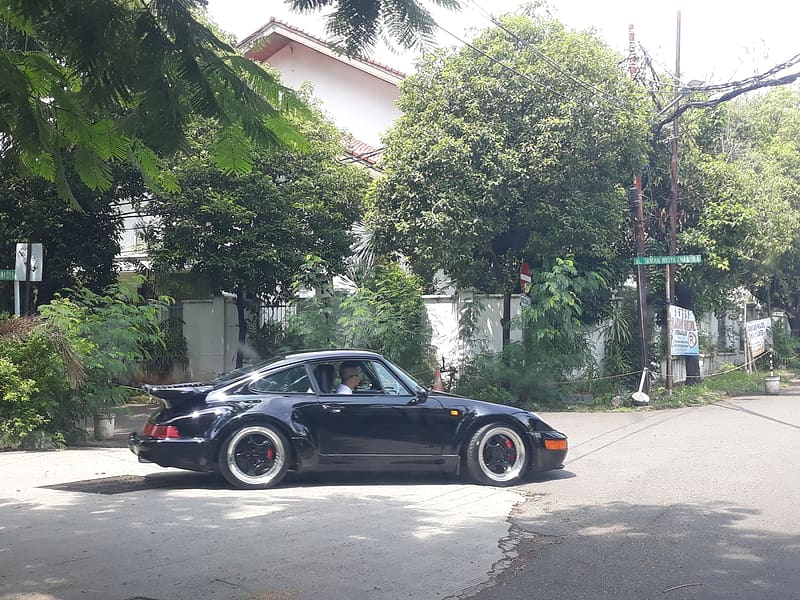
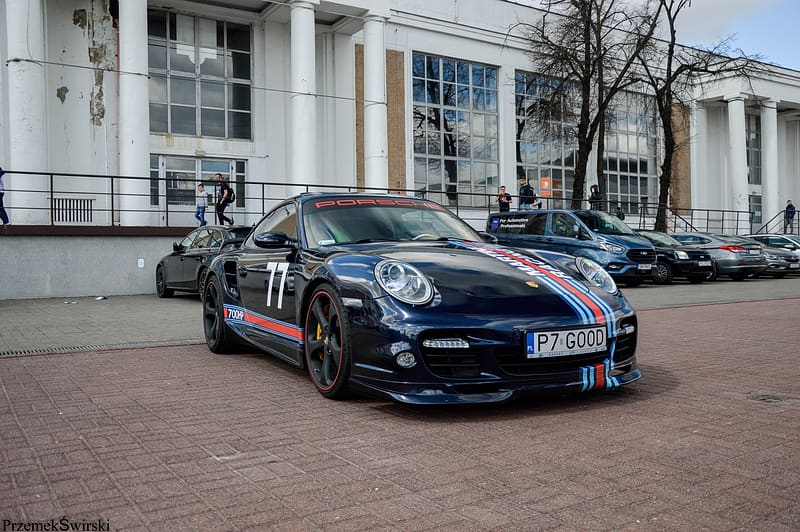
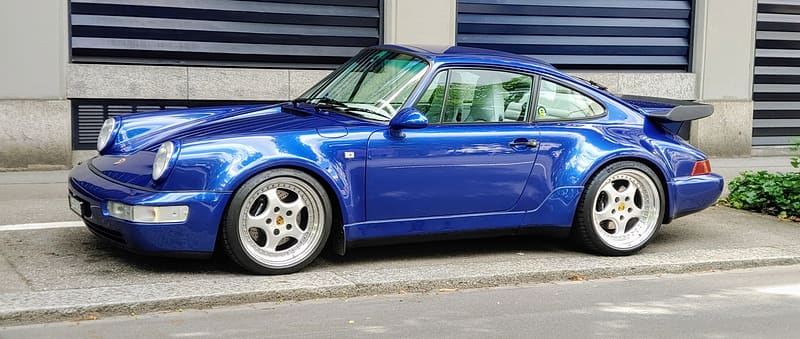
Introduced in March 1990, the first 964 Turbo kept a 3.3-liter single-turbo engine, now with a catalytic converter, making 316 hp. It drove only the rear wheels, through a five-speed manual. Porsche says more than 85 percent of the car’s parts were new, and Wikipedia counts 3,660 built.
How to spot one
A 964 with flared rear fenders, a fixed rear wing and red brake calipers; the later Turbo 3.6 has 18-inch three-piece Speedline wheels and Turbo 3.6 lettering.
A lightweight Turbo built by Porsche Exclusive. Porsche approved a run of 80 in May 1992 and 86 were made, those finished from July 1992 on as 1993 models. Dropping air conditioning, power steering, rear seats and soundproofing and using composite doors, front lid and rear spoiler saved about 180 kg; the engine made 376 hp and the car sat 40 mm lower.
How to spot one
959-style air intakes in the rear fenders, polished 18-inch three-piece Speedline wheels, new front air ducts and a different rear spoiler.
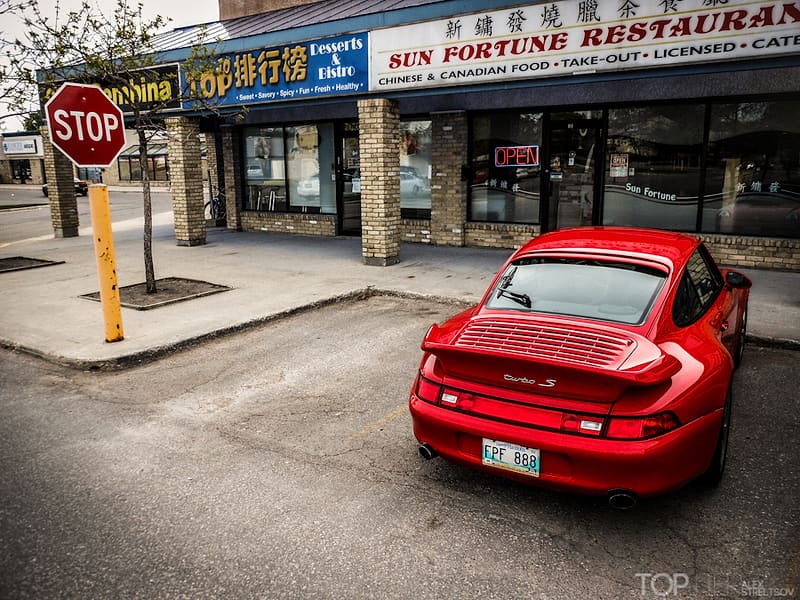
Released in January 1993, with the engine enlarged to 3.6 liters for 355 hp and 520 N·m. It kept rear-wheel drive and a five-speed manual. Fewer than 1,500 were built, and a black 1994 car appeared in the 1995 film Bad Boys.
How to spot one
18-inch three-piece Speedline wheels and Turbo 3.6 lettering set it apart from the earlier Turbo 3.3.
A farewell run from Porsche Exclusive, which turned leftover Turbo 3.6 chassis into Turbo S cars at the end of 964 production in 1994. The flatnose (Flachbau) package cost US$60,179 on top of a $99,000 Turbo 3.6 and added the Turbo S engine, Exclusive front and rear spoilers and 959-style rear fender intakes. Wikipedia counts 76 flatnose cars (39 for the US, 27 for other markets and 10 for Japan), plus 17 US cars with the standard nose.
How to spot one
A sloped flat nose with pop-up headlights on a 964 Turbo body, with air intakes in the rear fenders.
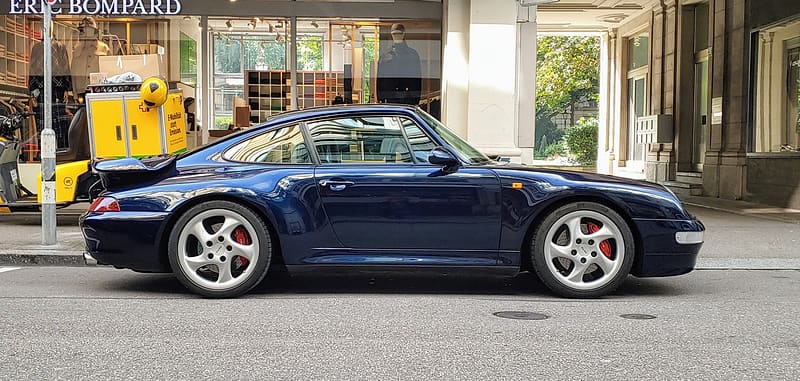
Shown at the Geneva Motor Show in March 1995, the 993 Turbo was the first 911 Turbo with two turbochargers and all-wheel drive. The two smaller turbos cut lag, and the 3.6-liter flat-six made 402 hp, for 0–100 km/h in 4.5 seconds per Porsche. It was among the first cars with OBD-II diagnostics.
How to spot one
Rear wheel arches about 6 cm wider than a Carrera’s, a fixed rear wing and 18-inch hollow-spoke wheels. The Carrera 4S and Carrera S share the wide body but not the fixed wing.
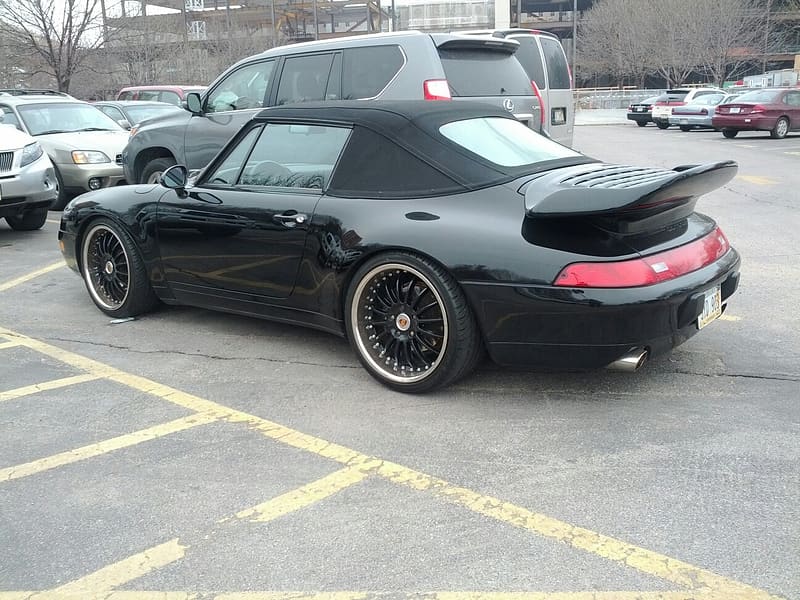
Fourteen built by Porsche Exclusive in 1995. Instead of the new twin-turbo, all-wheel-drive layout they used the 964 Turbo 3.6’s 355 hp single-turbo engine with a five-speed manual and rear-wheel drive. The conversion cost about $62,500 more than a standard cabriolet.
How to spot one
A 993 cabriolet wearing the 964 Turbo 3.6’s rear wing.
The last and most powerful 993 Turbo, built in 1997 and 1998; 345 were made. Larger turbochargers raised output to 444 hp, or 424 hp for US cars, and the interior got carbon fiber and leather trim.
How to spot one
Air scoops in the rear fenders behind the doors, yellow brake calipers, a slightly larger rear wing and a four-pipe exhaust.
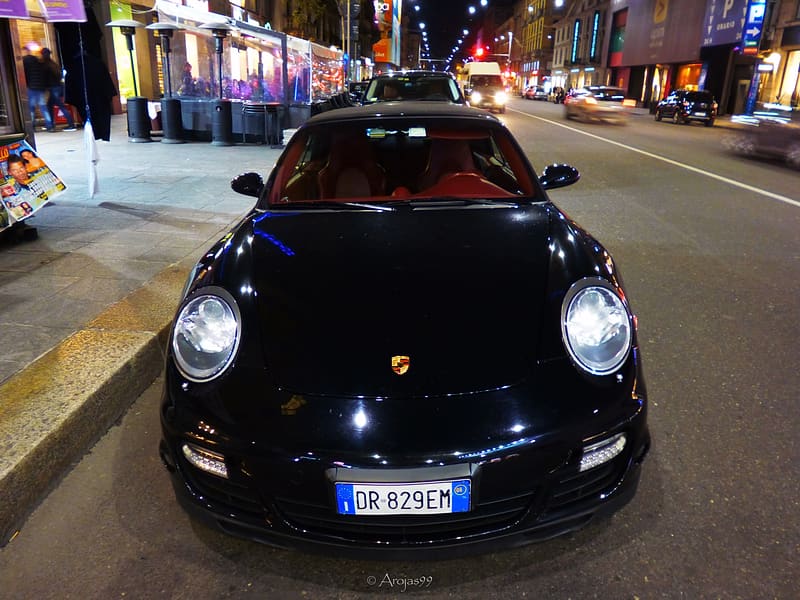
Shown at the Frankfurt show in September 1999 and on sale in the US from summer 2000, the first water-cooled 911 Turbo. Its 3.6-liter twin-turbo flat-six, derived from the 1998 Le Mans-winning 911 GT1, made 414 hp, with all-wheel drive and a six-speed manual or five-speed Tiptronic. Carbon-ceramic brakes (PCCB) were a new option, and a cabriolet followed for 2004, the first series-built Turbo Cabriolet since 1989.
How to spot one
Three large air intakes in the front bumper, intakes in the wider rear fenders and a rear wing that extends at speed.
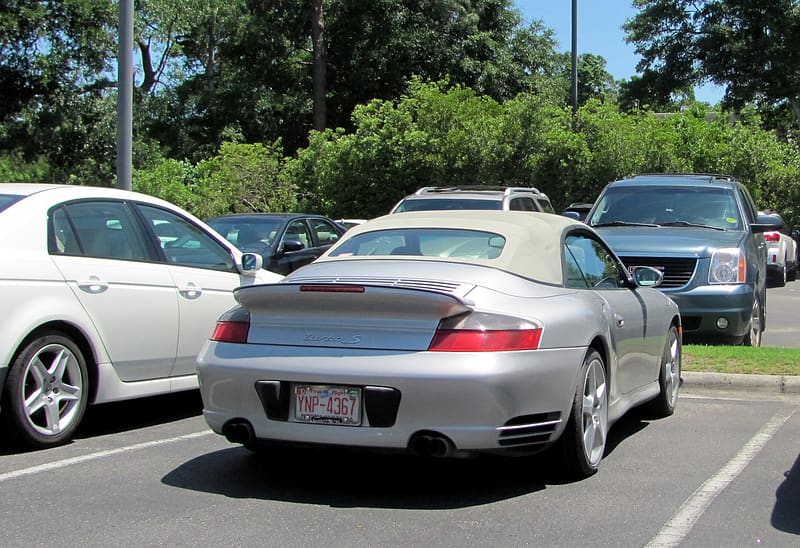
The first 911 Turbo Cabriolet since 1987: Porsche offered it from summer 2003, for the 2004 model year, with the coupe’s 414 hp twin-turbo engine and all-wheel drive.
How to spot one
The 996 Turbo’s three big front intakes, the intakes in its wider rear fenders and its rear wing, with a folding fabric top in place of the steel roof.
Offered as a coupe or cabriolet for the 2005 model year. It was essentially a Turbo with the X50 power kit (larger turbochargers and intercoolers, a revised ECU and 444 hp, or 444 hp) plus standard carbon-ceramic brakes, a CD changer and aluminum-faced gauges.
How to spot one
Yellow brake calipers from the standard ceramic brakes; a 996 Turbo with the X50 kit and optional ceramic brakes looks the same, so check the badge.
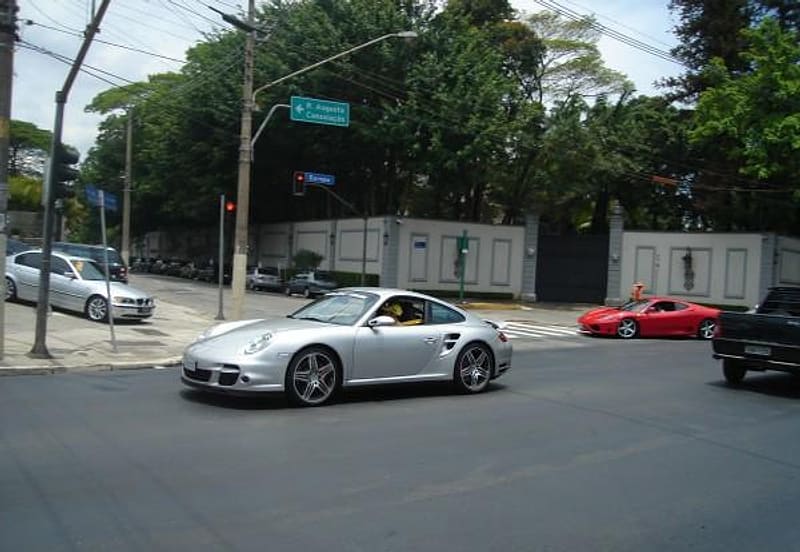
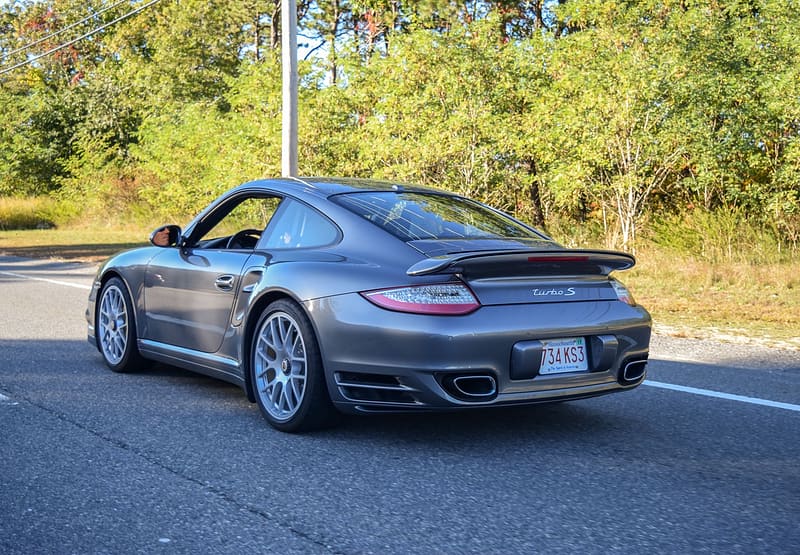
Shown at the 2006 Geneva Motor Show, with the first variable turbine geometry turbochargers on a gasoline production car. The 3.6-liter twin-turbo flat-six made 473 hp, with an overboost function in the Sport Chrono package, and Porsche quoted 0–100 km/h in 3.9 seconds with the manual. A cabriolet followed in 2007.
How to spot one
LED turn-signal strips in the front bumper, large vents ahead of and behind the rear wheels and a retractable rear wing; the 997.2 adds LED daytime running lights and LED taillights.
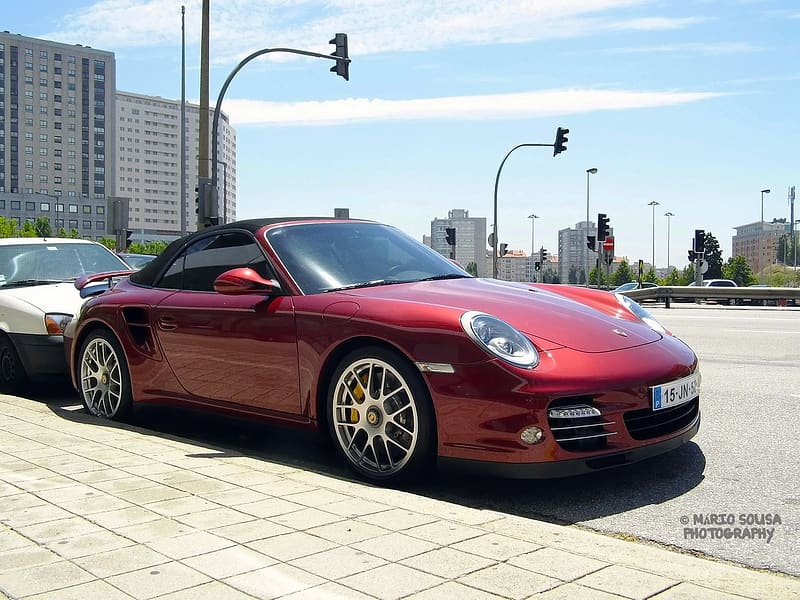
Unveiled in 2007, a year after the 997 Turbo coupe, with its 473 hp engine; Porsche says the fabric top opens or closes in under 20 seconds.
How to spot one
The 997.1 Turbo’s LED turn-signal strips in the front bumper, big vents around the rear wheels and retractable wing, with a folding fabric top in place of the steel roof.
Unveiled at the 2009 Frankfurt Motor Show with a new direct-injection 3.8-liter flat-six of 493 hp. The seven-speed PDK dual-clutch replaced the Tiptronic automatic, and Porsche claimed 0–100 km/h in 3.4 seconds with PDK and Sport Chrono.
How to spot one
LED daytime running lights in the front bumper, LED taillights, larger exhaust pipes and new 19-inch wheel designs.
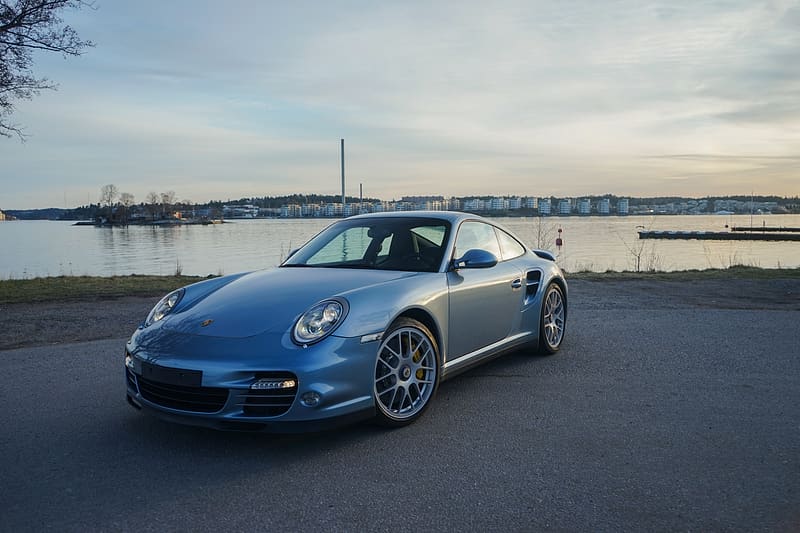
Shown at the Geneva Motor Show in March 2010 as a coupe and cabriolet, with 523 hp and 700 N·m. It came only with PDK, and carbon-ceramic brakes, the Sport Chrono package and center-locking wheels were standard.
How to spot one
Center-lock 19-inch wheels in the RS Spyder style, behind which sit the standard carbon-ceramic brakes.
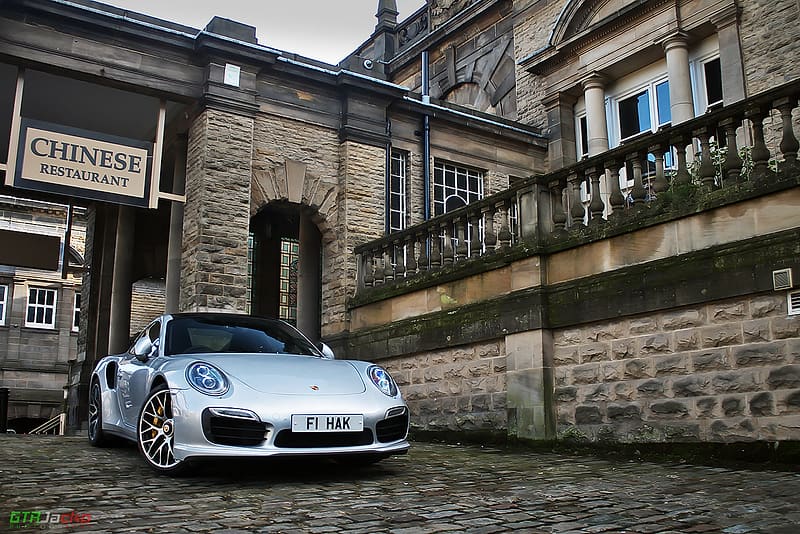
Revealed in May 2013 and first shown at that September’s Frankfurt show. Its 3.8-liter twin-turbo flat-six made 513 hp through a seven-speed PDK only, and it brought rear-axle steering and active aerodynamics: a three-stage extending front spoiler and a three-stage deployable rear wing. US prices started at $149,250.
How to spot one
Wider than a Carrera 4, with large intakes in the rear fenders and a rear wing that rises at speed; the Turbo S adds center-lock wheels and full-LED headlights as standard.
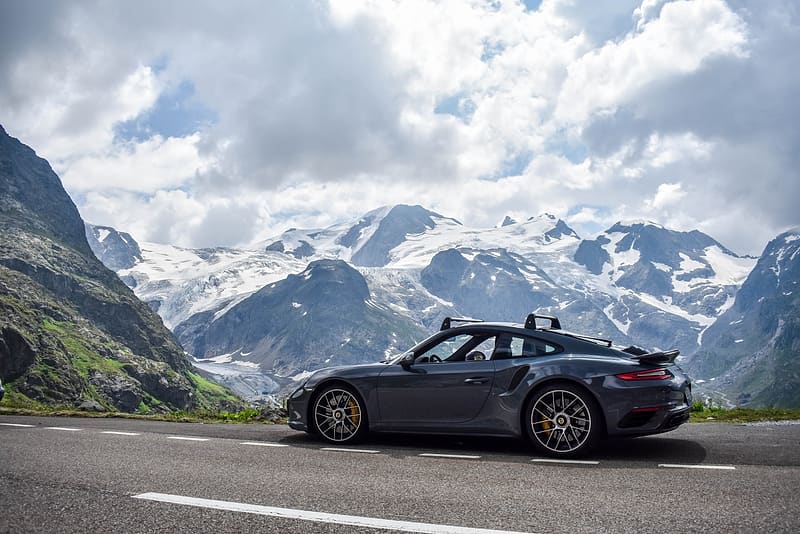
The faster 991.1 Turbo, with 552 hp and up to 750 N·m with overboost. Porsche claimed 0–60 mph in 2.9 seconds with Sport Chrono; full-LED headlights and center-lock wheels were standard, and the US base price was $182,050.
How to spot one
Center-lock wheels and full-LED headlights with four-point daytime running lights, which were optional on the Turbo.
The facelifted 991 Turbo, launched in December 2015 ahead of its show debut at Detroit in January 2016. New inlet ports, injectors and higher fuel pressure lifted output to 532 hp, and a drive-mode dial with a Sport Response button came on a steering wheel styled after the 918 Spyder’s.
How to spot one
A reshaped front with blade-like trim in the side intakes and narrow LED front lights, 3D taillights and new 20-inch wheels.
The facelifted 991 Turbo as a cabriolet, on sale from January 2016, with 532 hp.
How to spot one
The 991.2 Turbo’s blade-like trim in the front side intakes, narrow LED front lights and 3D taillights, with a folding fabric top in place of the steel roof.
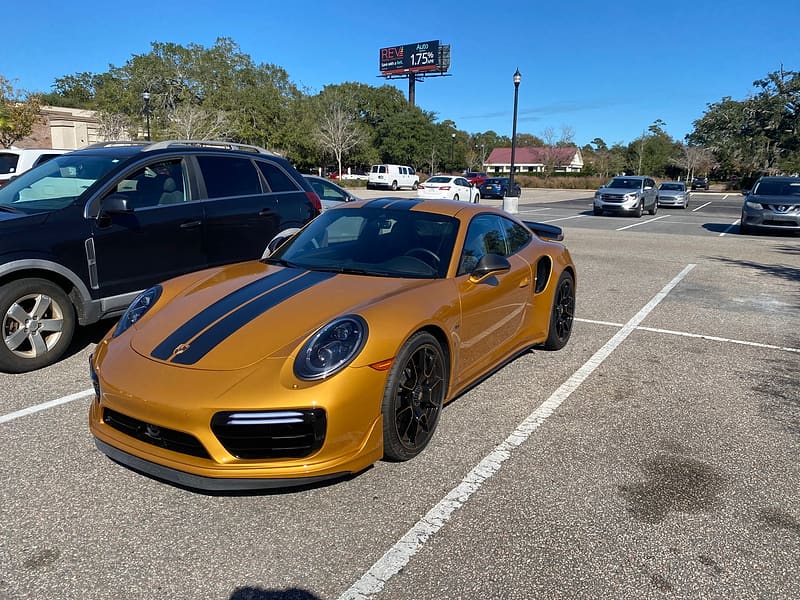
A run of 500 cars announced in June 2017, the first model finished by hand in the new Porsche Exclusive Manufaktur at Zuffenhausen. A power kit raised the Turbo S to 599 hp, and the hood, roof, side skirts, rear apron and ram-air scoop were carbon fiber. Porsche quoted 0–100 km/h in 2.9 seconds and a 330 km/h top speed.
How to spot one
Two carbon-weave stripes over the hood and roof, 20-inch center-lock wheels with Golden Yellow accents, black twin tailpipes and Porsche Exclusive Manufaktur plaques on the fenders. Launch cars were Golden Yellow Metallic, but other colors were offered.
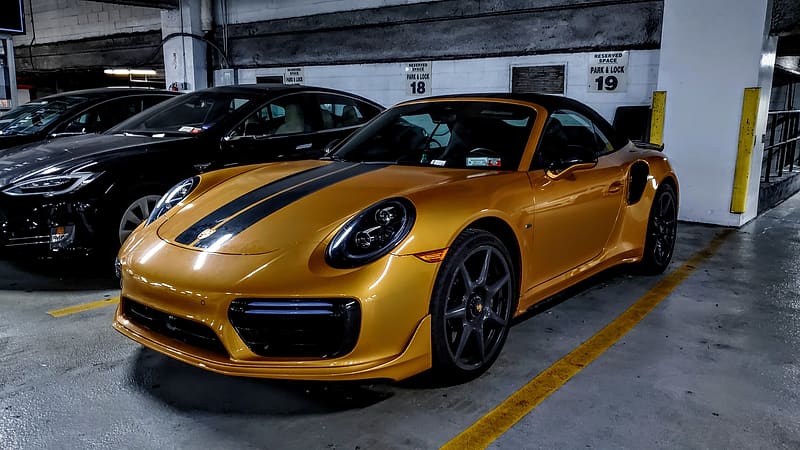
Two hundred open versions of the Porsche Exclusive Turbo S, beside 300 coupes: a power kit raises the engine to 599 hp. RM Sotheby’s sold one for $247,500 in 2020 and a car with 19 km on it for $280,000.
How to spot one
A 991.2 Turbo S Cabriolet with two carbon-weave stripes over the hood, 20-inch center-lock wheels with Golden Yellow accents and black tailpipes.
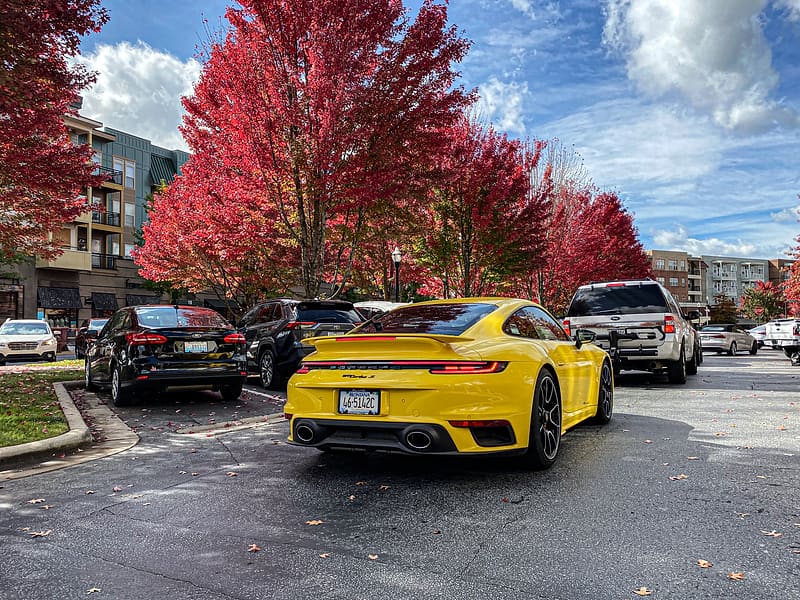
The regular Turbo of the 992 generation, launched in mid-2020 a few months after the Turbo S. It has 572 hp and 750 N·m from the same twin-turbo flat-six, with an eight-speed PDK and all-wheel drive, and came as a coupe and cabriolet.
How to spot one
Shares the Turbo S’s wide rear fenders with built-in air intakes and its rectangular black tailpipes; the lettering on the rear lid tells them apart.
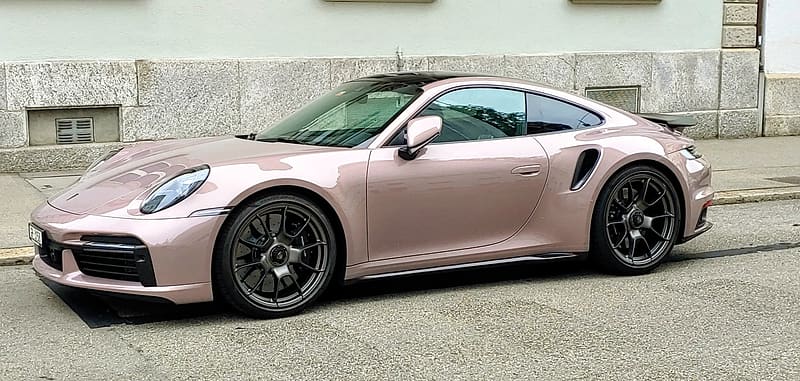
Revealed online on March 3, 2020, when the Geneva show was canceled. A new 3,745 cc twin-turbo flat-six made 641 hp and 800 N·m, 69 hp more than before, for 0–100 km/h in 2.7 seconds. It was the first Turbo with different wheel sizes front and rear, and its larger rear wing made 15 percent more downforce.
How to spot one
Wide rear fenders with built-in air intakes, a nose with wider intakes and dual front light modules, rectangular gloss-black tailpipes, and center-lock wheels, 20-inch in front and 21-inch at the rear.
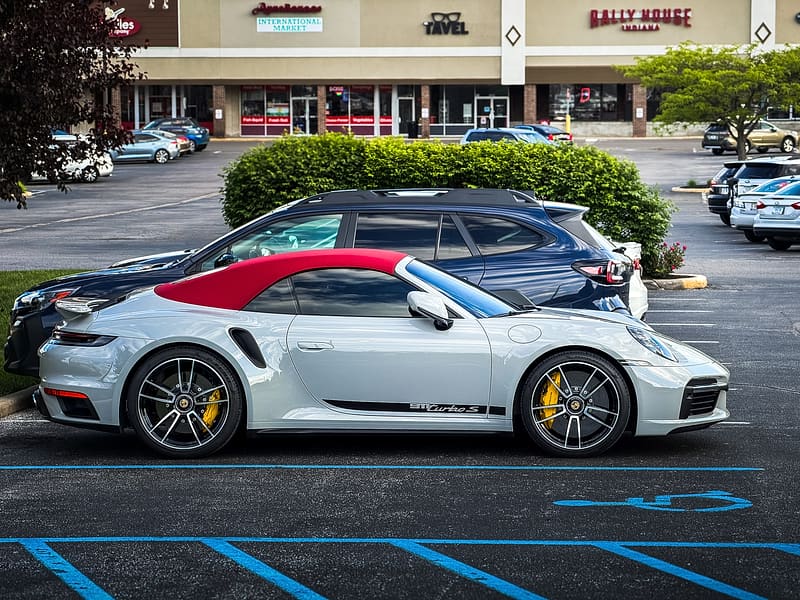
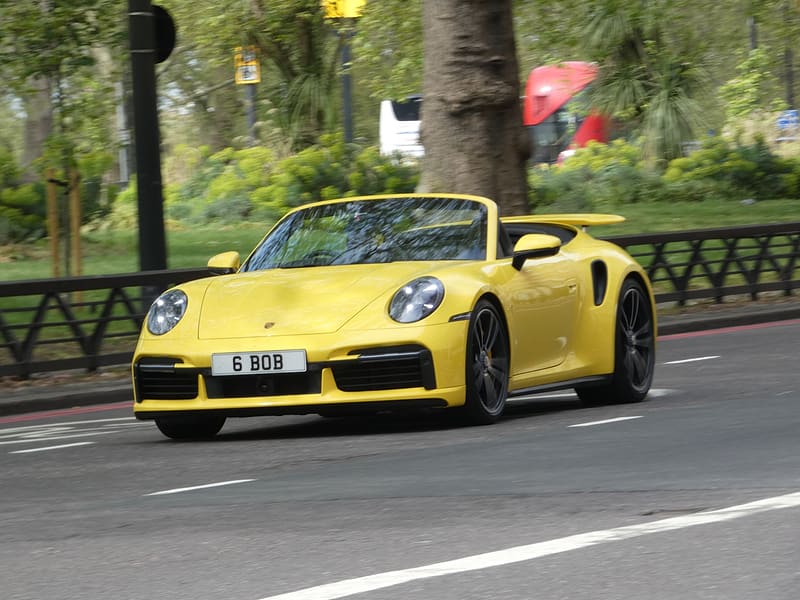
The 992 Turbo S as a cabriolet, with the coupe’s 640 hp.
How to spot one
The 992 Turbo S’s wide body, wider front intakes with horizontal flaps and center-lock wheels, with a folding fabric top in place of the steel roof. The 992.2 has vertical flaps in its front intakes.
An edition of 1,974 cars, the number recalling 1974, built on the 992 Turbo S to mark 50 years of the 911 Turbo and sharing its 641 hp. Tartan seat inserts and door panels recall the interior of Ferry Porsche’s own early 911 Turbo, and “turbo 50” lettering appears inside and out. Elferspot gives a starting price of about $296,000.
How to spot one
A Turbonit-colored crest, rear lid inlay, fuel cap and “turbo 50” lettering, with anthracite gray on the rear wing, lower rear, mirror bases and intake trims; the optional Heritage Design package adds satin white Sport Classic wheels and gold lettering.
Shown online on September 7, 2025 and then at the IAA Mobility show in Munich, the most powerful production 911 yet. A 3.6-liter flat-six with two electric turbochargers (eTurbos) and Porsche’s T-Hybrid system makes 701 hp and 800 N·m, for 0–100 km/h in 2.5 seconds and 322 km/h. It is 85 kg heavier than before but lapped the Nürburgring Nordschleife in 7:03.92, about 14 seconds faster.
How to spot one
Turbonite-colored crest, lettering, rear wing inserts, window strips and center-lock wheels, a rear with large ventilation openings and new tailpipes on a titanium exhaust, plus active cooling flaps at the front. The 2024 Turbo 50 Years also has Turbonit trim.
The 992.2 Turbo S as a cabriolet: the T-Hybrid engine with two electric turbochargers and 701 hp, 0–60 mph in 2.5 seconds with the roof down, at a base price of $284,300, $14,000 more than the coupe.
How to spot one
The 992.2 Turbo S’s Turbonite-colored trim and vertical flaps in the front intakes, with a folding fabric top in place of the steel roof.
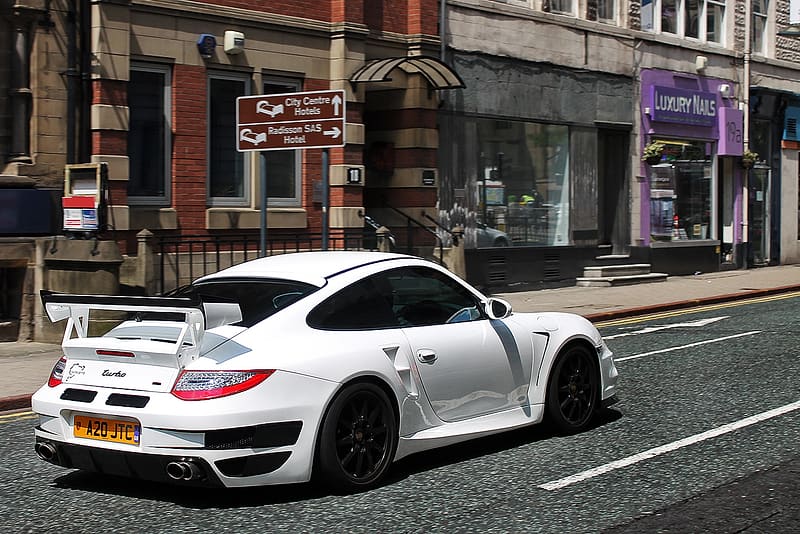
TechArt, founded in 1987 in Leonberg, Germany, is a Porsche specialist. Its GTstreet and GTstreet R cars, built on the 911 Turbo, add a large wing and a full aero kit; it also tunes other Porsches. On the 911 Turbo, its best-known build is the GTstreet R.
How to spot one
TechArt badges, a front apron with extra openings, a big fixed rear wing on the GTstreet models, and TechArt Formula wheels.
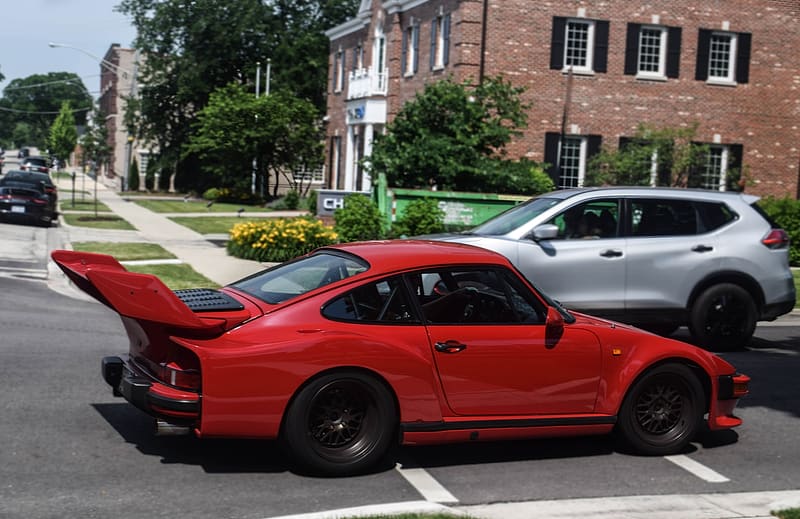
The BTR (Gruppe B Turbo RUF) was RUF's first production car with its own serial numbers, built from 1983 on the 911 in either narrow Carrera or wide 930 Turbo body. Its 3.4-liter single-turbo flat-six made 374 PS (369 hp), with a RUF 5-speed gearbox, bigger brakes and stiffer suspension. In 1984 it won Road & Track's "World's Fastest Cars" test at 186 mph and set auto motor und sport's 0–100 km/h record. RUF also offered BTR conversions for customers' 930 Turbos and Carrera 3.2s, a few on slantnose (Flachbau) 930s with pop-up headlights. A 1985 BTR II sold for $490,000 in 2022.
How to spot one
Most BTRs wear the wide Turbo body and whale tail, so look for RUF badges, RUF five-spoke 17-inch wheels, a quad-pipe exhaust and a RUF front spoiler with an oil cooler behind it; some have 935-style mirrors. A slantnose BTR has the flat nose with pop-up headlights and a louvered engine lid. The CTR, by contrast, is narrow-bodied, gutterless and has no whale tail.
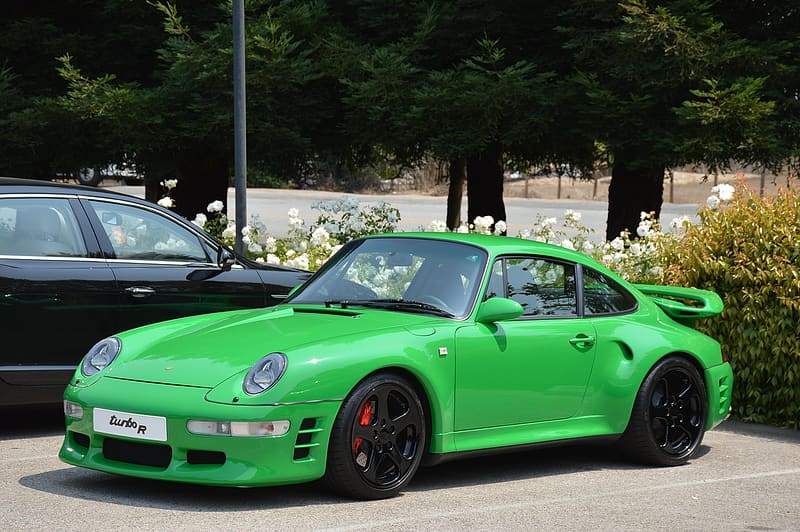
The Turbo R took over as RUF's top car for 1998 after the CTR2 ended, built on the 993 911 Turbo. RUF reworked the twin-turbo 3.6-liter flat-six to 490 hp and 650 Nm, kept all-wheel drive and the 6-speed manual, and fitted firmer springs, bigger anti-roll bars and RUF brakes; it does 0–100 km/h in 3.6 seconds and 204 mph. The CTR2's roll cage and the BTR's light interior were options. RUF kept building and converting Turbo Rs into the 2000s, and in 2016 made seven Turbo R Limited cars with 620 hp.
How to spot one
A 993 Turbo shape with a RUF body kit: vents ahead of the front wheels, aero mirrors, no rain gutters on the roof and RUF 18-inch five-spoke wheels. Badges say RUF, and the gauges are RUF-branded with green markings. A CTR2 is narrow-bodied with a much taller wing that has its own intake.
RUF's turbo 911s that have no page of their own: the 1977 RUF Turbo 3.3 (RUF's first complete car), the 996-based Rturbo of 2001 (520 PS, then 550 and 590 PS, in Carrera, wide Turbo or extreme wide body and as a cabriolet), and the 991-based RtR of 2013 (645 PS, or 802 PS with the older Mezger engine; about 10 built, narrow or RUF wide body with a large rear wing). Customer Porsche Turbos upgraded with RUF parts also go here.
How to spot one
RUF badges in place of the Porsche crest, RUF's own five-spoke wheels, and on many cars a slimmer, smoother body than the Porsche it started from.
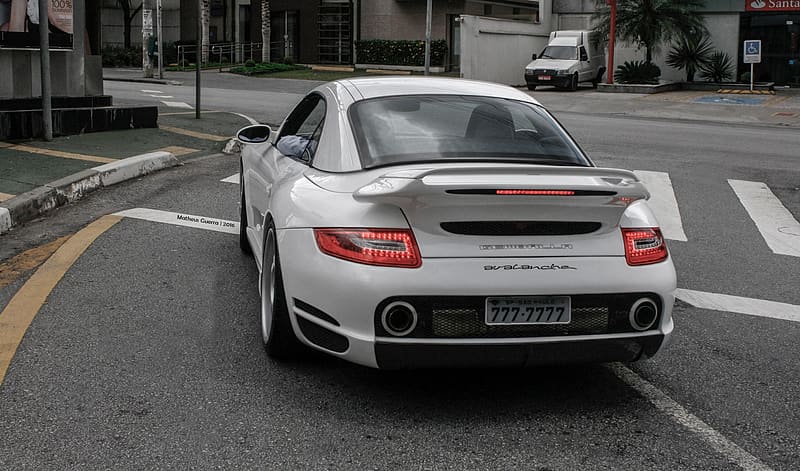
Gemballa, founded by Uwe Gemballa in 1981 in Leonberg, Germany, is known for heavily restyled, more powerful Porsches, and also built a small series of restyled Enzos. On the 911 Turbo, its best-known builds are the Avalanche, GTR 750.
How to spot one
Reshaped bumpers with extra openings, carbon panels and scoops, and Gemballa lettering where the factory badges were.
9ff was founded in Dortmund in 2001 by Jan Fatthauer to turn stock Porsches into street-legal racers, sold as finished cars or as parts and kits; the company went bankrupt in 2013 and was restarted as 9ff Engineering that October. Its 911 Turbos run far past factory power, many making 800 to 1,000 hp, and 9ff chased top-speed records with them: the TR1000 reached 243 mph at Papenburg in 2009, and the GT9, built around a 996 Turbo engine, hit 254 mph there in 2008.
How to spot one
A 996, 997 or 991 Turbo with "9ff" lettering on the doors, wing or front lip, a deep carbon front splitter, often a big fixed wing and 9ff's own wheels. A TechArt Turbo has TechArt badges and its own fixed wing; a RUF has RUF badges in place of Porsche's crest.
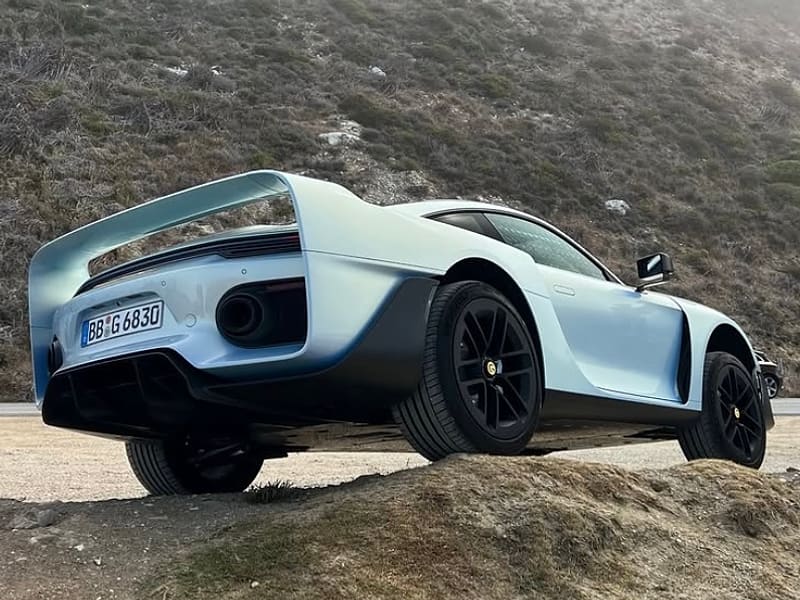
The Marsien is an off-road supercar by Marc Philipp Gemballa, son of Gemballa founder Uwe Gemballa; his company is separate from Gemballa GmbH. Revealed in July 2021 and inspired by the Porsche 959 Paris-Dakar rally cars, it is built on a 992-generation 911 Turbo S with an all-carbon-fiber body, KW suspension and an Akrapovič titanium exhaust. RUF retunes the twin-turbo flat-six to 750 PS (740 hp) and 930 Nm (686 lb-ft), or 830 as an option; 0–100 km/h takes 2.6 seconds, and ground clearance rises from 120 mm to 250 mm in off-road mode, where top speed is limited to 210 km/h. Only 40 are being built, and the conversion cost $586,000 at launch, on top of the donor car.
How to spot one
A 992 Turbo S body raised high on its suspension with chunky all-terrain tires is the giveaway, together with a large central scoop in the front hood. Look for exposed-carbon front parts, a full-width LED light strip across the tail, new mirrors (935/RSR-style on some cars), and center-lock forged wheels (19/20-inch off-road set, 20/21-inch road set).
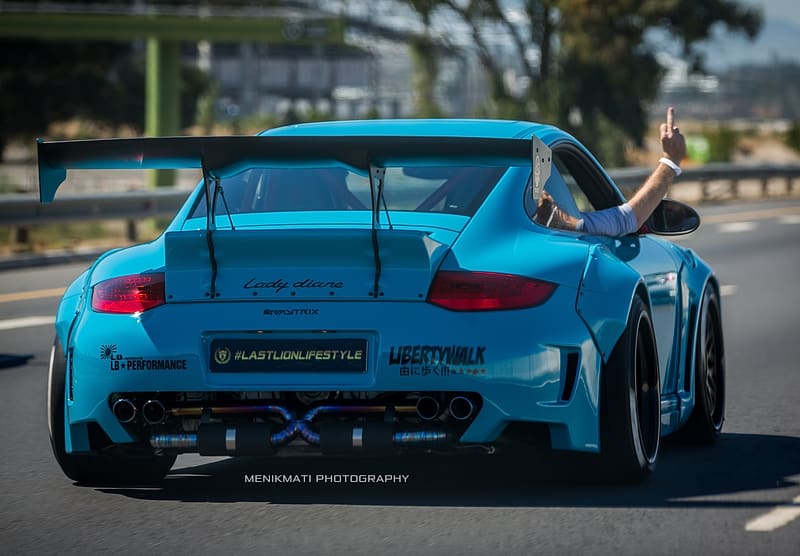
Liberty Walk, the Japanese tuner founded in 1993 and run by its founder and president Wataru Kato, is known for widebody kits: the original fenders are cut and wider riveted or bolted-on over-fenders fitted. Its "LB Works" 997 kit (v1, on sale by 2014) has a new front bumper reaching back to the over-fenders, louvers between the lip and fender, riveted over-fenders, a center-exit exhaust and a duckbill or swan-neck GT wing. A 2007 997 Turbo fitted with the kit in Vancouver in 2015 reached $85,250 bid at auction in 2025.
How to spot one
Liberty Walk cars have over-fenders fixed on with visible rivets or bolts along their edges, a deep front splitter, side skirt extensions and a ducktail or GT wing, and usually sit very low. On the 997, the riveted flares, louvers between the front lip and fenders, a center exhaust and a tall duckbill or swan-neck GT wing.
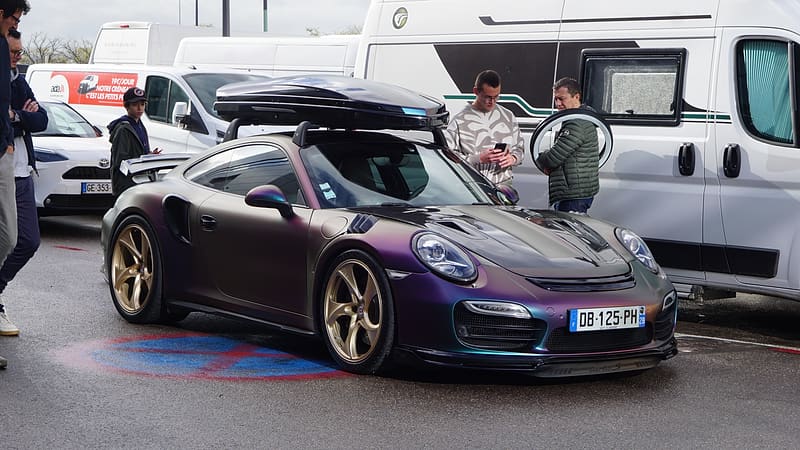
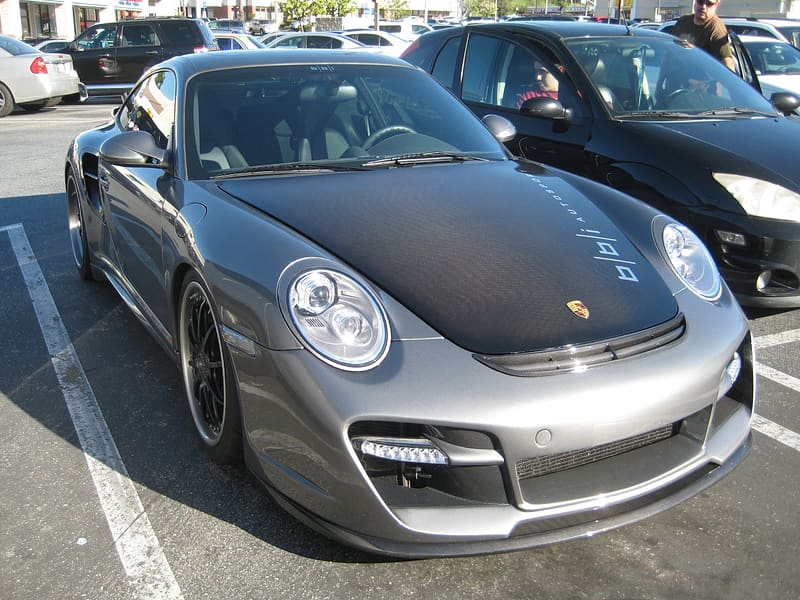
Cars changed by their owners or by a shop we don't list: aftermarket body kits (new bumpers, side skirts, wings, wider fenders), custom wide bodies, and one-off builds. They're grouped here until someone names the tuner or the build.
How to spot one
Bumpers, wings or fender flares the factory never made, a much lower stance, or wheels and details that don't match any version. Know who did it? Suggest it on the spot's page.
Most spotters just write “911 Turbo”. 2,826 of these have a clue in the description and wait in Help identify: when three spotters agree, the spot gets its variant.
349 of 3,179 sorted (11%) · 2,826 questions waiting
 Uncommon