Lotus Elise

Colin Chapman’s “add lightness” in modern form: a bonded-aluminum roadster weighing about 700 kg, built for 25 years.

Common· 10 pts1996–2021Out of production35,124 built17 variants
Lotus Elise
Built35,124all versions
Years1996–2021Out of production
Value today$24k–$43kRecent prices
Power118–250 hpBy version
0–60 mph3.8 sQuickest version
Top speed154 mphFastest version
On ExoticSpotter1,149571 spotters · 84 places

Every Elise

17 variants, by generation: what each one is, and how to tell it apart on the street.

Series 1

1996–2001 · 5 variants · 5 spots
Not sorted yetIts spots are among the unsorted onesCommon

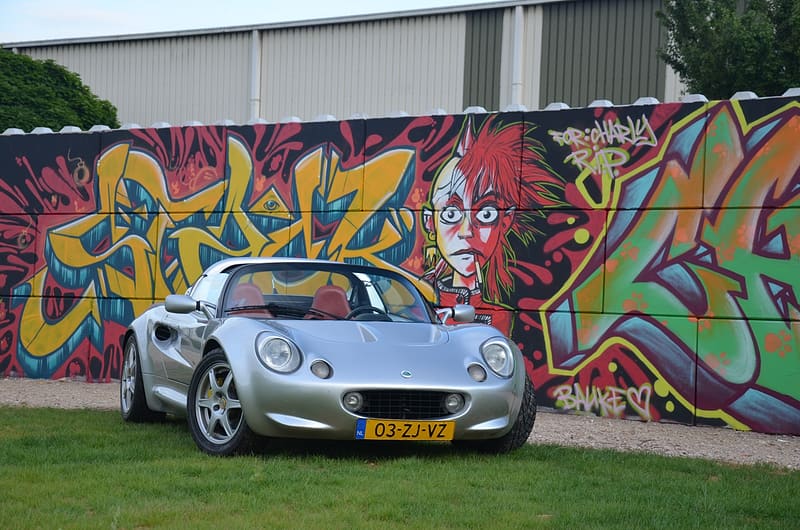
Elise (S1)

1996–2001 · 118 hp

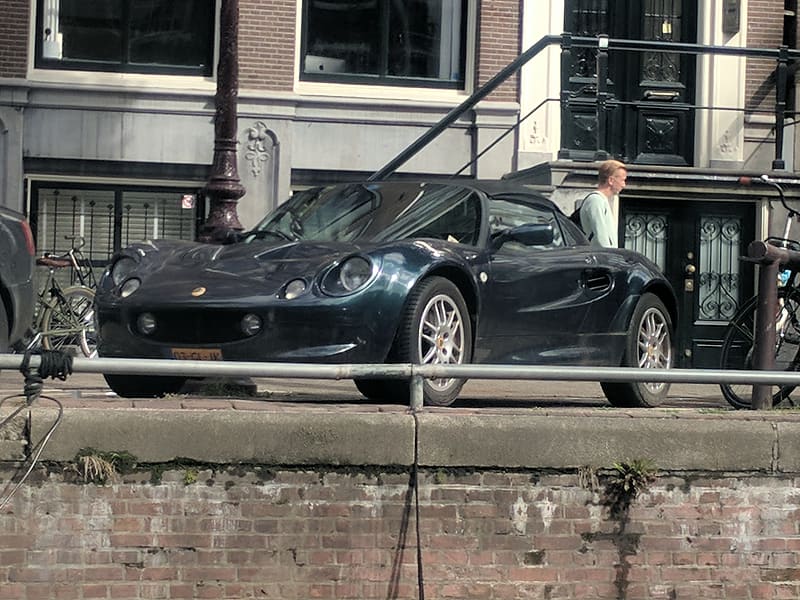
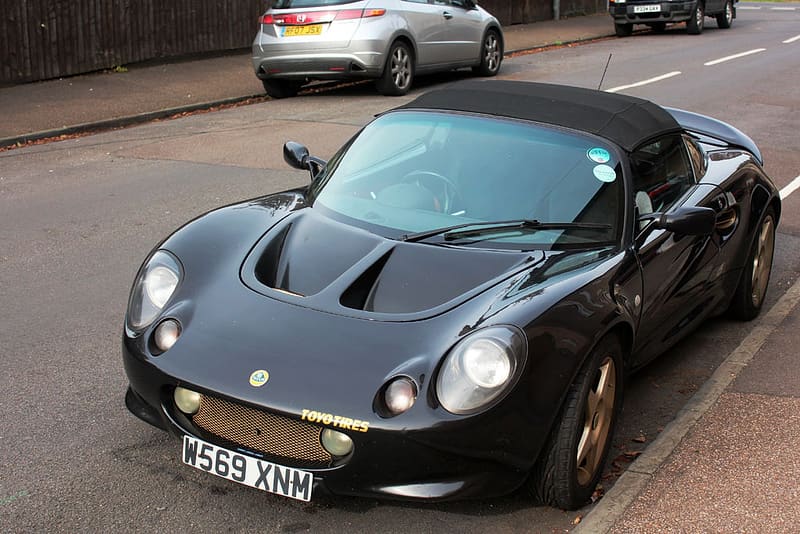
The original Elise, launched in September 1996 and named after Elisa Artioli, granddaughter of Lotus and Bugatti chairman Romano Artioli. Designed by Julian Thomson with chief engineer Richard Rackham, it had a bonded aluminum chassis, a fiberglass body and a mid-mounted 118-hp Rover K-series engine. At 725 kg it reached 60 mph in 5.8 seconds. Besides the Hethel-built cars, Proton assembled Series 1 Elises from kits in Malaysia.

How to spot one

The basic car has none of the headlight covers, rear spoiler, six-spoke wheels or rear wheel-arch spats of the 111S. The Series 2 of 2001 has a new body styled by Steve Crijns.
Help sort them
Not spotted yetBe the firstRare

Elise Sport 135

1998–1999 · 145 hp

A limited-edition Series 1 of 1998–1999 with about 145 hp from a tuned Rover K-series engine. Like the other Sport editions, it was made more capable on track with sports suspension, wheels, tires and seats.

Be the first to spot one
Common

Elise 111S

1999–2001 · 143 hp

Named after the Elise’s Lotus type number, 111, the 111S arrived in early 1999 with the Rover K-series engine with VVC variable valve control, as used in the MG F. It gave 143 hp and a flatter torque curve, and a closer-ratio gearbox and shorter final drive improved acceleration.

How to spot one

Headlight covers, a rear spoiler, six-spoke wheels, a “chipcutter” front grille and small spats on the back of the rear wheel arches, needed for its wider rear wheels.

3 spots + 4 possible · Photos
Rare

Elise Sport 160

2000 · 337 built · 160 hp

A limited-edition Series 1 from 2000 with 150 to 160 hp from a tuned Rover K-series engine, plus sports suspension, wheels, tires and seats for track use.

2 spots · Photos
Not spotted yetBe the firstRare

Elise Sport 190

190 hp

The most powerful of the Series 1 Sport editions, with 190 hp from its Rover K-series engine and track-oriented suspension, wheels, tires and seats. Wikipedia also lists a track-focused Sport 190 in the Series 2 range, with 192 hp, Lotus Sport suspension and wider wheels.

Be the first to spot one

Series 2

2001–2011 · 5 variants · 23 spots · 7 possible
Common

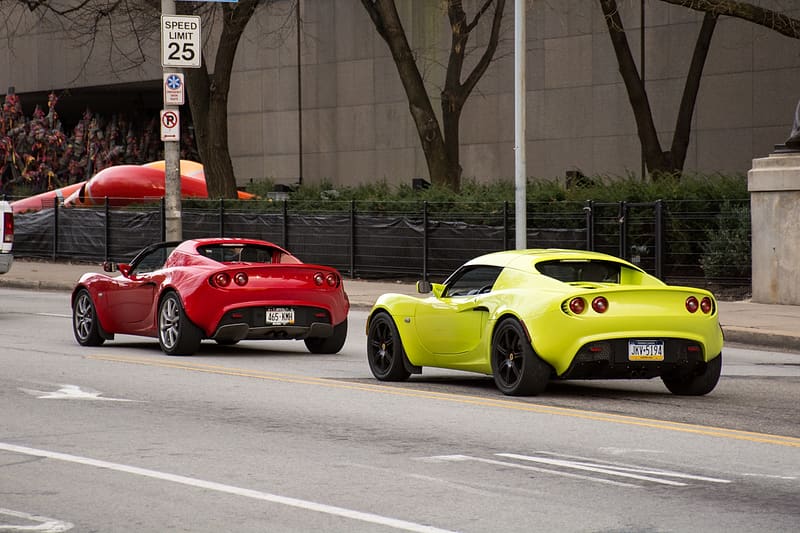
Elise (S2)

2001–2011 · 120 hp

Announced on October 9, 2000, the Series 2 kept a slightly modified Series 1 chassis to meet new European crash rules, and its body, styled by Steve Crijns, was the first Lotus designed on a computer. General Motors helped fund it in return for the Opel Speedster/Vauxhall VX220, built on the same line at Hethel. The base car kept a 120-hp Rover K-series engine until Toyota engines replaced the Rover units.

How to spot one

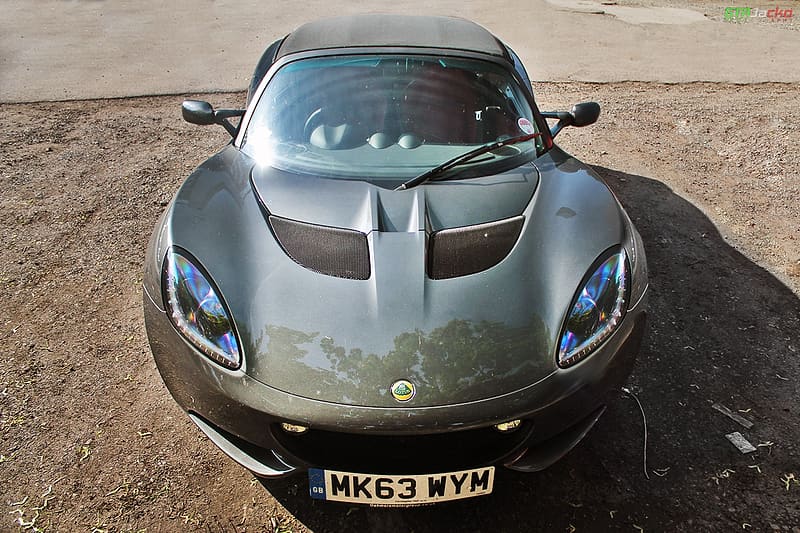
It lacks the single, larger triangular headlights that came with the 2010 facelift (Series 3). Supercharged SC models from 2008 add a rear spoiler and their own wheels.

1 spot · Photos
Common

Elise 111S (S2)

2001–2005 · 160 hp

The Series 2 111S had the Rover K-series VVC engine with 160 hp and was dropped in 2005 in favor of Toyota power. It spawned two runs of 50 heritage editions: the Type 25, honoring Jim Clark’s Formula 1 car, and the 2003 Type 23, honoring the Colin Chapman-designed race car of 1962–1963.

How to spot one

The Type 25 edition is Lotus Racing Green with twin metallic yellow stripes and black six-spoke wheels; the Type 23 is white with twin green stripes. A regular 111S has no such stripes.

1 spot + 5 possible · Photos
Common

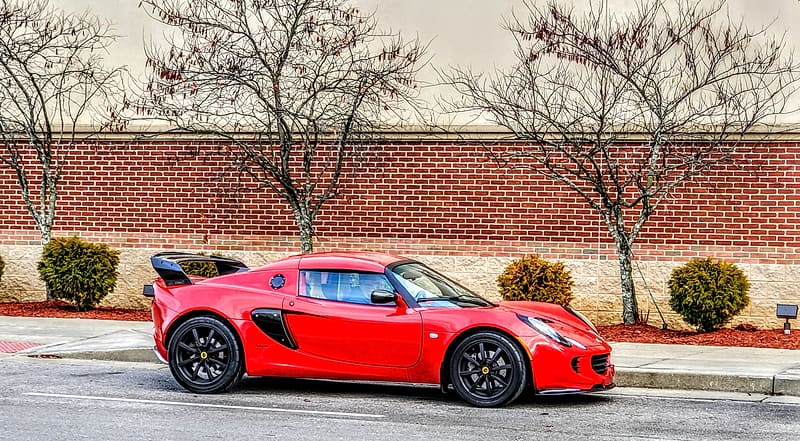
Elise 111R / US Elise

2004–2011 · 189 hp

In 2004 Lotus fitted Toyota’s 189-hp 2ZZ-GE engine, with a Yamaha-designed head and variable valve lift, and a 6-speed manual, creating the 111R in Europe and the “Federal Elise” for North America. It was the first Elise sold in the US, from summer 2004 as a 2005 model, after the NHTSA granted a three-year exemption from bumper and headlight rules. Tests showed 0–60 mph in about 4.9 seconds; the 111R was renamed Elise R in 2007.

How to spot one

From the 2007 model year the LOTUS letters on the tail are raised instead of flat decals, and US cars got small bumperettes beside the rear license plate.

14 spots + 1 possible · Photos
Not sorted yetIts spots are among the unsorted onesCommon

Elise S

2007–2011 · 189 hp

The entry-level Elise from 2006, which replaced the Rover-engined base car after Rover’s collapse. It used Toyota’s 134-hp 1.8-liter 1ZZ engine from the Corolla, which has variable valve timing but not the variable lift of the 2ZZ in the Elise R. With a curb weight of 860 kg, CAR magazine measured 0–62 mph in 6.1 seconds.

7 possible · help confirm
Common

Elise SC

2008–2011 · 218 hp

The supercharged Series 2, sold from 2008. A non-intercooled supercharger on the Toyota 2ZZ-GE engine raised output to 218 hp, cutting 0–60 mph to 4.3 seconds, with a top speed of 150 mph. It was also offered in the 2011 model year on the facelifted car.

How to spot one

A rear spoiler like that of the Type 72-D edition and its own wheel design set it apart from the naturally aspirated Elise.

7 spots · Photos

Series 3

2011–2021 · 7 variants · 3 spots
Not sorted yetIts spots are among the unsorted onesCommon

Elise Sport

2011–2021 · 134 hp

The entry-level Series 3 Elise, facelifted in 2010, used Toyota’s 1.6-liter 1ZR-FAE engine, chosen to meet Euro 5 emissions rules, with 134 hp. From late 2015 it was called the Elise Sport, 10 kg lighter at 866 kg, with lightweight sports seats; it reached 62 mph in 6.5 seconds and 127 mph. The 1.6-liter version was dropped in 2018.

How to spot one

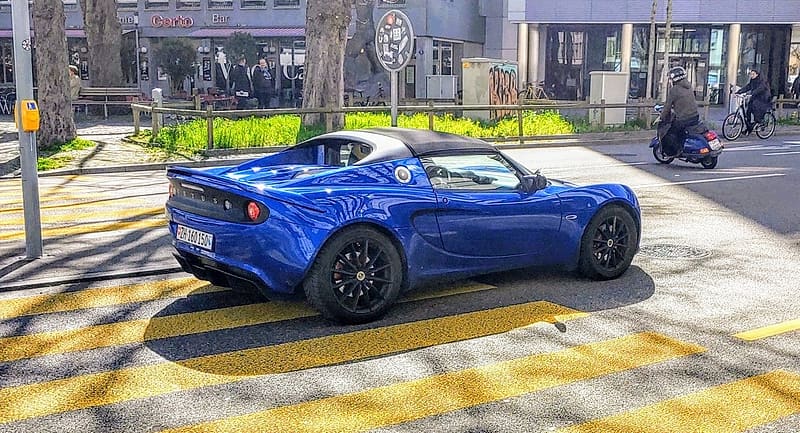
Series 3 Elises have single, triangular headlights, larger than those of the Series 2.

Help sort them
Common

Elise Sport 220

217 hp

Revealed in November 2015 alongside the Elise Sport, it replaced the supercharged Elise S of 2012–2015. Its supercharged 1.8-liter Toyota engine makes 217 hp with a 6-speed manual; it weighs 914 kg, reaches 62 mph in 4.6 seconds and tops out at 145 mph. It cost about $55,800 in the UK at launch.

2 spots + 7 possible · Photos
Not sorted yetIts spots are among the unsorted onesCommon

Elise Cup 220

217 hp

A more track-focused Elise revealed at the 2015 Geneva show, with the 217-hp supercharged 1.8-liter Toyota engine, a sport-ratio 6-speed manual and 125 kg of downforce at 140 mph. Top Gear quoted 0–60 mph in 4.2 seconds and a dry weight of 932 kg. The Cup 250 replaced it in 2016.

Help sort them
Not sorted yetIts spots are among the unsorted onesCommon

Elise Cup 250

243 hp

Shown at the 2016 Geneva show as the replacement for the Cup 220. Its supercharged 1.8-liter engine makes 243 hp, and at 884 kg dry it reaches 60 mph in 3.9 seconds and 154 mph. An optional Carbon Aero Pack swaps the front splitter, rear wing, diffuser and side floor extensions for carbon versions; a 245-hp Cup 250 Final Edition followed in 2021.

How to spot one

A fixed rear wing and front splitter, which the Elise Sport models do not have.

Help sort them
Not spotted yetBe the firstRare

Elise Cup 260

250 hp

Unveiled in October 2017 and limited to 30 cars, it was the fastest Elise yet. A revised supercharger gave the 1.8-liter engine 250 hp, and at 862 kg dry it reaches 60 mph in 3.8 seconds. Its aero package, including a carbon rear wing developed from the Lotus 3-Eleven’s, makes 180 kg of downforce at 151 mph.

How to spot one

A large carbon rear wing with Union Jacks on its endplates, louvered vents over the front wheel arches and a laurel wreath decal on the rear buttress.

Be the first to spot one
Not sorted yetIts spots are among the unsorted onesCommon

Elise Sprint 220

217 hp

A lighter special edition of the Sport 220, announced in March 2017 alongside a 1.6-liter Elise Sprint. Carbon seats and rear deck, a polycarbonate rear window, a lithium-ion battery and lighter wheels saved about 40 kg. The Sprint 220 has the 217-hp supercharged engine and reaches 60 mph in 4.1 seconds; it cost about $57,100 in the UK.

Help sort them
Rare

Elise Sport 240 Final Edition

2021 · 240 hp

One of two final editions unveiled on February 9, 2021, as Elise production neared its end. The Sport 220’s supercharged 1.8-liter engine was raised to 240 hp, for 0–100 km/h in 4.5 seconds, and fully optioned with carbon parts and a lithium-ion battery it weighs 898 kg. The last Elise built was a gold Sport 240, delivered to Elisa Artioli, the car’s namesake.

1 spot · Photos

1,118 Elise spots need a variant

Most spotters just write “Elise”. 1,118 of these have a clue in the description and wait in Help identify: when three spotters agree, the spot gets its variant.

31 of 1,149 sorted (3%) · 1,118 questions waiting
Help sort 1,118
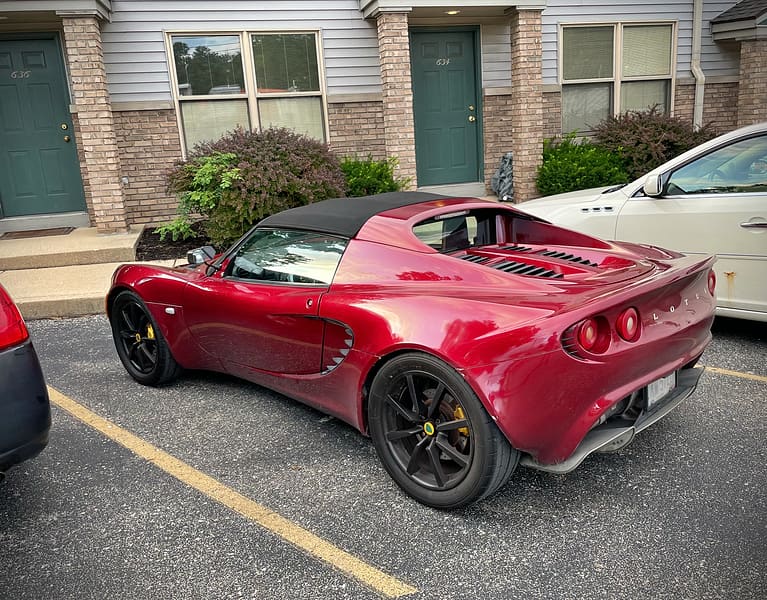
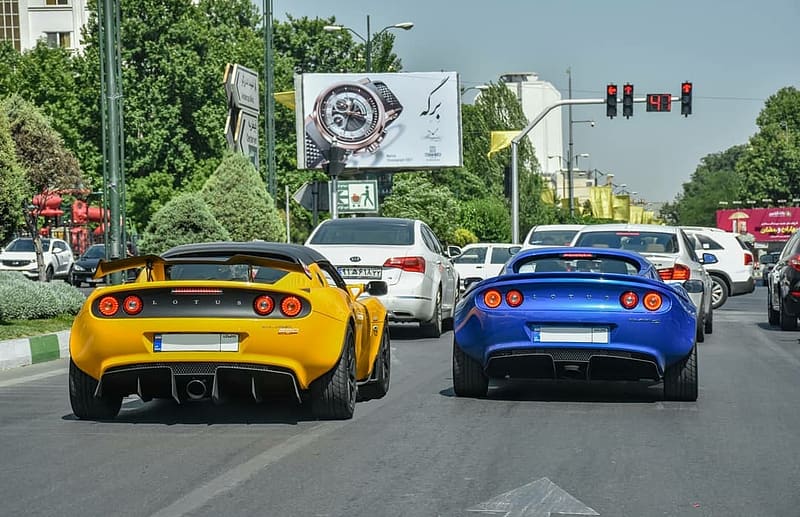
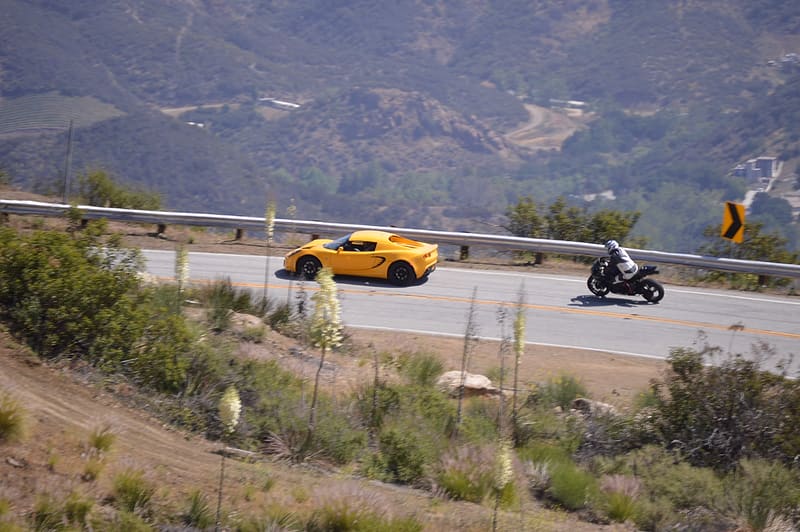
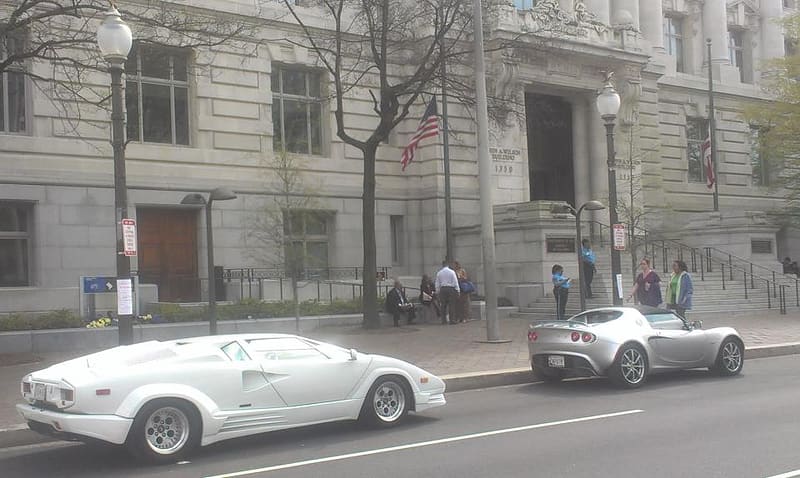
Lotus Elise spotted in Somewhere, NetherlandsLotus Elise spotted in Munich, GermanyLotus Elise spotted in Bloomington, IndianaLotus Elise spotted in Tehran, IranLotus Elise spotted in Los Angeles, CaliforniaLotus Elise spotted in Washington, District of ColumbiaLotus Elise spotted in Florence, KentuckyLotus Elise spotted in Agoura Hills, California