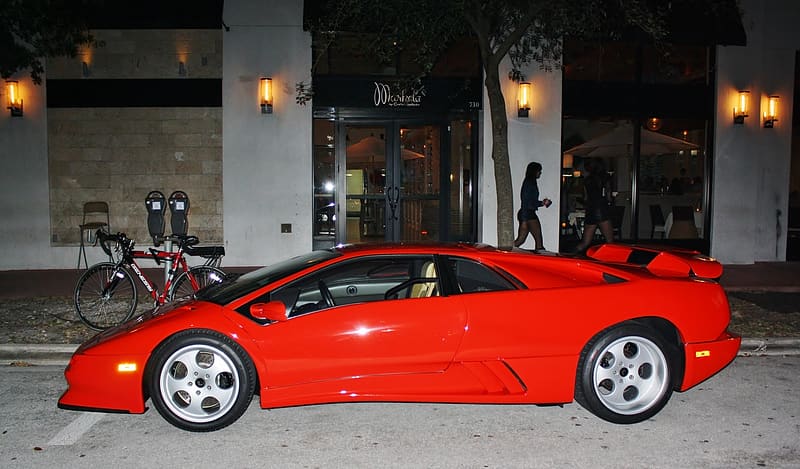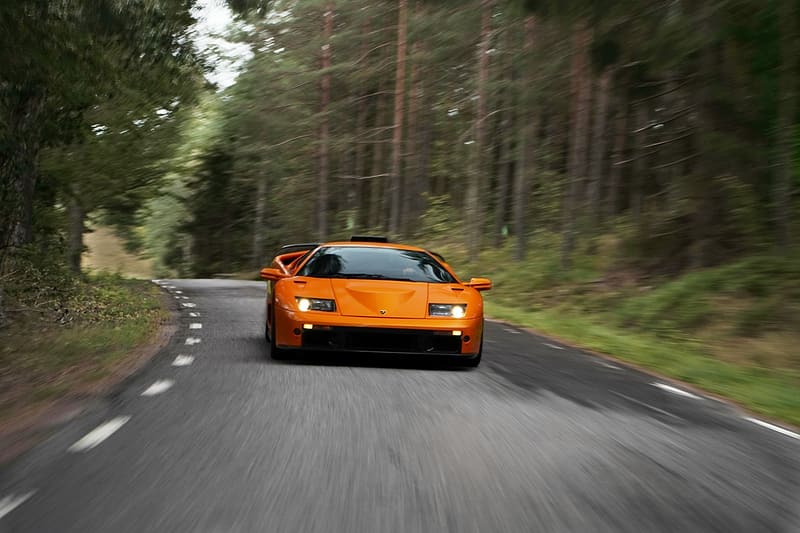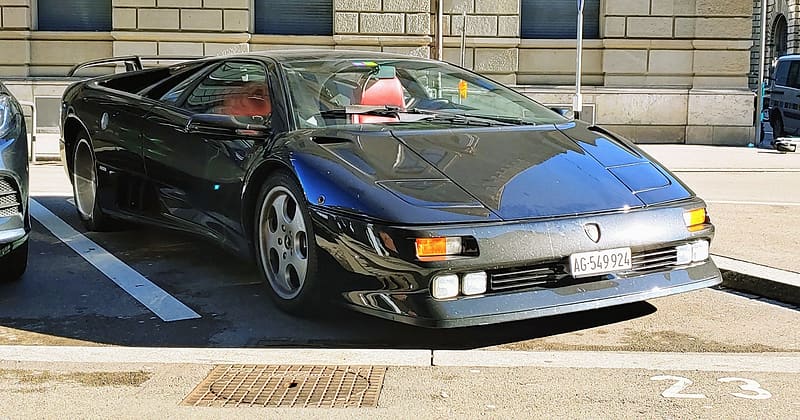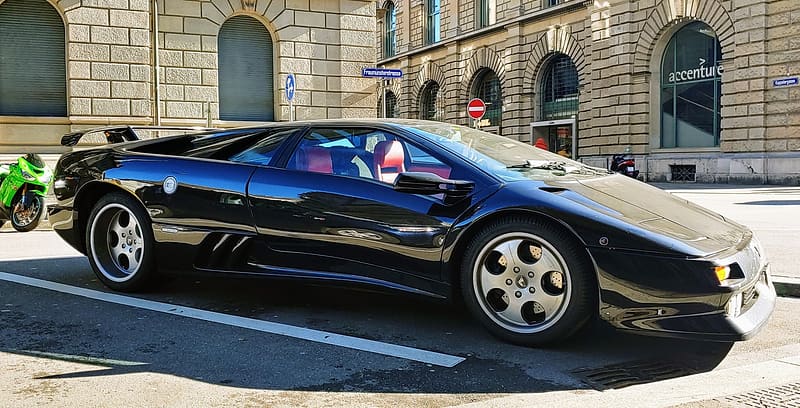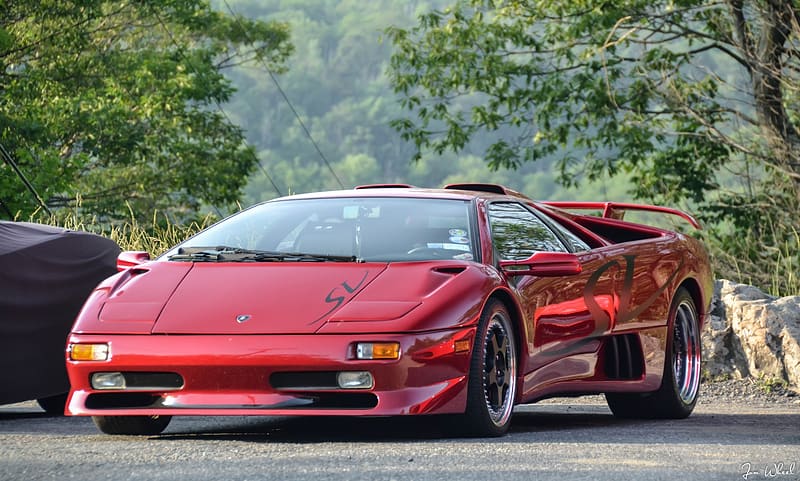
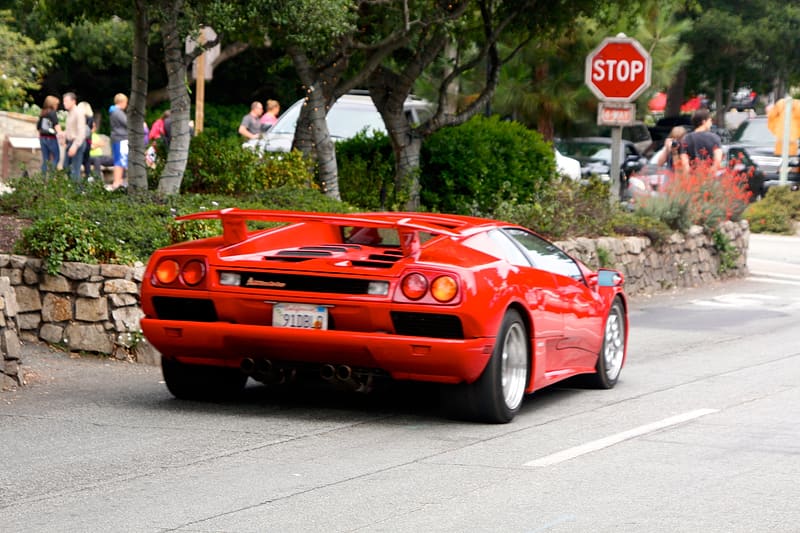
Lamborghini Diablo

The Countach’s successor and the first production Lamborghini to top 200 mph: Gandini’s last V12 wedge.

Uncommon· 20 pts1990–2001Out of production2,903 built23 variants
Lamborghini Diablo
Built2,903all versions
Years1990–2001Out of production
Value today$2.42MRecent prices, by variant
Power485–646 hpBy version
0–60 mph4.5 sQuickest version
Top speed208 mphFastest version
On ExoticSpotter1,071662 spotters · 86 places

Every Diablo

23 variants, by generation: what each one is, and how to tell it apart on the street.

Original

1990–1998 · 8 variants · 17 spots · 34 possible
Rare

Diablo

1990–1998 · 900 built · 485 hp

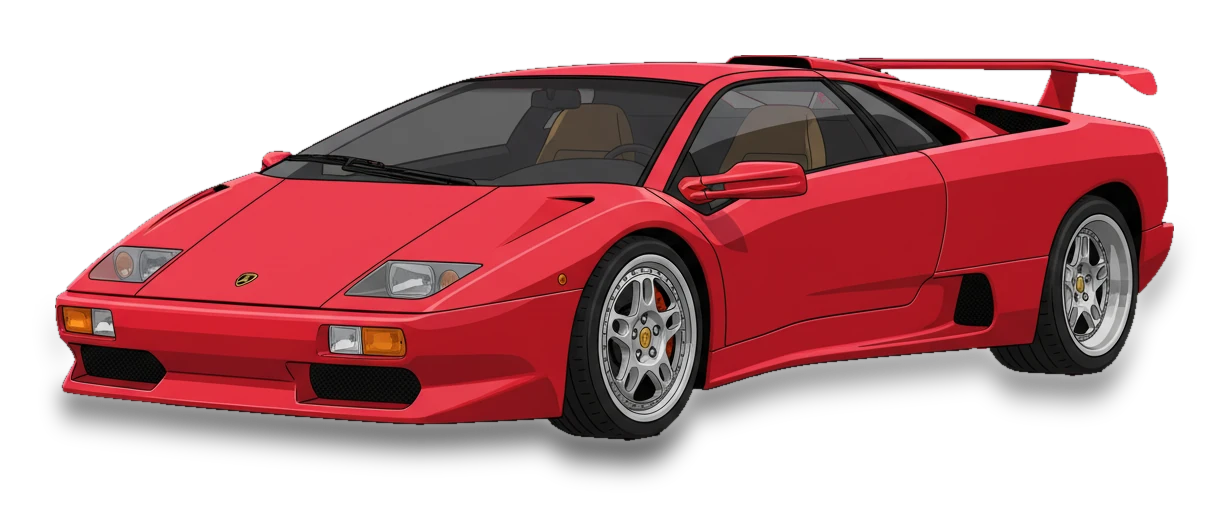
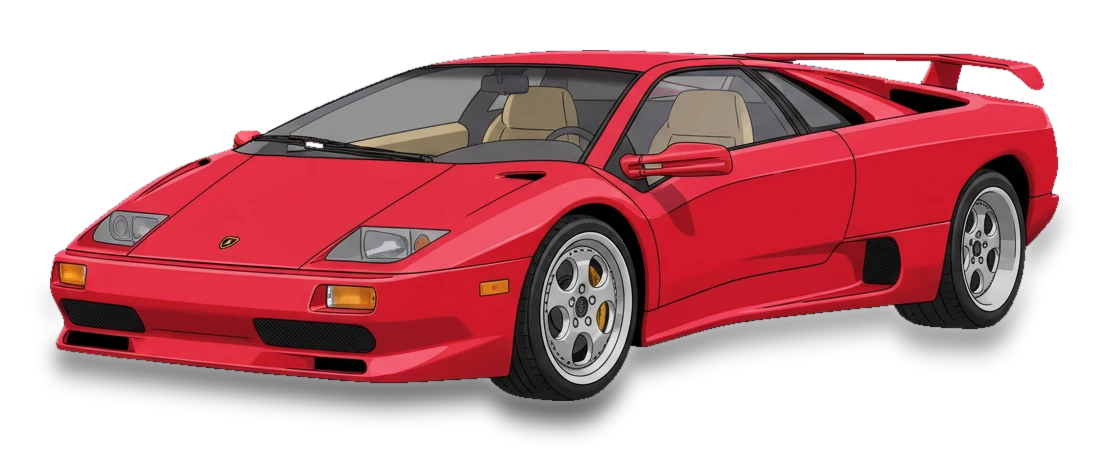
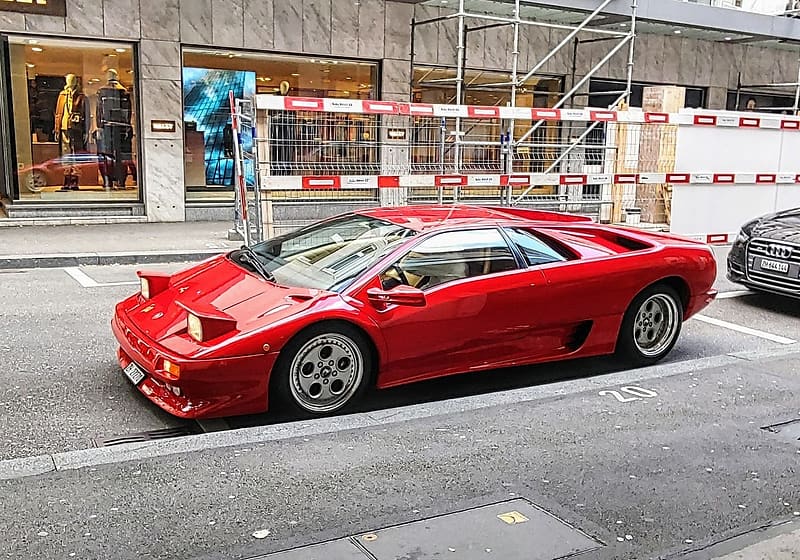
The original Diablo, presented on January 21, 1990, in Monte Carlo as the Countach’s successor. Marcello Gandini drew it, and Chrysler’s styling center in Detroit then softened his design. Its 5.7-liter V12 made 485 hp through the rear wheels only, with a quoted top speed of 325 km/h (202 mph). A big rear wing was an option.

How to spot one

Pop-up headlights and a front bumper without the brake-cooling intakes under the driving lights that the VT added, and no VT or SV badge on the tail.
6 spots + 1 possible · Photos
Not sorted yetIts spots are among the unsorted onesVery rare

Diablo VT

1993–1998 · 400 built · 485 hp

The VT (for Viscous Traction) of 1993 was Lamborghini’s first four-wheel-drive sports car: a viscous center coupling sends up to 25 percent of the torque to the front wheels when the rears lose grip. It kept the 485 hp V12 and added power steering, four-piston Brembo brakes and electronically adjustable dampers. It weighed 1,625 kg against the two-wheel-drive car’s 1,576 kg.

How to spot one

Air intakes under the front driving lights for brake cooling, larger intakes ahead of the rear wheels and a VT badge on the tail. Otherwise an early VT looks like the base Diablo, pop-up lights included; the rear wing was optional on both.
2 possible · help confirm
Not spotted yetBe the firstVery rare

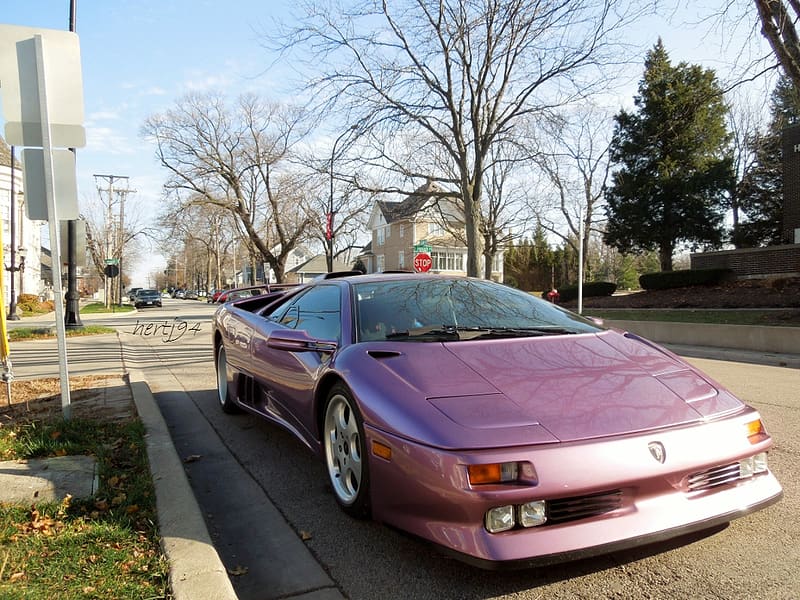
Diablo SE30

1993 · 150 built · 518 hp

Built for Lamborghini’s 30th anniversary, unveiled in September 1993 at Sant’Agata and limited to 150 cars, 25 of them for the US. It is a lighter, rear-wheel-drive Diablo: engine tuning raised output to 518 hp, Plexiglas side windows replaced the power windows, and air conditioning and power steering were left out. It weighed 1,451 kg.

How to spot one

A reshaped front with straked brake ducts and a deeper spoiler, the bull badge moved onto the nose between the indicators, slats over the rear window, a standard rear wing, magnesium wheels and SE30 badges. The launch color was a metallic purple, but buyers could choose any color.

28 possible · help confirm
Legendary

Diablo SE30 Jota

1995 · 28 built · 587 hp

A factory upgrade kit for the SE30, developed by Lamborghini Engineering in 1995. Lambocars says 28 kits were made: 12 fitted at the factory, 14 sold to SE30 owners for dealer installation and 2 kept as spares; Wikipedia puts the cars converted at about 15. Engine work lifted output to 587 hp.

How to spot one

An SE30 with two large air scoops on the engine cover that stick up above the roofline, plus a small Jota logo on the rear.

6 spots + 29 possible · Photos
Not sorted yetIts spots are among the unsorted onesVery rare

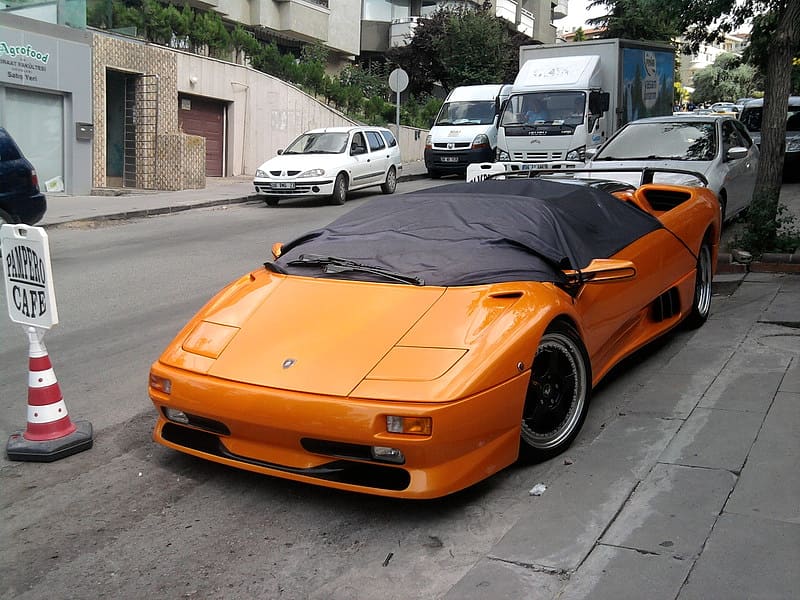
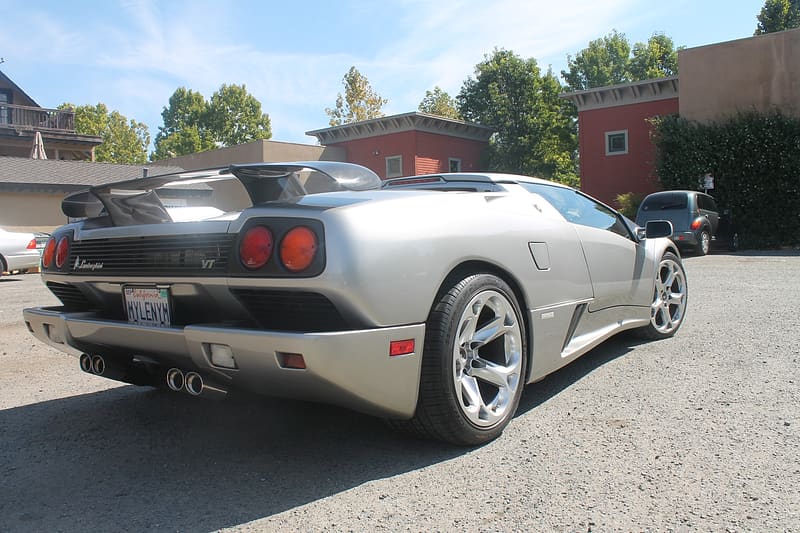
Diablo VT Roadster

1995–1998 · 200 built · 485 hp

The open Diablo, previewed as a prototype at the 1992 Geneva show and built from 1995 to 1998 with all-wheel drive. Its carbon-fiber targa roof panel stows above the engine lid. In 1998 variable valve timing raised power to 523 hp, and the wheels grew from 17 to 18 inches.

How to spot one

Besides the removable roof, the front bumper has two rectangular and two round driving lights instead of the coupe’s four rectangular ones, with straked brake ducts; the engine lid is reshaped and the exhaust tips are oval.

2 possible · help confirm
Not sorted yetIts spots are among the unsorted onesVery rare

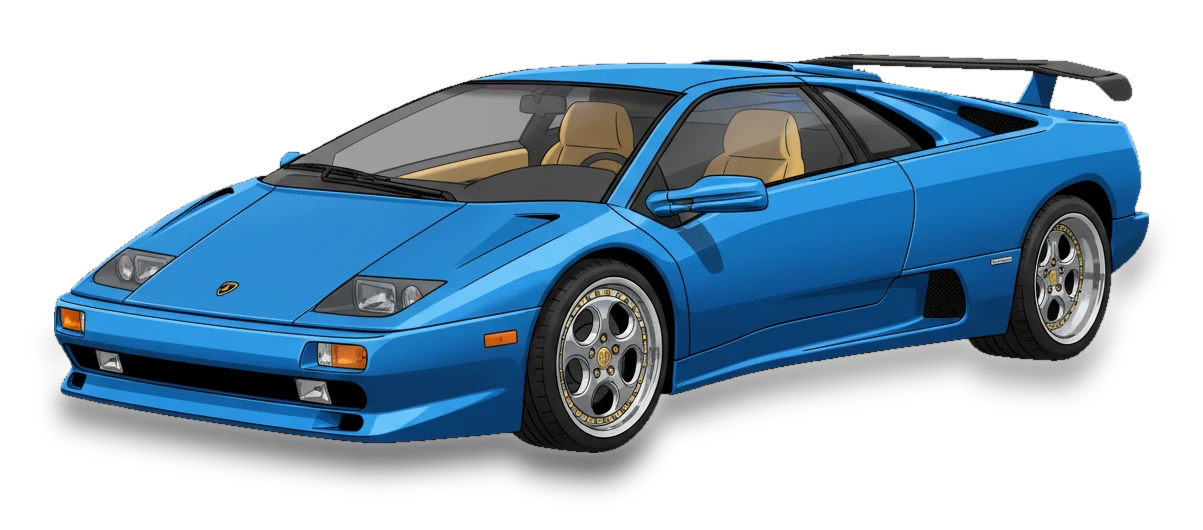
Diablo SV

1995–1998 · 250 built · 503 hp

Shown at the 1995 Geneva show, the SV revived the Super Veloce name. It is a simpler, rear-wheel-drive Diablo with the V12 raised to 503 hp, 18-inch wheels and a standard adjustable rear wing. About 250 were built through 1998.

How to spot one

Often big SV decals on the doors (they were optional), a standard rear wing with an adjustable center section, two fog lights in the front bumper instead of four lamps, extra brake-cooling ducts and a black panel between the taillights.

2 possible · help confirm
Legendary

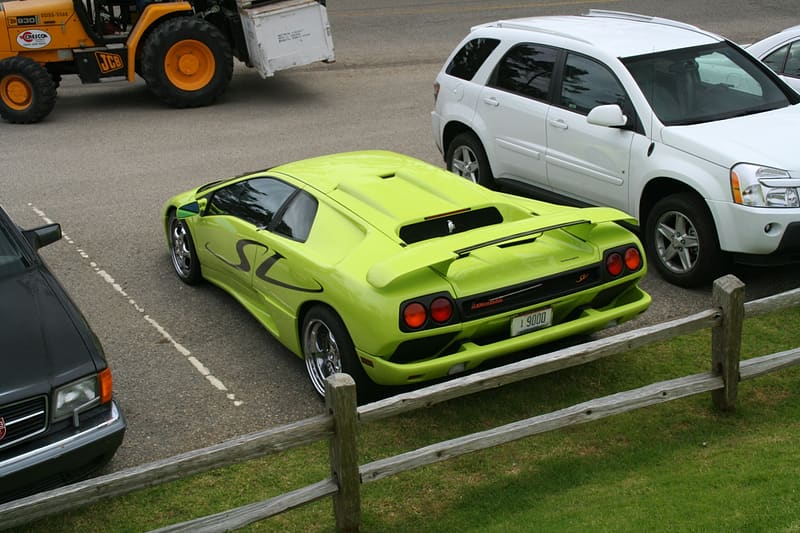
Diablo SV Monterey Edition

1998 · 20 built

A run of 20 SVs for the US market in 1998. Mechanically it matched the regular 1998 SV, with 503 hp. Lambocars notes it was the last Diablo built with pop-up headlights. One, car No. 3, was driven by Mario Andretti at Lamborghini’s Running of the Bulls event.

How to spot one

An SV with SE30-style air intakes ahead of the rear wheels and pop-up headlights, painted in bright colors such as Lime Green, Pearl Yellow, Verde Scandal, Le Mans Blue or Lightning Blue.

2 spots + 2 possible · Photos
Legendary

Diablo SV Roadster

1998 · 2 built

An SV roadster: the SV’s rear-wheel drive and bodywork with the VT Roadster’s removable roof. Only two were built, a prototype and one car completed on April 6, 1998, for Milan dealer Emanuele Conforti, making it the rarest series-production Lamborghini. RM Sotheby’s offered the Conforti car in December 2023.

How to spot one

A Diablo roadster with the SV’s front bumper, side skirts, big rear wing and SV decals. The Conforti car is yellow with a black interior and black wheels.

3 spots + 3 possible · Photos

Facelift

1999–2001 · 9 variants · 22 spots · 62 possible
Illustration of a Diablo SV (facelift)IllustrationNot spotted yetVery rare

Diablo SV (facelift)

1999 · 100 built · 523 hp

The 1999 update of the SV. Pop-up headlights gave way to fixed glass-covered units, power rose to 523 hp with variable valve timing, and ABS and 18-inch wheels became standard. Inside it got a new wave-shaped dashboard and dual airbags. SV production ended after the 1999 model year.

How to spot one

Fixed headlights, with lenses borrowed from the Nissan 300ZX, on the SV body with its rear wing and, often, SV decals.

Help sort them
Illustration of a Diablo VT (facelift)IllustrationNot spotted yetVery rare

Diablo VT (facelift)

1999–2000 · 150 built · 523 hp

The 1999 update of the all-wheel-drive VT coupe, with the same changes as the SV: fixed headlights, 523 hp, Kelsey-Hayes ABS, bigger cross-drilled brakes behind 18-inch wheels and a new dashboard. US cars got their own front and rear bumpers and the vertical rear brake ducts of the original VT Roadster.

How to spot one

Fixed headlights (from the Nissan 300ZX) set it apart from earlier VTs. Next to the 2000 VT 6.0 it lacks the two large front intakes, and its turn signals are not below the headlights.

Help sort them
Illustration of a Diablo VT Alpine EditionIllustrationNot spotted yetLegendary

Diablo VT Alpine Edition

1999 · 12 built

A 1999 run of 12 VT coupes for the US market, celebrating Lamborghini’s ties with Alpine car audio. Each had an Alpine multimedia unit with navigation, a DVD player, a six-disc CD changer and a radar/laser detector, plus carbon interior trim and Alpine logos with a production number on the headrests. The engine was standard.

How to spot one

Carbon touches outside: fins in the intakes ahead of the rear wheels, taillight bezels and “eyebrows” over the headlights, plus a body-colored SV-style wing with a carbon fin. Most have chrome wheels with gold-plated screws.

1 possible · help confirm
Not spotted yetBe the firstLegendary

Diablo VT Roadster Momo Edition

1999 · 12 built

Twelve VT Roadsters made for the US in 1999 to mark Lamborghini’s partnership with Momo, introduced on that year’s Running of the Bulls drive from Beverly Hills to Monterey. It was a cosmetic package: a two-tone red and beige interior with Momo four-point belts and Momo logos on the seats and mats. The 523 hp engine was unchanged, and the list price was $275,000.

How to spot one

A yellow or red VT Roadster; later cars have chrome Momo wheels, while early ones kept the standard 18-inch Roadster wheels.

2 possible · help confirm
Legendary

Diablo VT Roadster Millennium Edition

2000 · 30 built

A final run of 30 VT Roadsters for the 2000 model year, officially the Millennium Metallico Roadster: 10 for the US and 20 for Europe and the Middle East. It used the SV’s shorter rear differential ratio (2.53:1 instead of 2.41:1) for quicker acceleration and had a two-tone leather interior.

How to spot one

US cars are Titanium Metallic with a clear-coated carbon rear wing and gray-and-black seats; European cars could be yellow with yellow-and-black leather, and some had no wing.

2 spots + 2 possible · Photos
Legendary

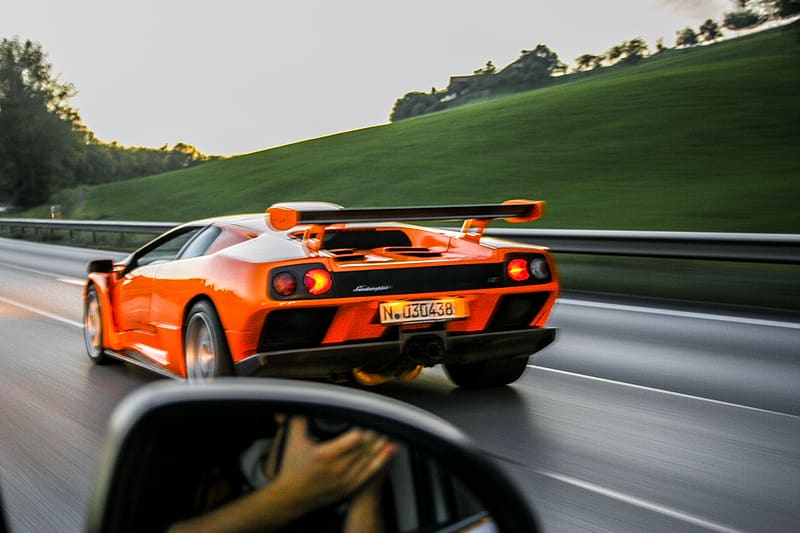
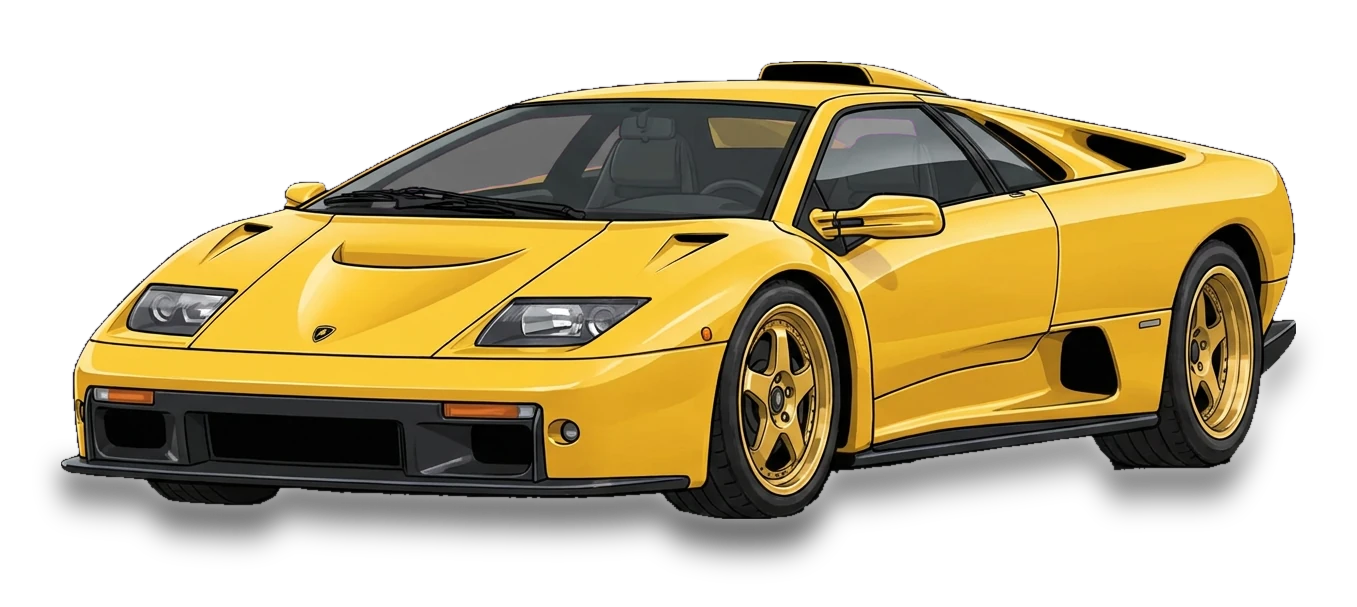
Diablo GT

1998–2000 · 83 built · 567 hp · $2.42M

A track-focused, rear-wheel-drive Diablo shown at the March 1999 Geneva show and sold in Europe, though some were imported into the US. Its V12 was stroked to 6.0 liters for 567 hp, and almost all of the body is carbon fiber; only the steel roof and aluminum doors carried over. Wikipedia counts 83 built against 80 planned.

How to spot one

A black carbon front air dam with big brake ducts and a central oil-cooler vent, a ram-air scoop rising above the roof, NACA ducts on the front fenders, and a carbon diffuser with two center exhausts where the rear bumper was. It has three-piece OZ wheels and a standard rear wing.

17 spots + 2 possible · Photos
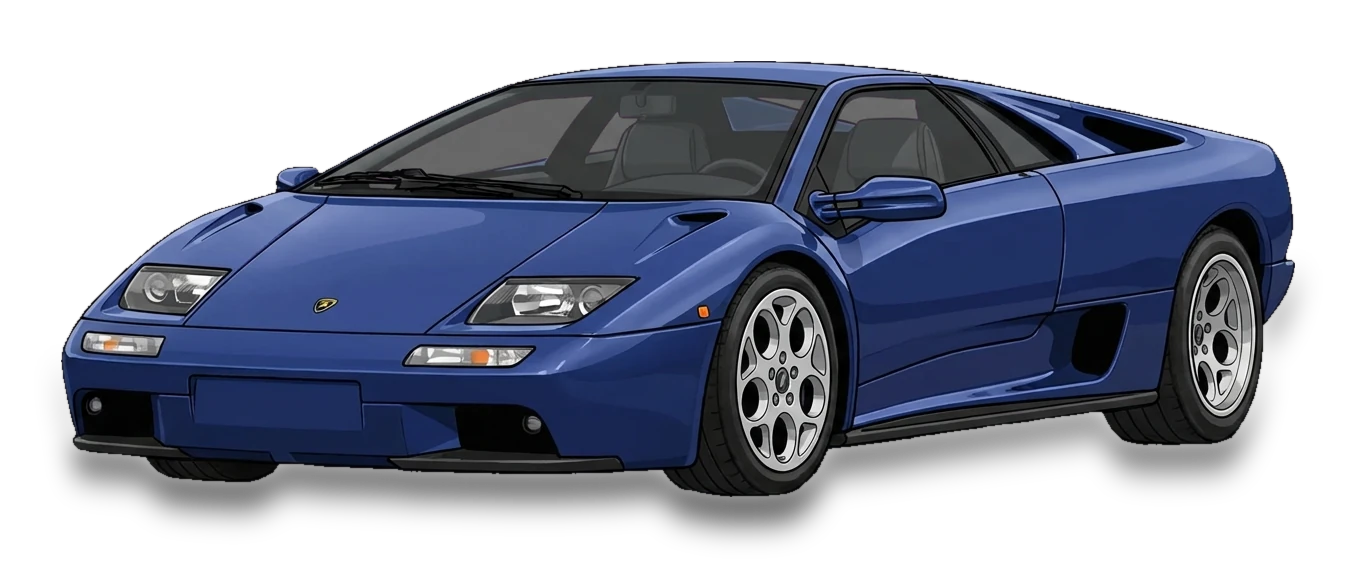
Illustration of a Diablo VT 6.0IllustrationNot spotted yetVery rare

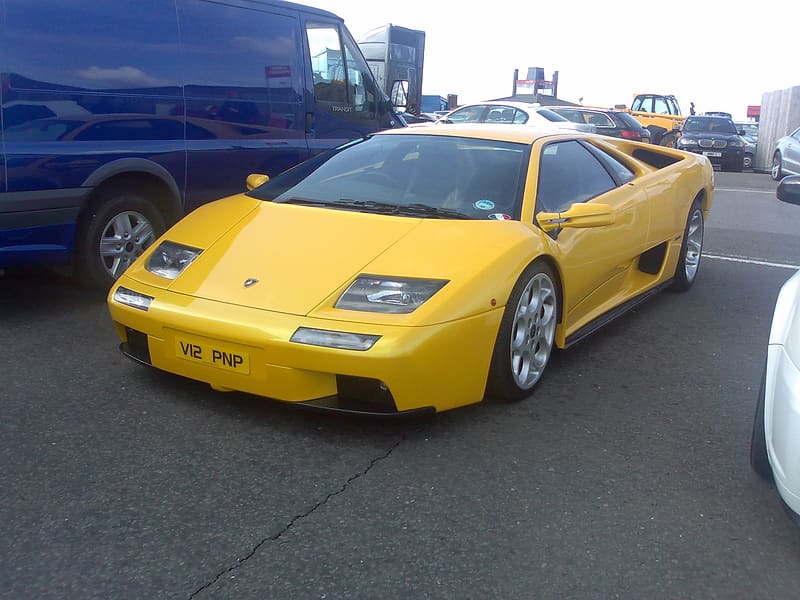
Diablo VT 6.0

2000–2001 · 343 built · 542 hp

The last regular Diablo, reworked after Audi bought Lamborghini and launched in 2000. Luc Donckerwolke restyled the nose, intakes and interior, and the V12 grew to 6.0 liters with 542 hp. It came only as a coupe with all-wheel drive, though rear-wheel drive could be special-ordered; 343 were built before the Murciélago took over in 2001.

How to spot one

A new front with two large air intakes and the turn signals moved below the fixed headlights, body-colored taillight surrounds, no small air inlets on top of the rear fenders, and 18-inch OZ “phone dial” wheels with five holes.

57 possible · help confirm
Legendary

Diablo VT 6.0 SE

2000–2001 · 42 built · 542 hp

The final Diablo edition, shown at the 2001 Geneva show and limited to 42 cars (Lambocars says 40, 20 in each color). Its two colors were chosen to evoke sunrise and sunset. Power stayed at 542 hp, but it added magnesium intake manifolds, shorter gearing, carbon trim woven with titanium thread, titanium cockpit details and Alpine navigation.

How to spot one

A VT 6.0 in Oro Elios gold metallic or Marrone Eklipsis, a brown-maroon that shifts color with the light, with Lamborghini-logo brake calipers instead of Brembo ones.

3 spots + 57 possible · Photos

Race cars

4 variants · 0 spots · 11 possible
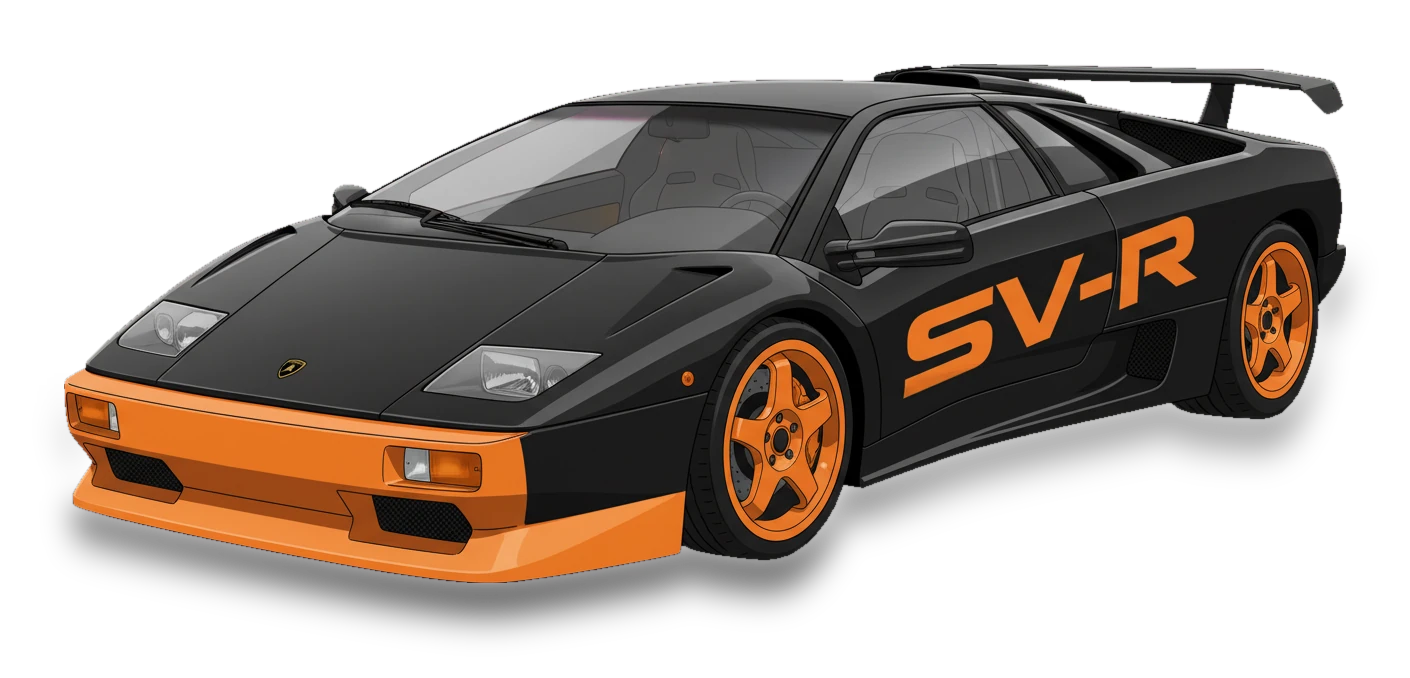
Illustration of a Diablo SV-RIllustrationNot spotted yetLegendary

Diablo SV-R

1996–1997 · 31 built · 533 hp

The first Lamborghini built by the factory for racing, announced at the 1996 Geneva show for a one-make series, the Lamborghini Supertrophy. Its first round supported the 1996 Le Mans 24 Hours, where all 28 cars entered finished. Based on the rear-wheel-drive SV, it had 533 hp, a six-speed gearbox and a roll cage, and weighed 1,385 kg; each sale included a season of factory support.

How to spot one

Fixed lights or air intakes where the pop-up headlights were, a deep black front spoiler and side skirts, a big adjustable carbon rear wing, Plexiglas windows with sliding panels and center-lock wheels.

5 possible · help confirm
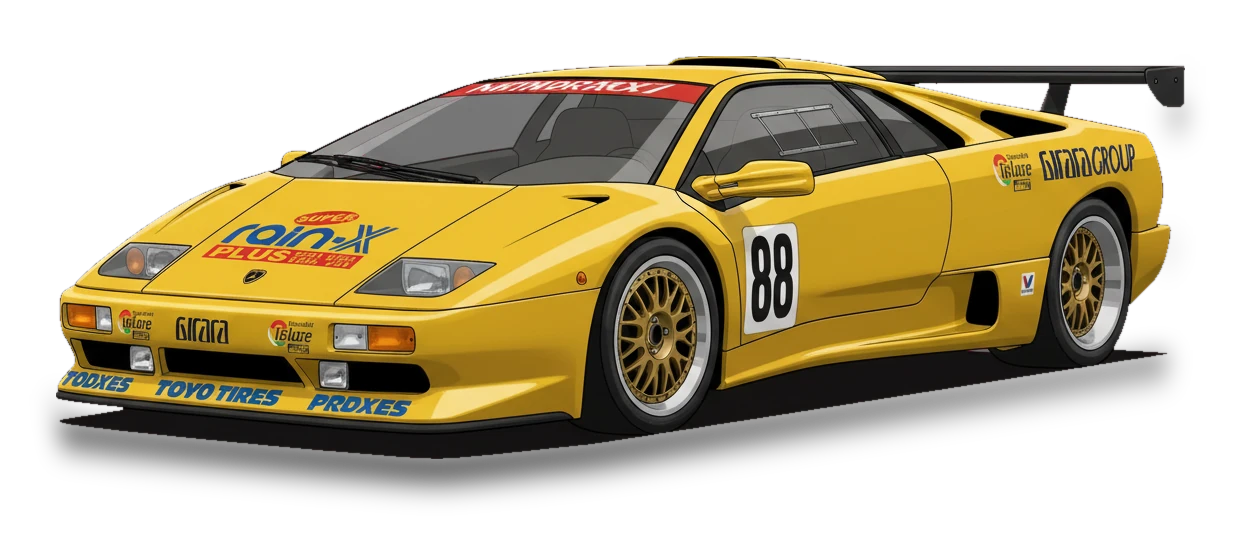
Illustration of a Diablo Jota JGTCIllustrationNot spotted yetLegendary

Diablo Jota JGTC

1995–1996 · 3 built

Three Jota race cars Lamborghini built for the Japan Lamborghini Owners Club (JLOC) to enter Japan’s GT championship (JGTC): two for racing and one road-legal homologation car. Based on the Diablo SE, they raced in 1995 and 1996 without scoring a championship point; PO.02 was prepared for endurance racing and ran the Suzuka 1000 km. All three still exist in Japan.

How to spot one

Plexiglas side windows with sliding panels, a large adjustable rear wing and Jota-style scoops on the engine cover.

Be the first to spot one
Illustration of a Diablo GT1 StradaleIllustrationNot spotted yetLegendary

Diablo GT1 Stradale

1997 · 2 built · 646 hp

Lamborghini had Signes Advanced Technologies (SAT) of Toulon, France, build a Diablo for GT1 racing. SAT made two in 1997 on a new tubular steel chassis with a carbon body and a 6.0-liter V12 of 646 hp: a race car, which JLOC raced in Japan from 1997, and a road-legal Stradale. At 1,050 kg it is the lightest Diablo.

How to spot one

A very deep chin spoiler, longer front and rear sections, NACA ducts near the doors and air intakes behind the roof; the road car lacks the race car’s rear wing.

Be the first to spot one
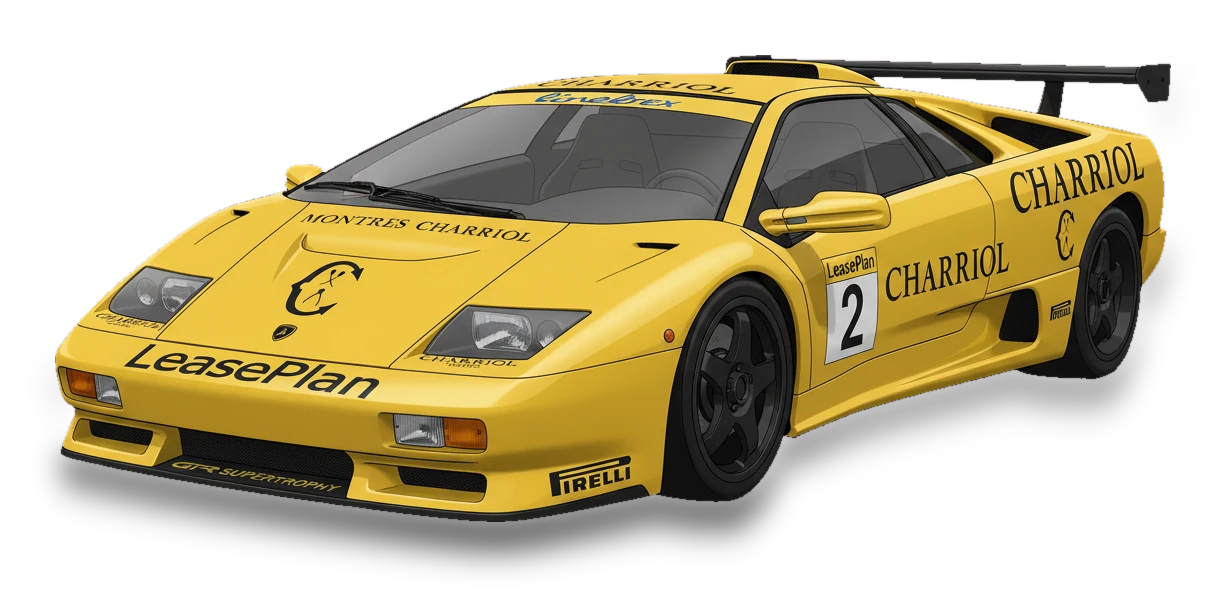
Illustration of a Diablo GTRIllustrationNot spotted yetLegendary

Diablo GTR

1999–2001 · 40 built · 582 hp

The race version of the Diablo GT, unveiled at the Bologna show in December 1999 for Lamborghini’s GTR Supertrophy, which replaced the SV-R series in 2000. Its 6.0-liter V12 makes 582 hp, and the stripped cabin has a single carbon seat, a roll cage and a fire system. Wikipedia counts 40 built; Lambocars says 30.

How to spot one

A Diablo GT body with an even larger rear wing bolted to the chassis, Plexiglas windows, 18-inch center-lock magnesium wheels and an emergency fuel cutoff switch on the left front fender.

6 possible · help confirm

Concepts and coachbuilt

2 variants · 0 spots
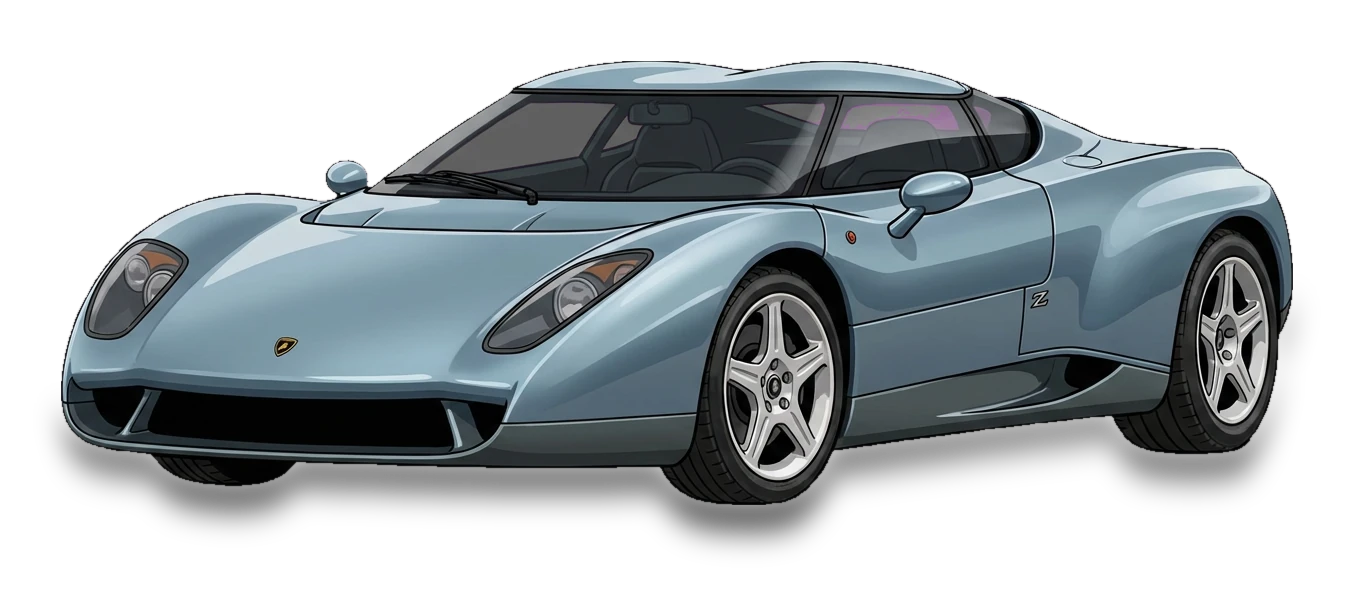
Illustration of a Zagato RaptorIllustrationNot spotted yetLegendary

Zagato Raptor

1996 · 1 built

A one-off concept by Zagato, designed by Norihiko Harada with Alain Wicki and shown at the 1996 Geneva show. It used the Diablo VT’s chassis, 5.7-liter V12 and all-wheel drive under a carbon-fiber body much lighter than the Diablo’s. Lamborghini declined to build it, and Wicki kept the car until it was auctioned at Geneva in 2000.

How to spot one

It has no conventional doors: the whole middle of the car, with Zagato’s double-bubble roof, tilts up and forward like a fighter-jet canopy.

Be the first to spot one
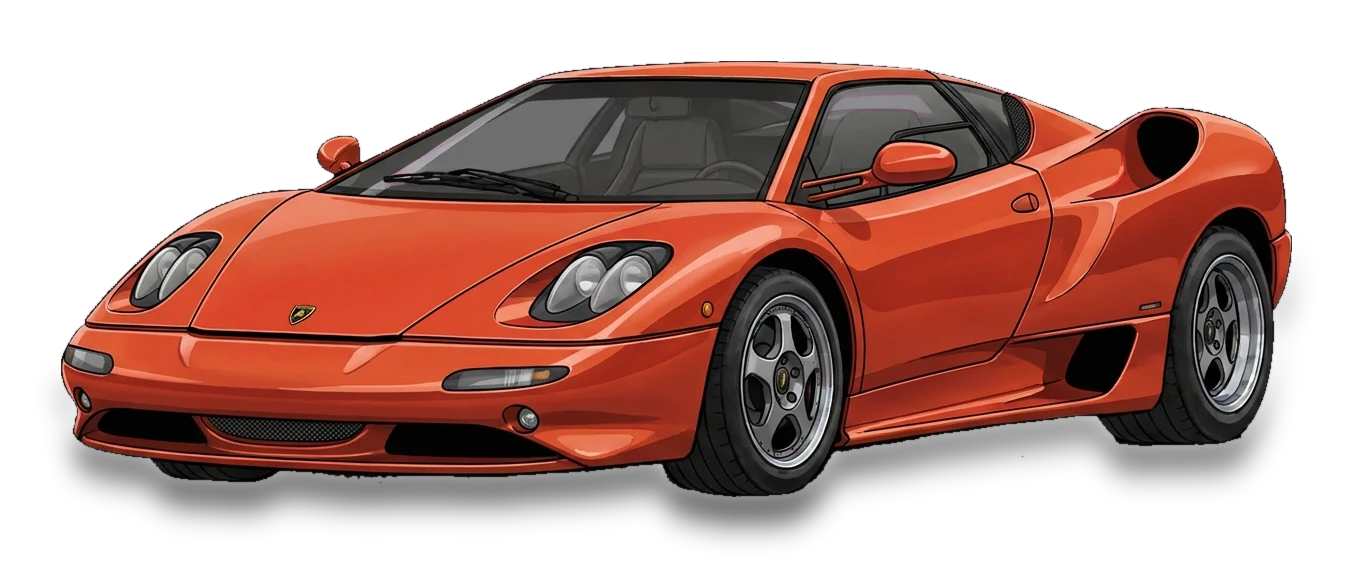
Illustration of a Lamborghini CantoIllustrationNot spotted yetLegendary

Lamborghini Canto

1997 · 5 built

A prototype for the Diablo’s successor, codenamed L147 and designed by Zagato’s Norihiko Harada after Lamborghini passed on a Marcello Gandini proposal. It used Diablo running gear with a 6.0-liter V12 and was due at the 1999 Geneva show, but Ferdinand Piëch, head of new owner Volkswagen Group, rejected the design shortly before. Wikipedia says five were built; evo says Audi ordered 12 prototypes destroyed and two survived.

How to spot one

Very large air intakes on the rear fenders, which Piëch disliked and which were later made smaller.

Be the first to spot one

1,032 Diablo spots need a variant

Most spotters just write “Diablo”. 1,032 of these have a clue in the description and wait in Help identify: when three spotters agree, the spot gets its variant.

39 of 1,071 sorted (4%) · 1,032 questions waiting
Help sort 1,032
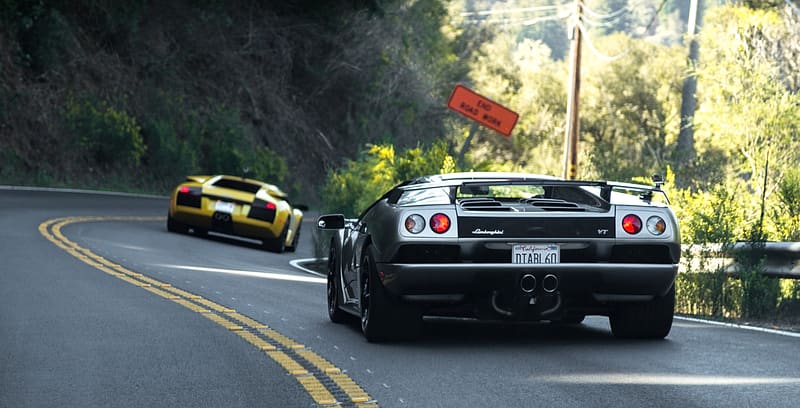
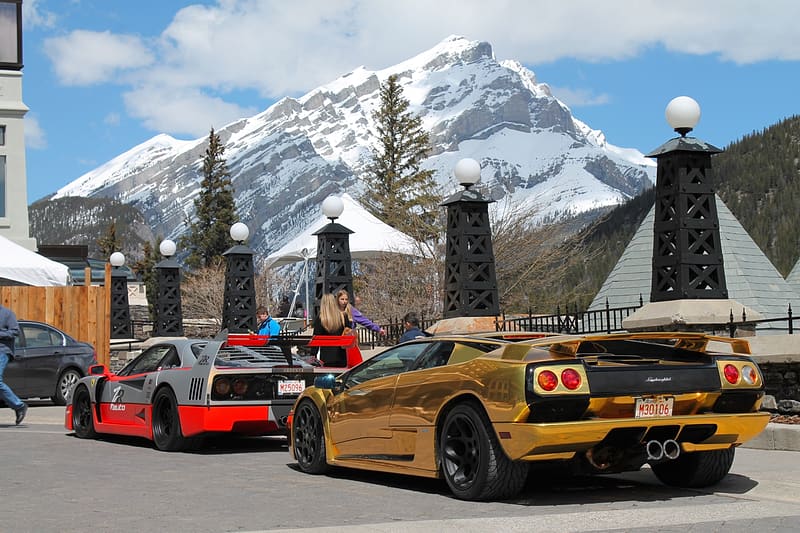
Lamborghini Diablo spotted in San Francisco, CaliforniaLamborghini Diablo spotted in Banff, CanadaLamborghini Diablo spotted in Miami, FloridaLamborghini Diablo spotted in Autobahn, GermanyLamborghini Diablo spotted in Random, SwedenLamborghini Diablo spotted in Zurich, SwitzerlandLamborghini Diablo spotted in Zurich, SwitzerlandLamborghini Diablo spotted in Zurich, Switzerland