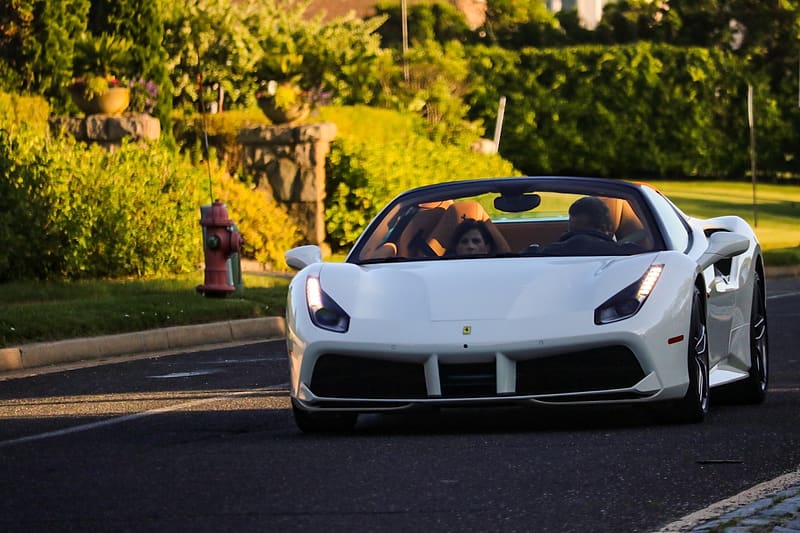
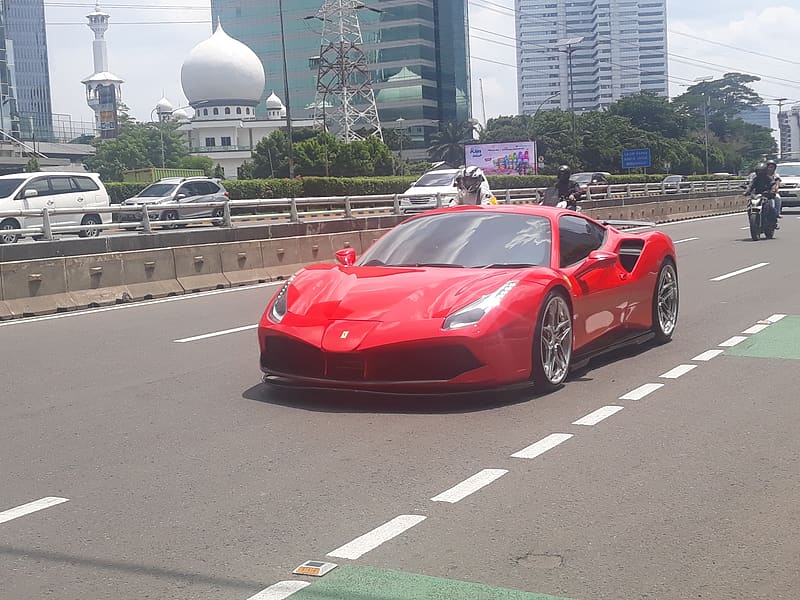
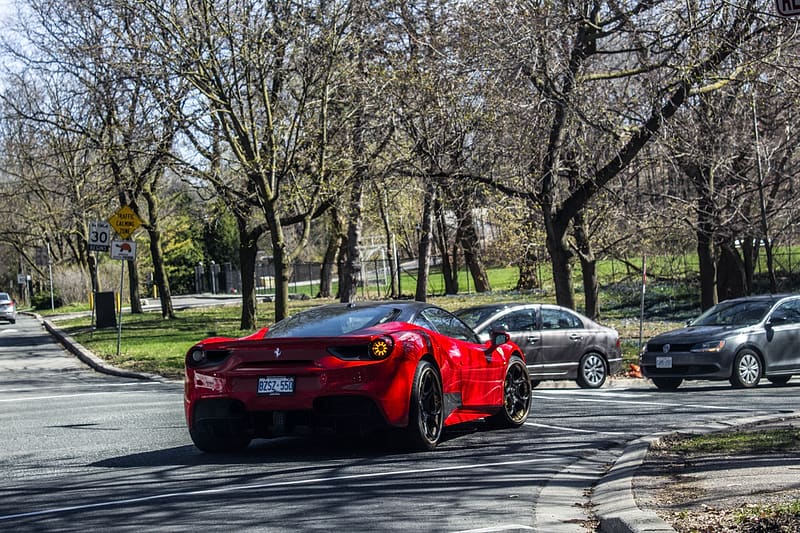
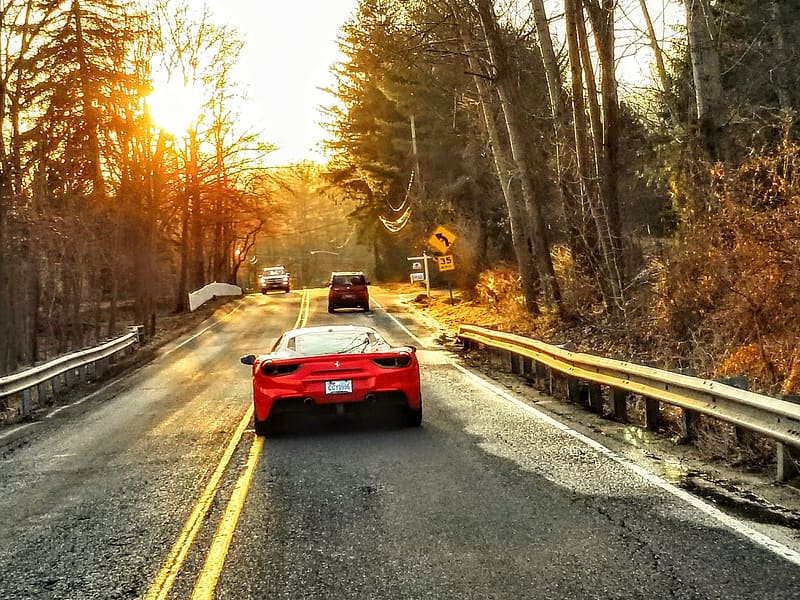
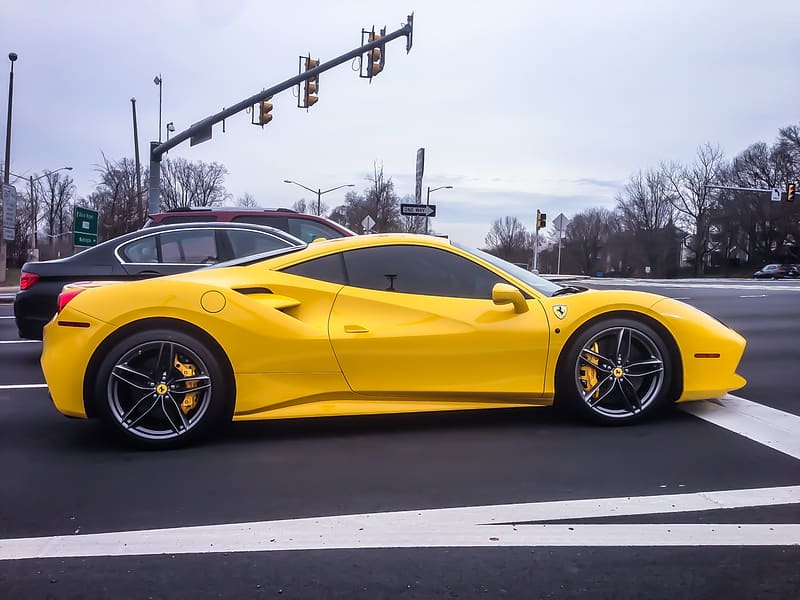
Unveiled at the 2015 Geneva show to replace the 458 Italia, with a 3.9-liter twin-turbo V8 making 661 hp, the first turbocharged mid-engined V8 Ferrari since the F40. The Ferrari Styling Centre under Flavio Manzoni designed it, and Ferrari claimed 50% more downforce than the 458.
How to spot one
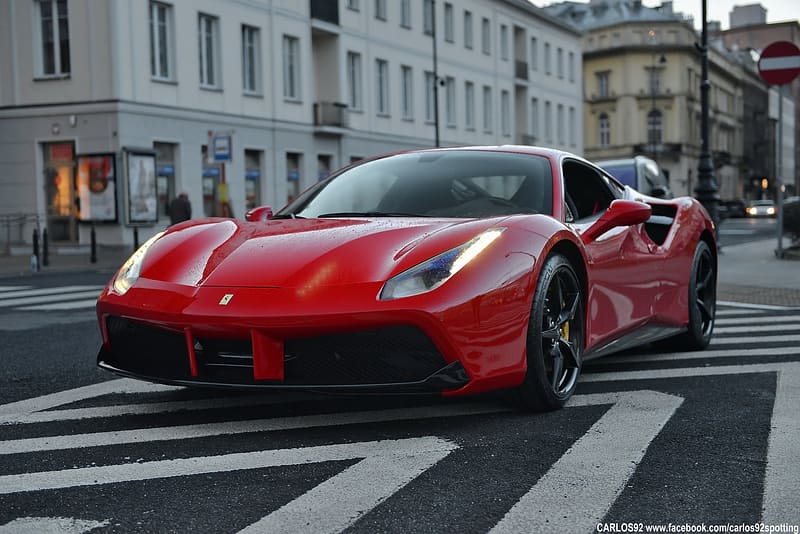
Large scooped side intakes split in two by a horizontal blade, a nod to the 308 GTB; a double front spoiler; round LED taillights; and a blown spoiler built into the tail. Unlike the Pista, it has no vent across the front of the hood.
The open 488, first shown in July 2015 and launched at that September’s Frankfurt show. It has the GTB’s 661 hp engine and 3.0-second 0–100 km/h time, and its folding hard top makes it only 50 kg heavier than the coupe.
How to spot one
The GTB’s nose, split side intakes and round taillights, with a folding hard top.
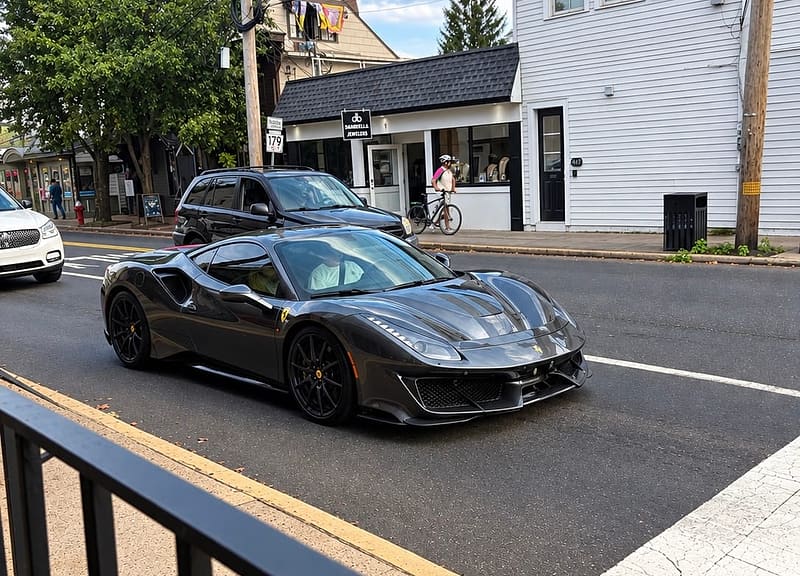
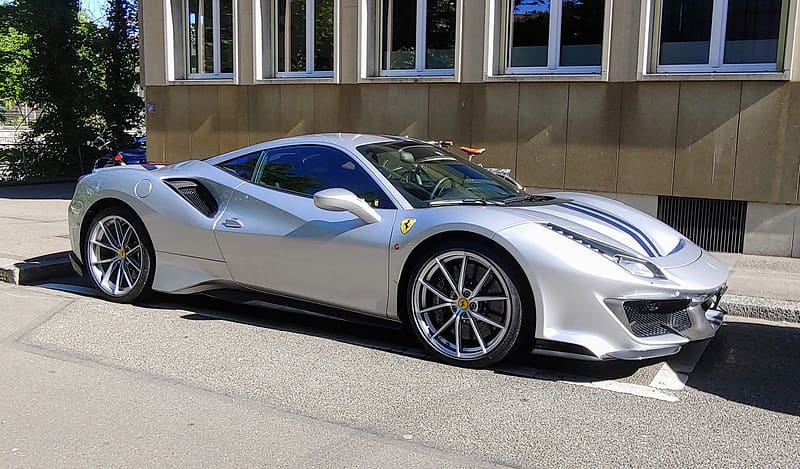
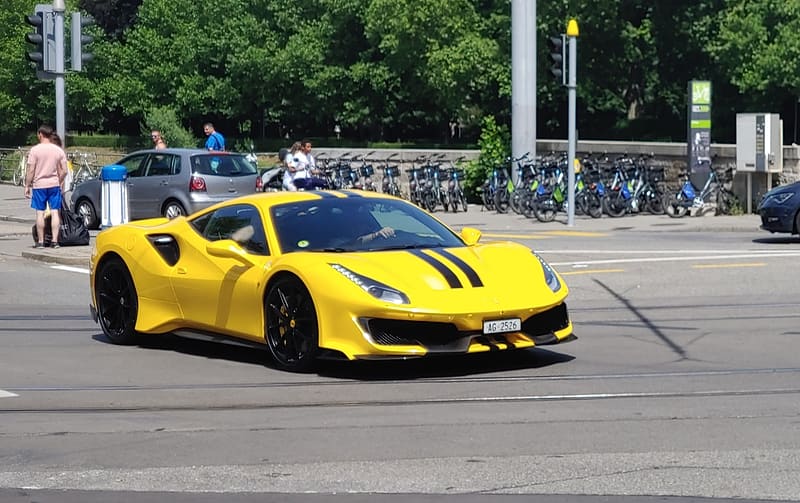
Unveiled at the 2018 Geneva show as the track-focused 488, built with lessons from the 488 Challenge and GTE race cars; pista is Italian for track. Power rose to 710 hp, dry weight fell about 90 kg to 1,280 kg, and downforce rose 20% over the GTB.
How to spot one
A vent across the front of the hood (the F1-inspired S-Duct), a taller and longer rear spoiler, and often a stripe from nose to tail. Carbon fiber wheels were an option.
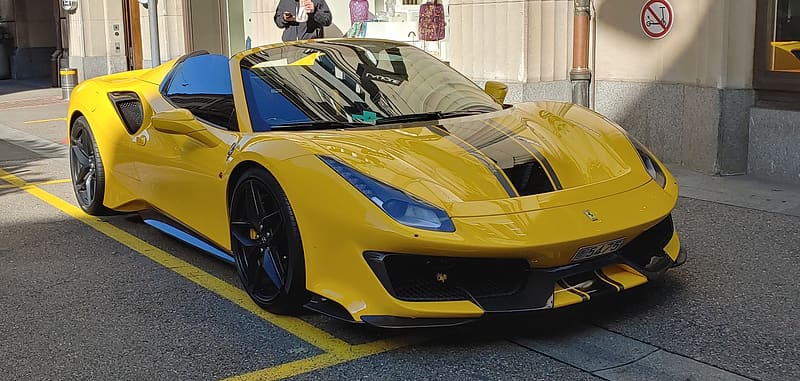
The open Pista, unveiled at the 2018 Pebble Beach Concours d’Elegance as Ferrari’s 50th factory convertible. It has the coupe’s 710 hp engine and performance, with a dry weight of 1,380 kg, 100 kg more than the Pista coupe and about 50 kg less than a 488 GTB.
How to spot one
Pista details (the S-Duct hood vent, taller spoiler) with a folding hard top. The optional center stripe widens toward the tail and runs across the solid rear deck, and new 20-inch ten-spoke star wheels were standard.
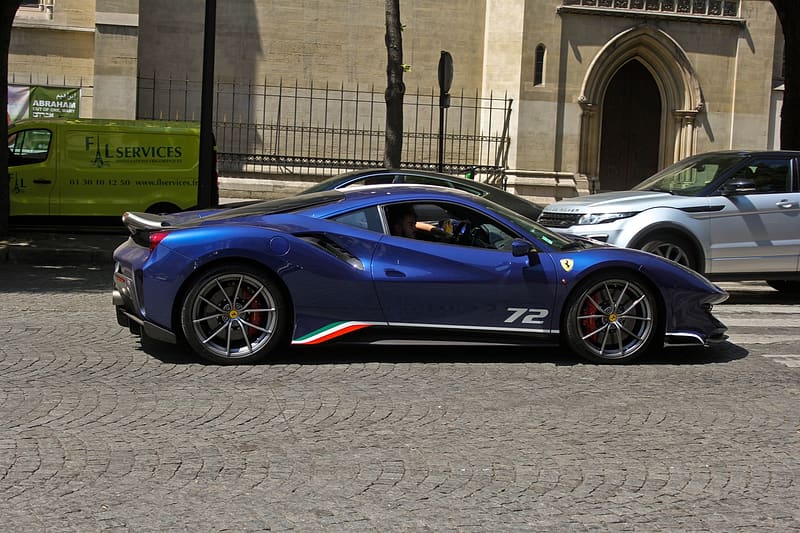
A 488 Pista specification from Ferrari’s Tailor Made program, revealed at Le Mans in June 2018 and sold only to customers in Ferrari’s racing programs. It celebrates the AF Corse #51 488 GTE that won the 2017 World Endurance Championship drivers’ and manufacturers’ titles.
How to spot one
An Italian-flag stripe over Rosso Corsa, Blu Tour de France, Nero Daytona or Argento Nürburgring paint, a race number of the owner’s choosing (51 on the launch car), and a WEC laurel and PRO badge on the hood.
A targa-topped car built on the 488 Spider to mark Ferrari’s 50 years in Japan, revealed in Tokyo on December 13, 2016. Ten were made, each tailored to its buyer. The V8 was raised to 681 hp, and the two-piece carbon fiber roof stows behind the seats.
How to spot one
A black band rising from the low nose back to the intakes behind the doors, a removable targa roof, slim headlights, four taillights and a diffuser shaped like jet-engine afterburners.
A one-off on the 488 GTB for a customer with a passion for racing, unveiled at Fiorano in May 2018 after 18 months of work. The Ferrari Design Centre took the F40 as its reference, and the car kept the GTB’s twin-turbo V8.
How to spot one
Three-layer metallic red paint, a slatted carbon fiber engine cover with no rear glass, an F40-style integrated rear spoiler and very thin headlights.
A track-only one-off on the 488 GT3 race car, whose wheelbase is 50 mm longer than the road car’s, revealed in March 2019. The client started the project in 2015, making it Ferrari’s longest one-off development. Its carbon fiber body draws on 1960s racers such as the 330 P3/4, Dino and 250 LM, and since it races in no series its engine is not restricted.
How to spot one
A wedge-shaped carbon body with slit headlights and a wraparound windshield; on track it runs a large rear wing and 18-inch wheels, while for display it wears 21-inch wheels without the wing.
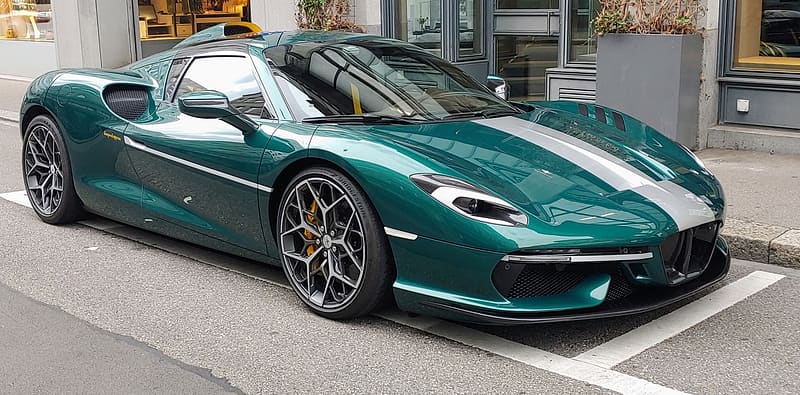
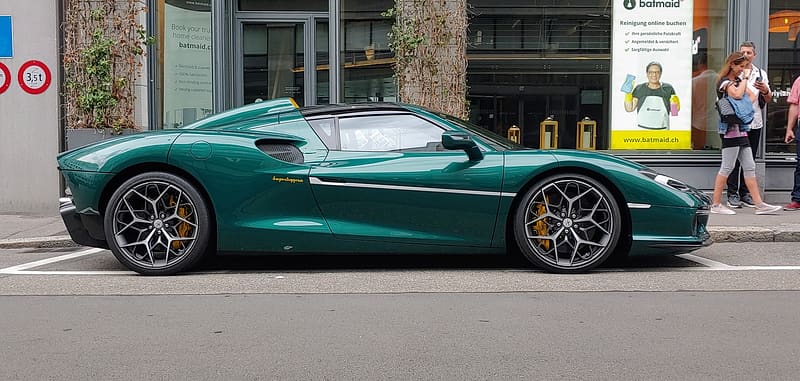
Carrozzeria Touring Superleggera's car for its 95th year, and the first mid-engined car it has built. It was revealed in early June 2021, and Touring said its first public showing would be The Quail during Monterey Car Week that August, followed by Salon Privé in England in September. The name joins Via per Arese, the Milan street where Touring is based, the initials (RH) of the client who commissioned the first car, and the 95 years since 1926. Touring takes a mid-engined Ferrari V8 donor, leaves its chassis and drivetrain alone, and gives it an all-carbon-fiber body, about 214 mm (8.4 inches) longer than a 488 GTB, plus a new cabin with separate "cocoons" for driver and passenger. Each car takes about 5,000 hours, roughly six months from the donor's arrival; buyers can supply their own donor or have Touring find one. Touring planned 18, each finished to order: the first in Verde Pino with silver bands, the second in red with a white nose after Alfa Romeo's GTA racers, the third in Gulf blue and orange, and the fifth, the Vento d'Oro of March 2024, in white with real gold leaf. Touring never published a price.
How to spot one
From a distance it reads as a mid-engined Ferrari, but the body is all Touring. Look for scissor doors (the 488 and F8 have conventional doors), a scoop running up the middle of the engine cover toward the roof, and extra air intakes on its shoulders. The nose has the Aero 3's grille with two "nostril" openings, and a thin bright aluminum line runs along the flank, broken by the front wheel arch, as on the Disco Volante. The tail is one smooth piece with no trunk opening, a large diffuser and an offset license plate. It is much longer than a 488 or F8 (4,782 mm against 4,568 and 4,611). The Aero 3, its Touring sibling, is front-engined, with a long hood and the cabin set well back.
The one-make race car revealed at the Finali Mondiali at Daytona in December 2016 for the 2017 Ferrari Challenge season. It was the series’ first turbocharged car, with 661 hp, and lapped Fiorano a second faster than the 458 Challenge Evo. The Evo update, unveiled at Mugello in 2019 for 2020, added downforce and was also sold as a kit for existing cars.
The one-make race car revealed at the Finali Mondiali at Daytona in December 2016 for the 2017 Ferrari Challenge season. It was the series’ first turbocharged car, with 661 hp, and lapped Fiorano a second faster than the 458 Challenge Evo. The Evo update, unveiled at Mugello in 2019 for 2020, added downforce and was also sold as a kit for existing cars.
The 488’s endurance racer for Le Mans and the World Endurance Championship, first raced at Daytona in January 2016. AF Corse won the 2017 WEC drivers’ and manufacturers’ titles with it, and the updated Evo won the GTE Pro class at Le Mans in 2019 with the #51 car.
The customer GT3 racer, which made its world debut at Albert Park, Melbourne, in March 2016 and won the Bathurst 12 Hour in February 2017. The 2020 Evo update won the Pro class of the 2021 Spa 24 Hours. Under racing rules its engine makes around 590 hp; the 296 GT3 replaced it.
The customer GT3 racer, which made its world debut at Albert Park, Melbourne, in March 2016 and won the Bathurst 12 Hour in February 2017. The 2020 Evo update won the Pro class of the 2021 Spa 24 Hours. Under racing rules its engine makes around 590 hp; the 296 GT3 replaced it.
A limited track-only car unveiled in November 2020, combining 488 GT3 and GTE hardware such as GTE suspension and GT3 brakes, free of racing’s performance-balancing limits. It makes up to 690 hp and was sold only to clients in Ferrari’s Club Competizioni GT program, for track days and those events.
Novitec, from Stetten in southern Germany, tunes Ferraris as Novitec Rosso, Lamborghinis as Novitec Torado, McLarens and Rolls-Royces. Its signature is the N-Largo wide body: flared fenders and a wider track, usually with carbon aero, forged wheels and a louder exhaust. On the 488 GTB, its best-known build is the N-Largo.
How to spot one
Noticeably wider fenders (N-Largo), carbon front lip, side skirts and rear spoiler, Novitec badges, and large forged wheels, often by Vossen.
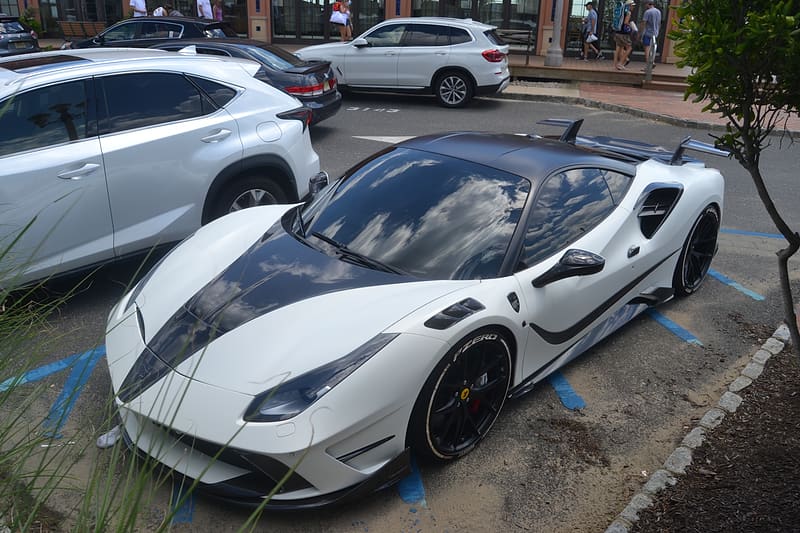
Mansory is a German tuner founded by Kourosh Mansory in 1989 and based in Brand, Bavaria. It is known for some of the boldest builds in the business: forged-carbon body kits, reshaped bumpers and hoods, big wings, loud two-tone paint and interiors, on Rolls-Royce, Bentley, Lamborghini, Ferrari and Mercedes. On the 488 GTB, its best-known build is the 4XX Siracusa.
How to spot one
Lots of bare carbon fiber (often the marbled forged kind), extra vents and winglets, a reshaped nose with bigger intakes, Mansory badges, and forged multi-spoke wheels.
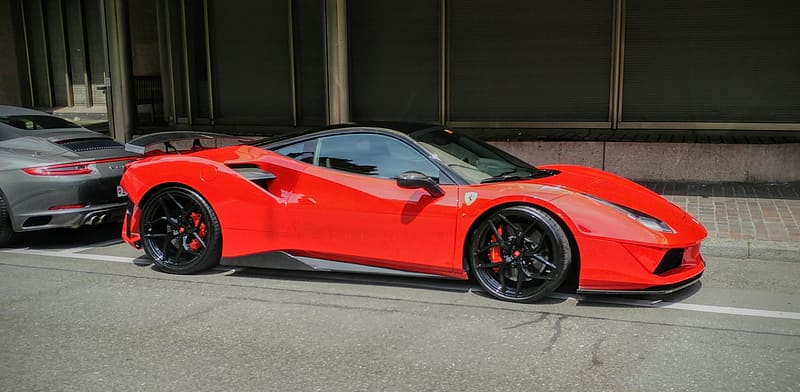
Cars changed by their owners or by a shop we don't list: aftermarket body kits (new bumpers, side skirts, wings, wider fenders), custom wide bodies, and one-off builds. They're grouped here until someone names the tuner or the build.
How to spot one
Bumpers, wings or fender flares the factory never made, a much lower stance, or wheels and details that don't match any version. Know who did it? Suggest it on the spot's page.
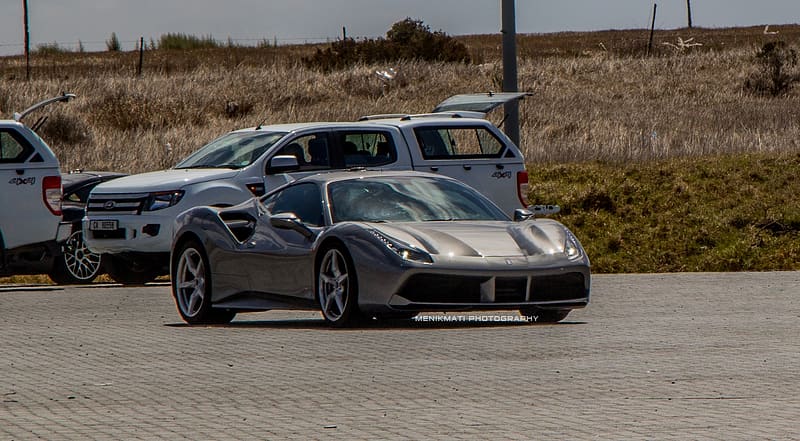
Most spotters just write “488 GTB”, and those count as the standard 488 GTB. These have a clue in the description that says otherwise, or a spotter’s question, and wait in Help identify: when three spotters agree, the spot gets its variant.
284 of 1,438 sorted (20%) · 1,154 questions waiting
 Common