Aston Martin DB2

The first “DB” Aston Martin: a W.O. Bentley-designed six-cylinder fastback that grew into the DB2/4 and DB Mark III over the 1950s.

Rare· 40 pts1950–1959Out of production1,726 built6 variants
Aston Martin DB2
Built1,726all versions
Years1950–1959Out of production
Price new$5k1950 · UK price of a DB2 coupe with taxes, from The Motor’s 1950 road test, at that year’s exchange rate
Value today$37k–$212kRecent prices
Power105–162 hpBy version
0–60 mph9.3 sQuickest version
Top speed120 mphFastest version

Every DB2

6 variants, by generation: what each one is, and how to tell it apart on the street.

Production cars

1950–1959 · 4 variants · 15 spots
Very rare

DB2

1950–1953 · 411 built · 105 hp

The original: a two-seat fastback coupe with Lagonda’s 2.6-liter twin-cam six, 105 hp on two SU carburetors, or 125 hp with the Vantage option of bigger carburetors and higher compression. A drophead coupe followed later in 1950. It cost about $5,360 in the UK with taxes in 1950, and The Motor timed 116 mph and 0–60 in 11.2 seconds. Wikipedia counts 411 built from 1950 to 1953, at least 102 of them dropheads; a restored 1952 coupe sold for about $187,000 at Gooding’s London sale in 2024.

How to spot one

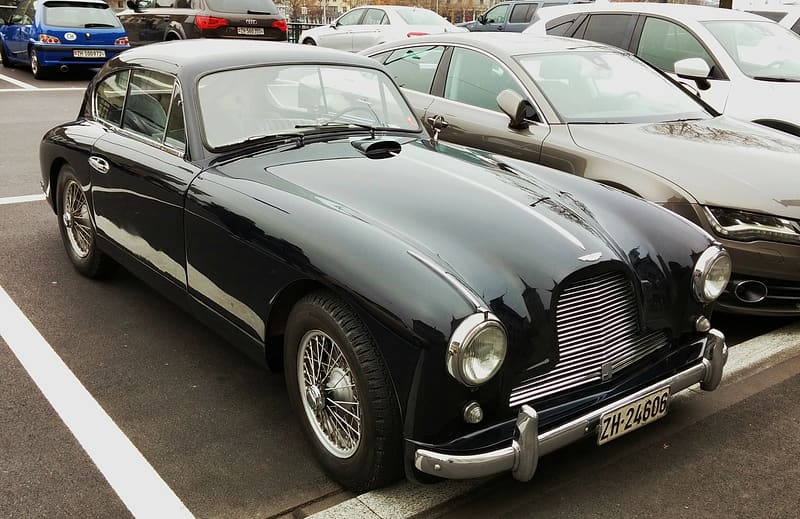
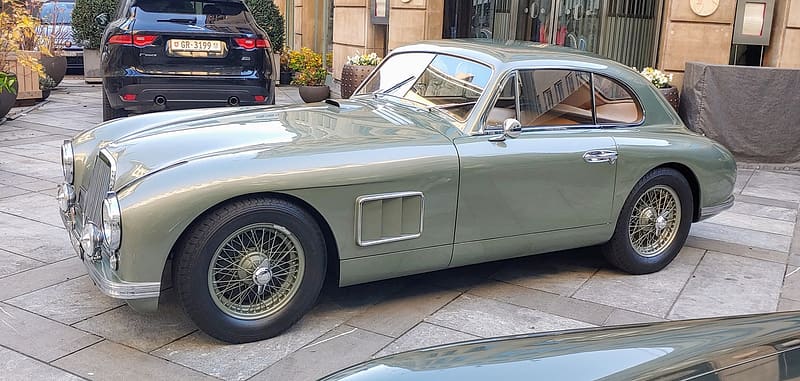
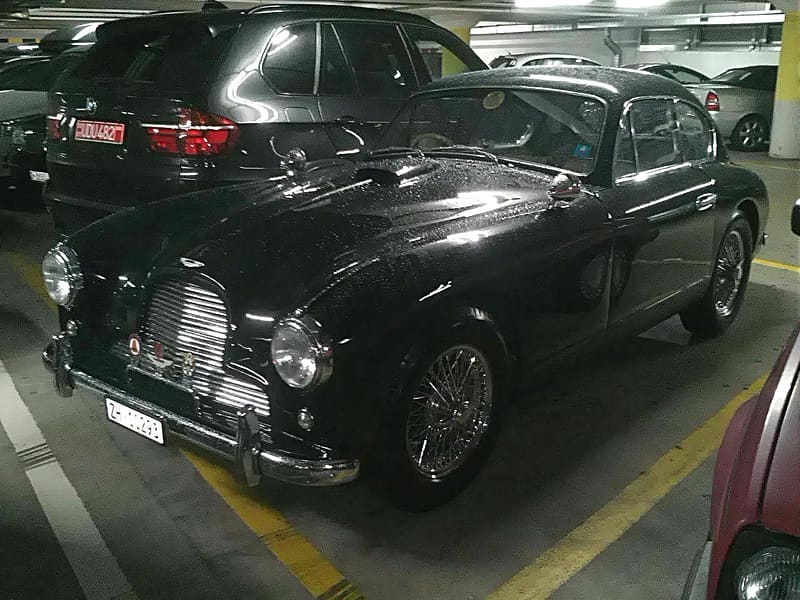
A strict two-seater: a two-piece windscreen split by a center bar, a small rear window and no rear hatch, only a little lid for the spare wheel, and slim bumpers. The first 49 cars have a three-piece chrome grille and large rectangular vents in the front fenders; later cars a one-piece grille of horizontal chrome bars and no vents.
1 spot · Photos
Rare

DB2/4

1953–1955 · 565 built · 140 hp

The DB2 made into a 2+2: two small rear seats, a lift-up rear hatch, a taller roof and a one-piece windscreen, with bodies by Mulliners. It started with the 125 hp Vantage-spec 2.6-liter six; the 2.9-liter six with 140 hp came in the hatchback from September 1953 and the drophead from April 1954. The Motor’s 2.9-liter car did 118.5 mph and 0–60 in 10.5 seconds and cost about $7,340 in the UK with taxes in 1954. Wikipedia counts 565, including 102 drophead coupes. Sales run from $36,700 for an unrestored car (RM Sotheby’s London, 2024) to $209,000 (Bonhams Scottsdale, 2017).

How to spot one

The DB2’s nose and horizontal-bar grille, but a one-piece curved windscreen, bigger bumpers and a much larger rear window that lifts as a hatch. The rear fenders are smooth and round with small lamps and no fins, and the bonnet’s seam runs low along the sill.

3 spots · Photos
Not spotted yetBe the firstVery rare

DB2/4 Mk II

1955–1957 · 199 built · 140 hp

Launched at the London Motor Show in October 1955 with bodies built by Tickford at Newport Pagnell, which David Brown had bought in 1954. The roof is ¾ inch higher, and alongside the hatchback there was a two-seat fixed-head coupe and a drophead. The 2.9-liter six gave 140 hp, or 165 hp with the optional large-valve, high-compression engine. Wikipedia counts 199 built; a 1956 hatchback sold for about $143,000 at Bonhams’ Goodwood Revival sale in 2023.

How to spot one

Small fins on top of the rear fenders carrying bubble-shaped tail lamps, more chrome, and a bonnet seam that runs back from the top of the front wheel arch instead of down at the sill. The grille is still the wide DB2/4 type with horizontal bars.

Be the first to spot one
Rare

DB Mark III

1957–1959 · 551 built · 162 hp

The last of the line, with the engine reworked by Tadek Marek: 162 hp as standard, 178 hp with twin exhausts, 180 hp with triple SUs and 195 hp on the 10 high-output cars. Front disc brakes became standard after the first 100 cars, and an overdrive or (on just five cars) an automatic was offered. Road & Track listed it at $7,450 in the US in 1959. Wikipedia counts 551 built: 462 hatchbacks, 84 dropheads and 5 fixed-head coupes. Recent sales run from about $164,000 (Bonhams Beaulieu, 2022) to about $212,000 (Bonhams Paris, 2024). It is the “DB III” James Bond drives in Ian Fleming’s novel Goldfinger.

How to spot one

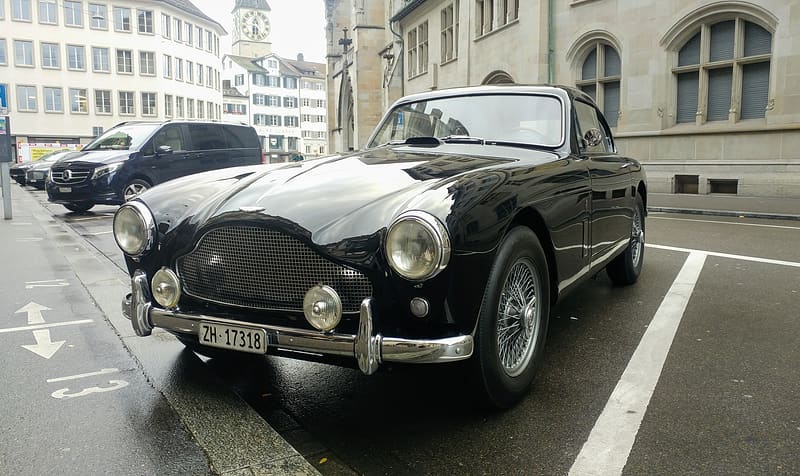
A new nose: a smaller grille in the DB3S racer’s shape, with the curved shoulders every later Aston has worn. After the first 100 cars the rear fins grow taller to hold big upright tail lamps from the Humber Hawk. Inside, the dashboard is a cowled panel shaped like the grille.

11 spots · Photos

Coachbuilt

2 variants · 0 spots
Not spotted yetBe the firstLegendary

DB2/4 Bertone

1953–1954 · 7 built

Italian bodies on DB2/4 chassis commissioned by the American Stanley Arnolt: open spiders styled by Franco Scaglione and convertibles by Giovanni Michelotti, all built by Bertone in Turin. Aston Martin stopped the spider project after three cars. Wikipedia counts six spiders and one coupe.

How to spot one

Nothing like the factory car: a low, open Italian body with a much smaller grille, built by Bertone.

Be the first to spot one
Not spotted yetBe the firstLegendary

DB2/4 Mk II Spider by Touring

1956 · 3 built

Three bare Mk II chassis bodied as two-seat spiders by Carrozzeria Touring of Milan with its Superleggera method of thin aluminum panels over small tubes, shown at the Turin, Paris and London shows in 1956. Touring went on to help with the DB4.

How to spot one

A low, open two-seater with a sleek Italian body, wire wheels and an Aston grille; only three exist.

Be the first to spot one

Best spots

All DB2 photos
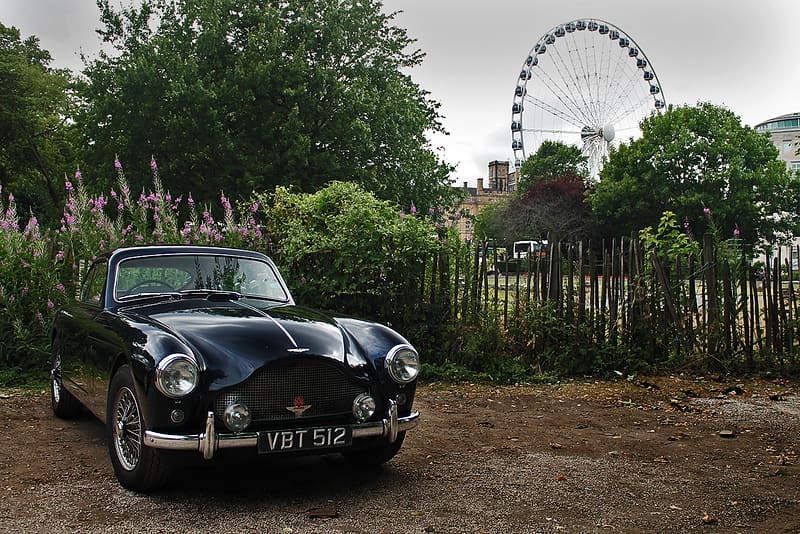
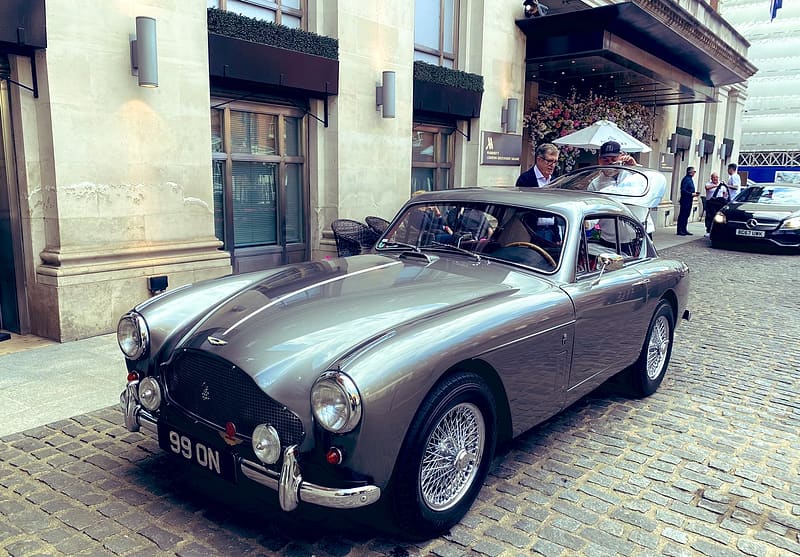
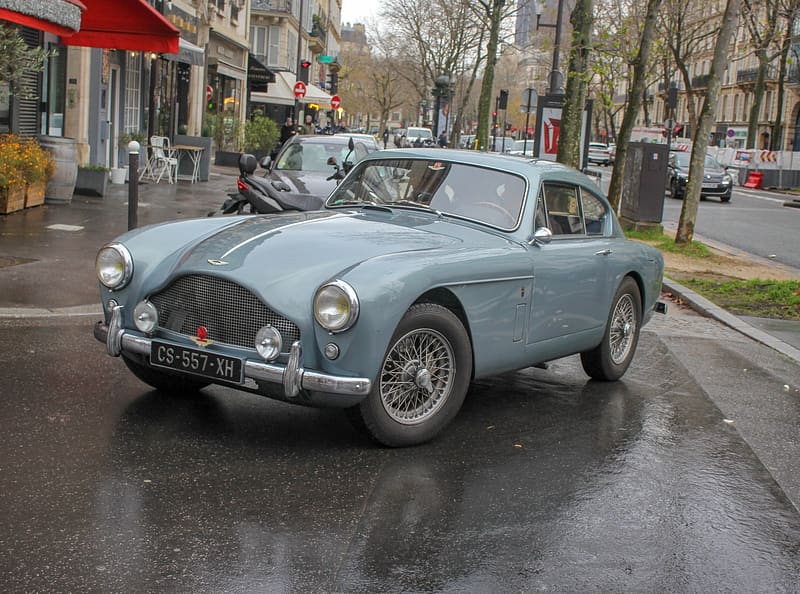
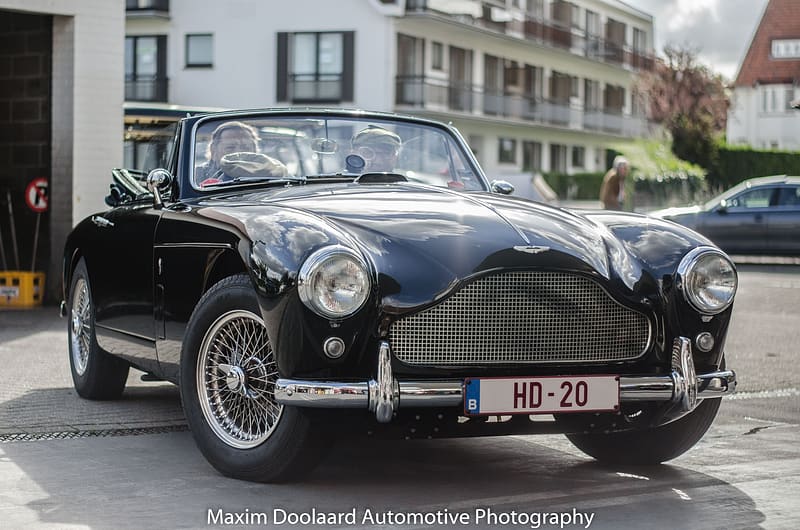
Aston Martin DB2 spotted in Zurich, SwitzerlandAston Martin DB2 spotted in Zurich, SwitzerlandAston Martin DB2 spotted in Zurich, SwitzerlandAston Martin DB2 spotted in Zurich, SwitzerlandAston Martin DB2 spotted in York, United KingdomAston Martin DB2 spotted in London, United KingdomAston Martin DB2 spotted in Paris, FranceAston Martin DB2 spotted in Knokke-Heist, Belgium