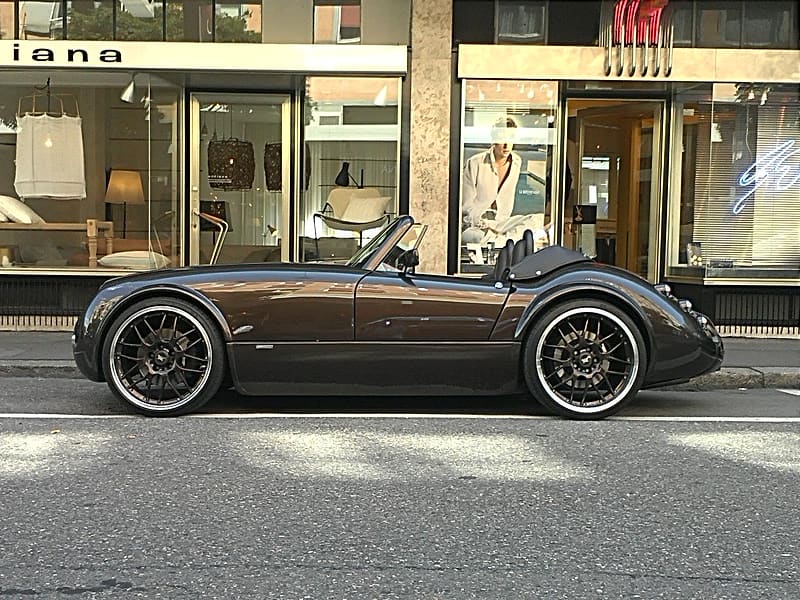
Brothers Martin and Friedhelm Wiesmann, whose parents ran a car dealership in Dülmen, founded their company there in 1988 and began by making hardtops for convertibles. Their idea was a classic roadster built with German quality, and in 1993 the first one appeared: a two-seater with a fiberglass body on a galvanized steel tube frame and a BMW straight-six. Models were named MF, for Martin and Friedhelm, plus the engine size, and the gecko badge was meant to say the cars stick to the road like geckos to a wall.
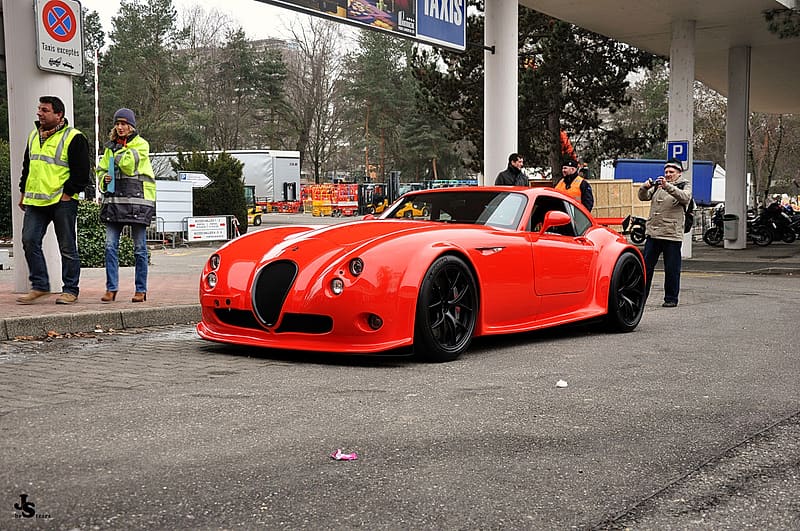
The MF3, with BMW M3 engines, became the best seller, with 826 built. In 2003 Stefan Breuer bought 64 percent of the company, and Wiesmann added the GT MF4 coupe with a BMW V8, followed by the GT MF5 and Roadster MF5 with the BMW M5’s V10. In October 2007 Wiesmann moved into a new factory in Dülmen whose showroom roof is shaped like a giant gecko; it cost about $16.5 million instead of the $2.74 million first planned.
The interest on that investment and the 2008 financial crisis hurt. Wiesmann needed to sell 220 cars a year to make money; it sold 200 in 2010 and fewer after that, and plans to export to the US were held back by costs and exchange rates. Martin Wiesmann was removed as managing director in 2012, production stopped in July 2013 with debts of nearly $35.9 million, and the company filed for insolvency on August 14, 2013. Creditors chose liquidation in January 2014, and the assets were auctioned that May.
In December 2015 creditors accepted a bid of about $6.32 million from London brothers Roheen and Sahir Berry, who took over the brand, factory and name. A BMW V8 coupe called Project Gecko was announced but put on hold in 2021, and Project Thunderball, an electric roadster with 671 hp, was revealed in April 2022 with deliveries planned for 2024. Friedhelm Wiesmann went on to found the small sports car maker Boldmen in 2020.
 Rare
 DülmenSince 19882 models0 in production
 IconWiesmann Roadster