Volkswagen, German for “people’s car”, was set up in 1937 by the Nazi Party’s German Labour Front under its Strength Through Joy program, after Adolf Hitler called for a car every German family could afford. Ferdinand Porsche designed the car, with an air-cooled, rear-mounted flat-four, and about 336,000 people paid into a savings scheme to buy one. Prototypes called the KdF-Wagen appeared in 1938, and work began that year on a factory in a new town, now Wolfsburg, but no saver ever received a car.
In World War II the factory built military vehicles such as the Kübelwagen and the amphibious Schwimmwagen. In 1945 the bombed plant fell under British control, and Major Ivan Hirst persuaded the British Army to order 20,000 cars, restarting production. British, American, Australian and French carmakers all turned the factory down, and in 1948 Ford declined it even as a gift.
Heinrich Nordhoff ran Volkswagen from 1948 and focused on the Type 1 Beetle, adding only the Type 2 van and the Karmann Ghia. Beetle production reached a million in 1955, and Doyle Dane Bernbach’s advertising made it a hit in the US. On 17 February 1972 the 15,007,034th Beetle passed the Ford Model T as the most-produced car, and more than 16 million had been built by 1973.
Volkswagen bought Auto Union in 1964 and NSU in 1969 and merged them into the modern Audi, whose expertise in front-wheel drive and water cooling shaped the Beetle’s successors. The Passat (1973), the Giugiaro-designed Scirocco and Golf (1974) and the Polo (1975) turned the company around, and the Golf has been its mainstay ever since; the GTI was Motor Trend’s Car of the Year for 1985. In the late 1990s, at Ferdinand Piëch’s request, Italdesign built W12 supercar concepts, one of which set a 24-hour world speed record at Nardò in 2002.
In 2015 the US Environmental Protection Agency found that Volkswagen had programmed diesel engines to cheat emissions tests; about 11 million cars were affected, and a 2016 US settlement reached $14.7 billion. Volkswagen then turned to electric cars, launching the ID.3 with a redesigned logo in 2019. In motorsport it won the Dakar Rally in 2009, 2010 and 2011 and the World Rally Championship with Sébastien Ogier from 2013 to 2016, and its electric I.D. R set a Pikes Peak record in 2018.
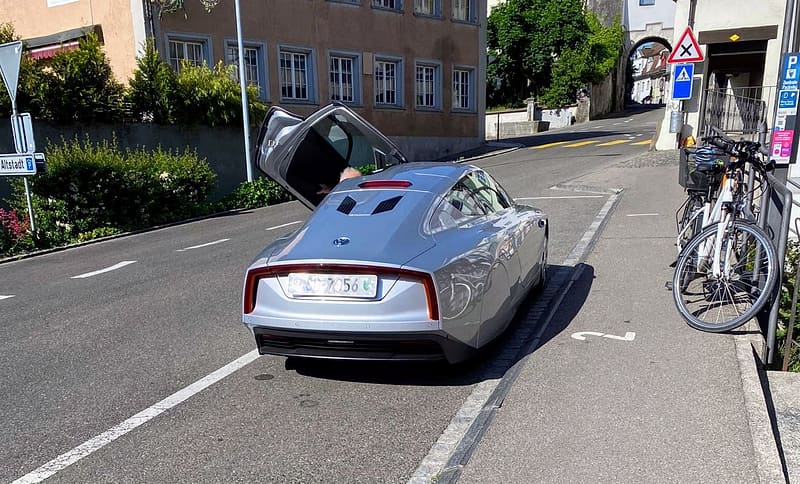 Legendary
 WolfsburgSince 19371 model0 in production