Louis Renault sold his first car, the Voiturette 1CV, to a friend of his father on 24 December 1898, and with his brothers Marcel and Fernand founded Société Renault Frères on 25 February 1899. Racing brought publicity, but Marcel was killed in the 1903 Paris–Madrid race; in 1906 Ferenc Szisz won the first Grand Prix in a Renault. AG1 taxis bought for Paris in 1905 later carried troops in World War I as the “Taxis de la Marne”, and by 1908 Renault was France’s largest carmaker. After Fernand’s death in 1909 Louis was sole owner, and in World War I the company built aero engines and the FT tank.
Between the wars Renault built economy four-cylinder cars and luxury six- and eight-cylinder models such as the Reinastella, and the diamond badge arrived in 1925. Citroën overtook it in the late 1920s, but Renault was France’s largest carmaker again from the mid-1930s. After France fell in 1940 the Germans took control of the factories, which were bombed by the RAF and the US. Louis Renault was arrested in 1944, accused of collaboration, and died in prison before trial; in January 1945 the company was nationalized as Régie Nationale des Usines Renault.
Under Pierre Lefaucheux the rear-engined 4CV, developed in secret during the war, went on sale in 1946 and sold more than half a million. The Dauphine, Renault 4 (1961–1992), Renault 8 and pioneering Renault 16 hatchback followed, and in 1970 Renault built more than a million cars in a year for the first time. The Renault 5 of 1972 was another hit. Renault took control of Alpine in 1973, won Le Mans in 1978 with the Alpine A442, and brought turbocharging to Formula One with the RS01 in 1977.
In North America Renault took control of American Motors, which built the Renault 9 as the Alliance in Kenosha, Wisconsin, but the venture failed. Renault was losing about $114 million a month by 1984; chairman Georges Besse cut costs before he was murdered by the Action Directe group in 1986, and AMC was sold to Chrysler in 1987. The Espace of 1984 was Europe’s first multi-purpose vehicle, and the Clio of 1990, which replaced numbers with names, and the Twingo of 1992 restored Renault’s fortunes.
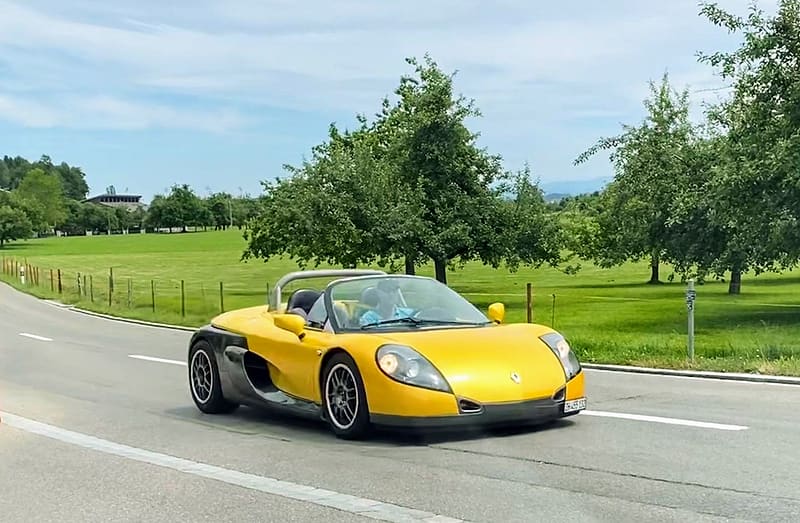
Renault was privatized in 1996, and in 1999 it formed an alliance with Nissan, taking a 36.8 percent stake, and bought a majority of Romania’s Dacia; it took control of Samsung’s car business in 2000. Its Formula One team won the drivers’ and constructors’ titles with Fernando Alonso in 2005 and 2006, and Renault engines powered Williams and Red Bull champions. Renault Sport, formed in the 1970s, builds models such as the Clio RS and Mégane RS; its first road car was the 1996 Spider.
Carlos Ghosn’s arrest in Japan in 2018 led to new leadership under Luca de Meo from 2020. In 2021 Renault split its car business into Renault, Dacia and Lada, Alpine and Mobilize, and renamed its Formula One team Alpine. It sold its Russian businesses, including AvtoVAZ, in 2022, cut its controlling stake in Nissan to 15 percent in 2023, and moved electric car development into Ampere and engine work into Horse, a joint venture with Geely.
 Rare
 Boulogne-BillancourtSince 18991 model0 in production