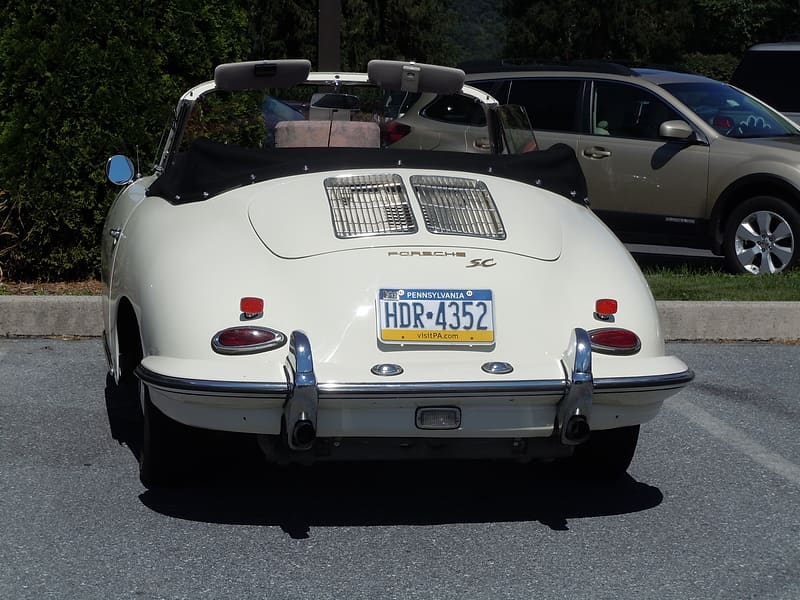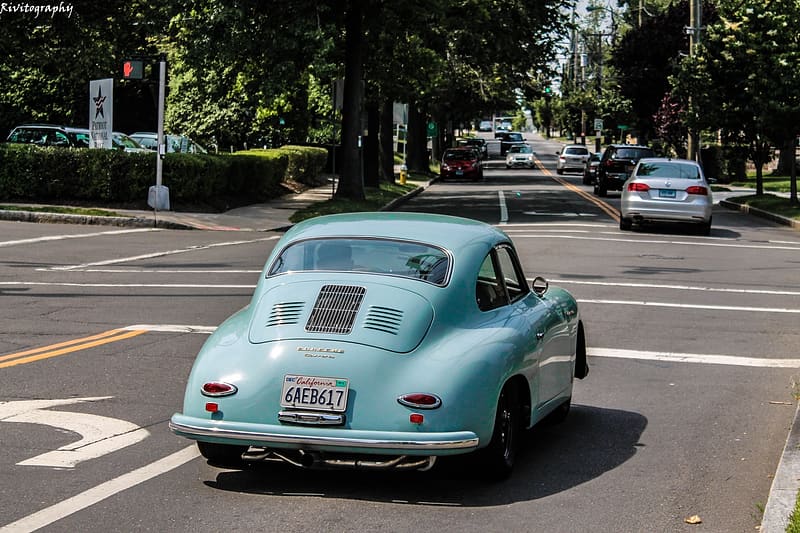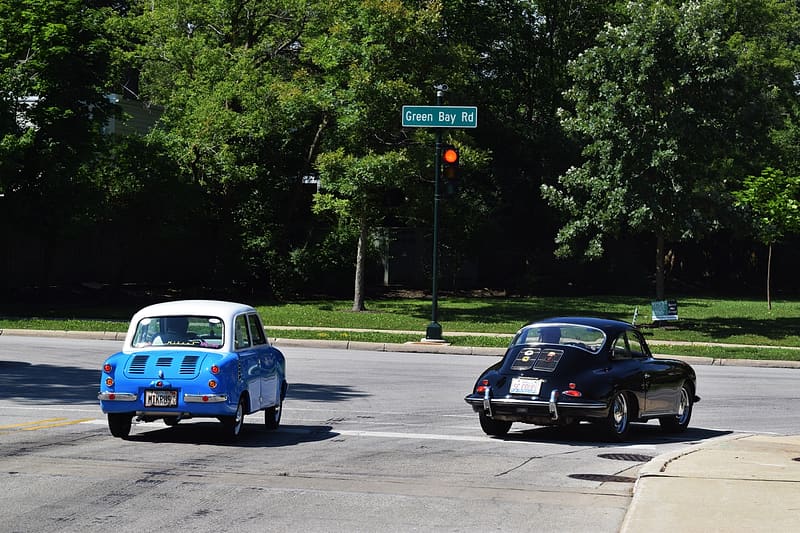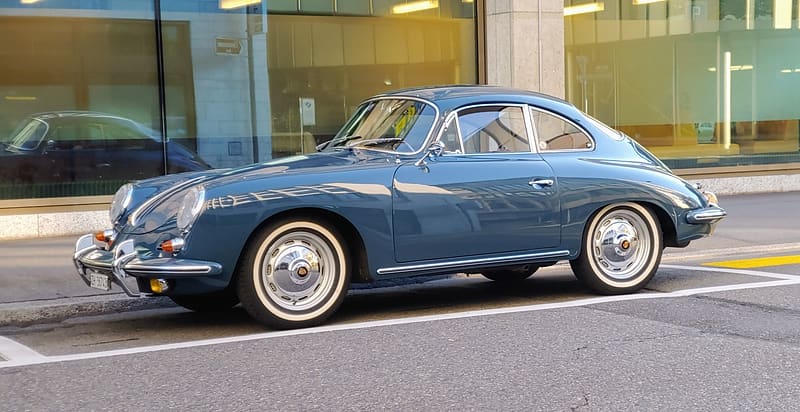
Porsche 356

The first Porsche: Ferry Porsche and Erwin Komenda’s air-cooled, rear-engined coupe, cabriolet and Speedster.

Common· 10 pts1948–1965Out of production76,313 built17 variants
Porsche 356
Built76,313Approximate
Years1948–1965Out of production
Price new$4k1948 · Coupe; the cabriolet was $4,250
Value today$511kRecent prices, by variant
On ExoticSpotter389213 spotters · 63 places

Every 356

17 variants, by generation: what each one is, and how to tell it apart on the street.

Pre-A

1948–1955 · 2 variants · 0 spots · 2 possible
Not sorted yetIts spots are among the unsorted onesCommon

356 “pre-A” Gmünd

1948–1955

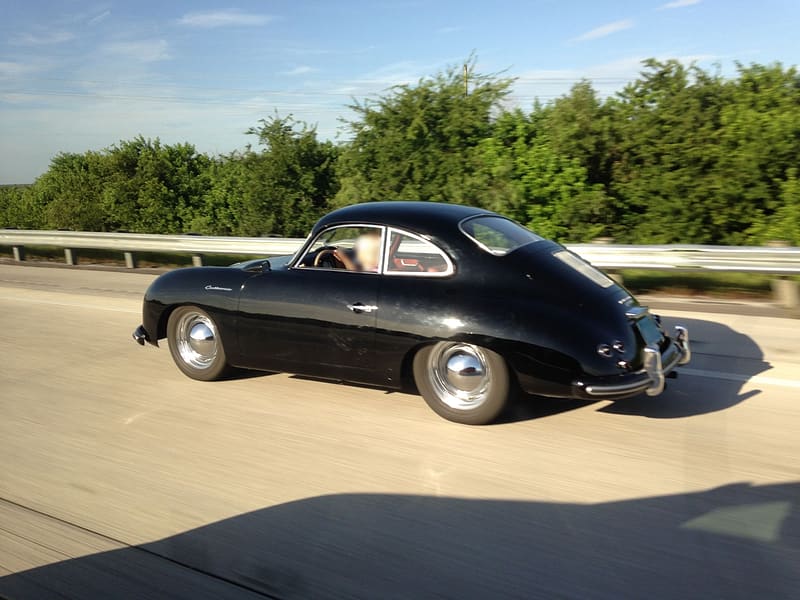
The original 356, now called the “pre-A.” The first car to carry the Porsche name, the 356/1 roadster, was approved for production on June 8, 1948, in Gmünd, Austria, where about 50 cars were built with hand-formed aluminum bodies. Production moved to Zuffenhausen in 1950, with steel bodies from Reutter, and engines grew from 1.1 to 1.5 liters over the years; 7,627 were built through 1955.

How to spot one

Look at the windshield: early cars have a two-piece windshield split by a center bar, and later pre-A cars a one-piece windshield with a crease down the middle. From the 356 A on, the windshield is a smooth, curved single pane.
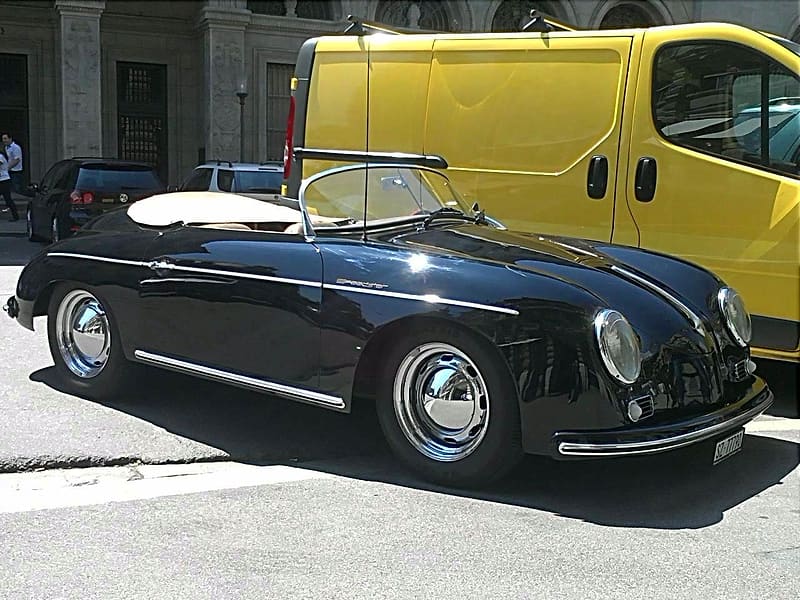
1 possible · help confirm
Not sorted yetIts spots are among the unsorted onesCommon

356 “pre-A” Zuffenhausen

1948–1955

The original 356, now called the “pre-A.” The first car to carry the Porsche name, the 356/1 roadster, was approved for production on June 8, 1948, in Gmünd, Austria, where about 50 cars were built with hand-formed aluminum bodies. Production moved to Zuffenhausen in 1950, with steel bodies from Reutter, and engines grew from 1.1 to 1.5 liters over the years; 7,627 were built through 1955.

How to spot one

Look at the windshield: early cars have a two-piece windshield split by a center bar, and later pre-A cars a one-piece windshield with a crease down the middle. From the 356 A on, the windshield is a smooth, curved single pane.
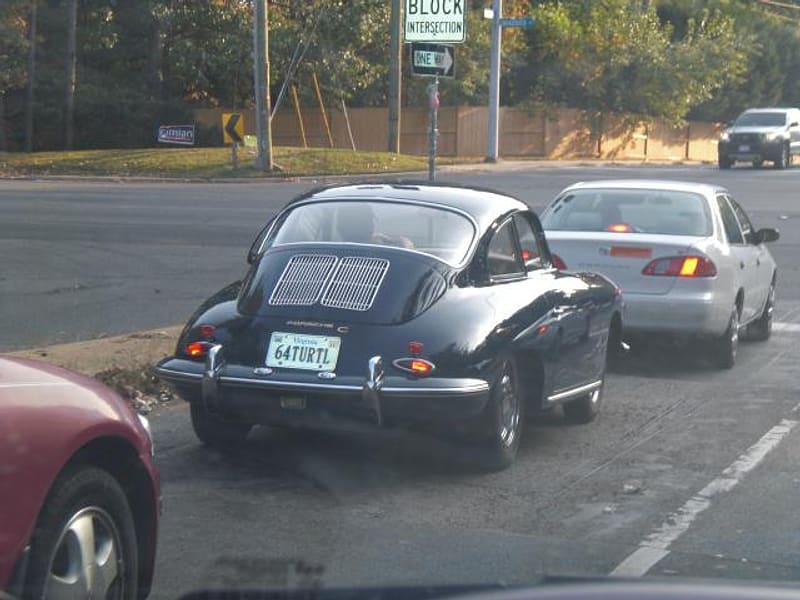
1 possible · help confirm

356 A

1955–1959 · 3 variants · 43 spots · 4 possible
Not sorted yetIts spots are among the unsorted onesCommon

356 A Coupe

1955–1959

The 356 A replaced the original 356 in September 1955, with a curved one-piece windshield and engines from 1.3 to 1.6 liters, plus the four-cam Carrera as the top option. Porsche updated it in two technical stages, T1 at launch and T2 from September 1957. Late in the run the coupe and cabriolet were joined by the Convertible D, the Speedster’s successor, with a taller windshield and roll-up side windows.

How to spot one

A smooth, curved one-piece windshield with no center crease sets it apart from the pre-A. Its bumpers and headlights sit noticeably lower than on the 356 B, and cars from March 1957 on have teardrop-shaped taillights.

2 possible · help confirm
Not sorted yetIts spots are among the unsorted onesCommon

356 A Cabriolet

1955–1959

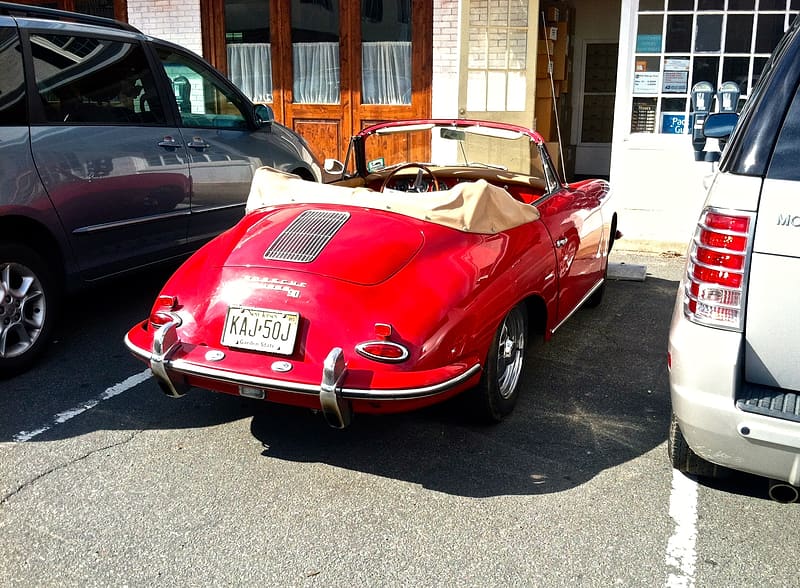
The 356 A replaced the original 356 in September 1955, with a curved one-piece windshield and engines from 1.3 to 1.6 liters, plus the four-cam Carrera as the top option. Porsche updated it in two technical stages, T1 at launch and T2 from September 1957. Late in the run the coupe and cabriolet were joined by the Convertible D, the Speedster’s successor, with a taller windshield and roll-up side windows.

How to spot one

A smooth, curved one-piece windshield with no center crease sets it apart from the pre-A. Its bumpers and headlights sit noticeably lower than on the 356 B, and cars from March 1957 on have teardrop-shaped taillights.

2 possible · help confirm
Uncommon

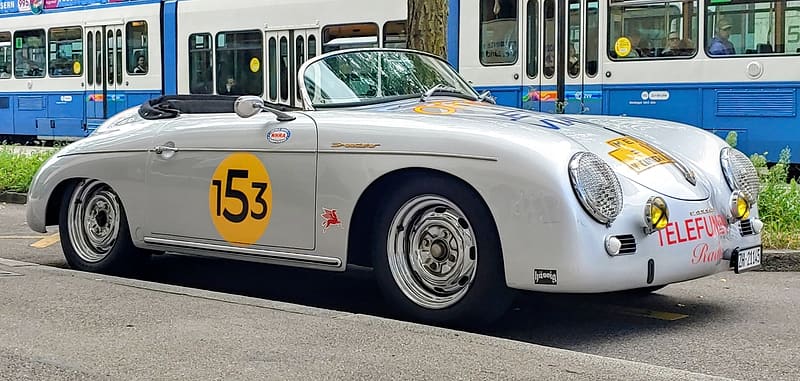
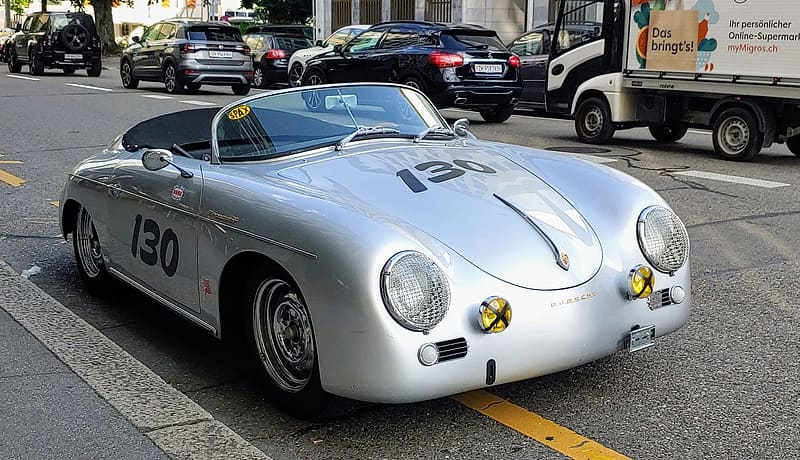
356 Speedster

1954–1958 · 4,854 built

A lower-cost, stripped-down open 356 that US importer Max Hoffman persuaded Porsche to build for the American market, introduced in late 1954. It had a low, raked windshield that could be removed for racing, bucket seats and a minimal folding top, and it was an instant hit, especially in Southern California. Porsche built 4,854, with a peak of 1,171 in 1957, before the Convertible D replaced it in late 1958.

How to spot one

The low, raked windshield and minimal top give it a much lower profile than the cabriolet or the Convertible D, which have a taller windshield and roll-up glass side windows.

43 spots + 12 possible · Photos

356 B

1959–1963 · 4 variants · 1 spot
Not sorted yetIts spots are among the unsorted onesCommon

356 B Coupe

1959–1963

The 356 B (T5 body) replaced the 356 A in September 1959 with a restyled front: the bumpers were raised by about 10 cm and the headlights set higher. A T6 update from September 1961 brought a wider front lid, an outside fuel filler and twin engine-lid grilles. Open versions included the Roadster (1960–1962), and the rare Karmann Hardtop of 1961–1962 was a cabriolet body with a fixed metal roof. Engines ranged from 59 hp in the 356 B 1600 to 138 hp in the four-cam 2000 GS-GT Carrera 2.

How to spot one

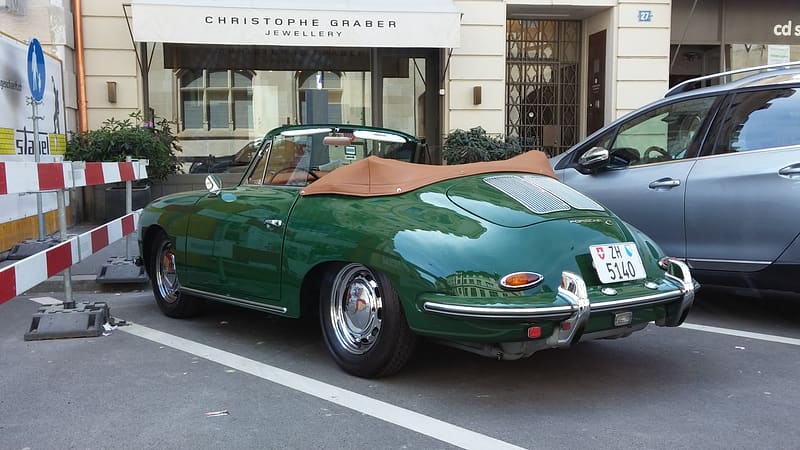
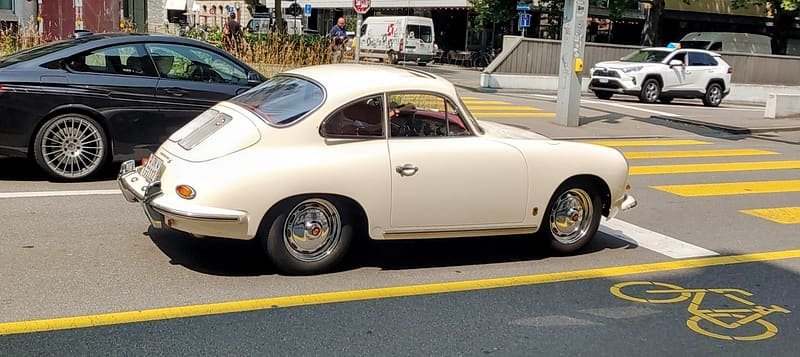
Higher bumpers with larger guards and higher-set headlights than the 356 A. Later T6 cars have two grilles on the engine lid and a fuel filler in the right front fender; the 356 C looks almost the same but has flatter hubcaps without the Porsche crest.

Help sort them
Common

356 B Cabriolet

1959–1963

The 356 B (T5 body) replaced the 356 A in September 1959 with a restyled front: the bumpers were raised by about 10 cm and the headlights set higher. A T6 update from September 1961 brought a wider front lid, an outside fuel filler and twin engine-lid grilles. Open versions included the Roadster (1960–1962), and the rare Karmann Hardtop of 1961–1962 was a cabriolet body with a fixed metal roof. Engines ranged from 59 hp in the 356 B 1600 to 138 hp in the four-cam 2000 GS-GT Carrera 2.

How to spot one

Higher bumpers with larger guards and higher-set headlights than the 356 A. Later T6 cars have two grilles on the engine lid and a fuel filler in the right front fender; the 356 C looks almost the same but has flatter hubcaps without the Porsche crest.

1 spot · Photos
Not sorted yetIts spots are among the unsorted onesCommon

356 B Roadster

1959–1963

The 356 B (T5 body) replaced the 356 A in September 1959 with a restyled front: the bumpers were raised by about 10 cm and the headlights set higher. A T6 update from September 1961 brought a wider front lid, an outside fuel filler and twin engine-lid grilles. Open versions included the Roadster (1960–1962), and the rare Karmann Hardtop of 1961–1962 was a cabriolet body with a fixed metal roof. Engines ranged from 59 hp in the 356 B 1600 to 138 hp in the four-cam 2000 GS-GT Carrera 2.

How to spot one

Higher bumpers with larger guards and higher-set headlights than the 356 A. Later T6 cars have two grilles on the engine lid and a fuel filler in the right front fender; the 356 C looks almost the same but has flatter hubcaps without the Porsche crest.

Help sort them
Not sorted yetIts spots are among the unsorted onesCommon

356 B Karmann Hardtop

1959–1963

The 356 B (T5 body) replaced the 356 A in September 1959 with a restyled front: the bumpers were raised by about 10 cm and the headlights set higher. A T6 update from September 1961 brought a wider front lid, an outside fuel filler and twin engine-lid grilles. Open versions included the Roadster (1960–1962), and the rare Karmann Hardtop of 1961–1962 was a cabriolet body with a fixed metal roof. Engines ranged from 59 hp in the 356 B 1600 to 138 hp in the four-cam 2000 GS-GT Carrera 2.

How to spot one

Higher bumpers with larger guards and higher-set headlights than the 356 A. Later T6 cars have two grilles on the engine lid and a fuel filler in the right front fender; the 356 C looks almost the same but has flatter hubcaps without the Porsche crest.

Help sort them

356 C

1963–1965 · 2 variants · 3 spots
Common

356 C Coupe

1963–1965

The last 356, introduced in September 1963. Disc brakes all round became standard, the 59 hp engine was dropped, and the 95 hp SC, the most powerful pushrod engine Porsche had yet built, was offered alongside the four-cam 2000 GS Carrera 2. Porsche built 16,678, and 356 production peaked at 14,151 cars in 1964.

How to spot one

It looks almost identical to a late 356 B; the clues are flatter hubcaps without the Porsche crest, fitted with the new disc brakes, and round exterior mirrors.

2 spots + 11 possible · Photos
Common

356 C Cabriolet

1963–1965

The last 356, introduced in September 1963. Disc brakes all round became standard, the 59 hp engine was dropped, and the 95 hp SC, the most powerful pushrod engine Porsche had yet built, was offered alongside the four-cam 2000 GS Carrera 2. Porsche built 16,678, and 356 production peaked at 14,151 cars in 1964.

How to spot one

It looks almost identical to a late 356 B; the clues are flatter hubcaps without the Porsche crest, fitted with the new disc brakes, and round exterior mirrors.

1 spot + 11 possible · Photos

Carrera four-cam cars

5 variants · 1 spot · 1 possible
Not spotted yetBe the firstRare

356 Carrera 1500

1955–1965 · $511k

The 356 Carrera used Ernst Fuhrmann’s Type 547 four-cam engine, developed from the 550 Spyder racers that won their class in the Carrera Panamericana in 1953 and 1954, with dual ignition and twin carburetors. It became an option from the 356 A on, in 1500, 1600 and 2000 sizes, as the road-going GS and the competition GT, which had aluminum doors, an alloy front lid, a larger fuel tank and a louvered engine lid. The 2000 GS, or Carrera 2, was offered in the 356 B and 356 C.

How to spot one

From outside it looks like the 356 of its series, so look for the Carrera script; competition GT cars also have a specially louvered engine lid.

Be the first to spot one
Not spotted yetBe the firstRare

356 Carrera 1600

1955–1965 · $511k

The 356 Carrera used Ernst Fuhrmann’s Type 547 four-cam engine, developed from the 550 Spyder racers that won their class in the Carrera Panamericana in 1953 and 1954, with dual ignition and twin carburetors. It became an option from the 356 A on, in 1500, 1600 and 2000 sizes, as the road-going GS and the competition GT, which had aluminum doors, an alloy front lid, a larger fuel tank and a louvered engine lid. The 2000 GS, or Carrera 2, was offered in the 356 B and 356 C.

How to spot one

From outside it looks like the 356 of its series, so look for the Carrera script; competition GT cars also have a specially louvered engine lid.

1 possible · help confirm
Not spotted yetBe the firstRare

356 Carrera 2000 GS

1955–1965 · $511k

The 356 Carrera used Ernst Fuhrmann’s Type 547 four-cam engine, developed from the 550 Spyder racers that won their class in the Carrera Panamericana in 1953 and 1954, with dual ignition and twin carburetors. It became an option from the 356 A on, in 1500, 1600 and 2000 sizes, as the road-going GS and the competition GT, which had aluminum doors, an alloy front lid, a larger fuel tank and a louvered engine lid. The 2000 GS, or Carrera 2, was offered in the 356 B and 356 C.

How to spot one

From outside it looks like the 356 of its series, so look for the Carrera script; competition GT cars also have a specially louvered engine lid.

Be the first to spot one
Rare

356 Carrera GT

1955–1965 · $511k

The 356 Carrera used Ernst Fuhrmann’s Type 547 four-cam engine, developed from the 550 Spyder racers that won their class in the Carrera Panamericana in 1953 and 1954, with dual ignition and twin carburetors. It became an option from the 356 A on, in 1500, 1600 and 2000 sizes, as the road-going GS and the competition GT, which had aluminum doors, an alloy front lid, a larger fuel tank and a louvered engine lid. The 2000 GS, or Carrera 2, was offered in the 356 B and 356 C.

How to spot one

From outside it looks like the 356 of its series, so look for the Carrera script; competition GT cars also have a specially louvered engine lid.

1 spot · Photos
Not spotted yetBe the firstLegendary

Abarth Carrera GTL

1960–1961 · 21 built

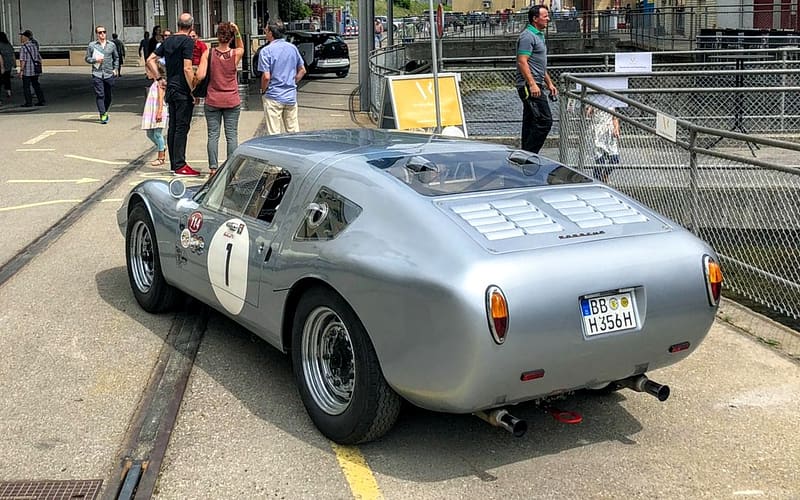
A lightweight racing 356 B Carrera. In 1959 Porsche wanted 20 light bodies for its GT racers and used Carlo Abarth as a go-between; Abarth had Franco Scaglione design them and Carrozzeria Rocco Motto in Turin build them in aluminum. The bodies were about five inches lower and nearly five inches narrower than a standard Carrera, with no bumpers, and the 1.6-liter four-cam engine made 135 hp. One ran and finished at Le Mans in 1960 as the factory’s only GT entry.

How to spot one

Much lower and narrower than any other 356, with no bumpers, enlarged wheel openings and an engine lid full of louvers.

Be the first to spot one

Replicas

1 variant · 0 spots · 17 possible

341 356 spots need a variant

Most spotters just write “356”. 341 of these have a clue in the description and wait in Help identify: when three spotters agree, the spot gets its variant.

48 of 389 sorted (12%) · 341 questions waiting
Help sort 341

Best spots

All 356 photos
Porsche 356 spotted in Zurich, SwitzerlandPorsche 356 spotted in Zurich, SwitzerlandPorsche 356 spotted in Zurich, SwitzerlandPorsche 356 spotted in Zurich, SwitzerlandPorsche 356 spotted in Bremen, GermanyPorsche 356 spotted in Zurich, SwitzerlandPorsche 356 spotted in Rockledge, FloridaPorsche 356 spotted in Winnetka, Illinois