Lancia Fulvia

Lancia's small front-drive V4 sedan, coupé and Zagato Sport of 1963–1976; the HF coupés won the 1972 International Championship for Manufacturers.

Common· 10 pts1963–1976Out of production338,996 built11 variants
Lancia Fulvia
Built338,996all bodies
Years1963–1976Out of production
Price new$2k1965 · Coupé 1.2 at launch in Italy, April 1965 (Quattroruote, via Italian Wikipedia), converted at the fixed exchange rate of the time. No US list price was found.
Value today$18k–$70kRecent prices
Power69–113 hpBy version
Top speed105 mphFastest version
On ExoticSpotter1111 spotters · 10 places

Every Fulvia

11 variants, by generation: what each one is, and how to tell it apart on the street.

Coupé Series 1

1965–1969 · 4 variants · 3 spots
Not sorted yetIts spots are among the unsorted onesCommon

Coupé

1965–1969 · 20,436 built · 79 hp

The first Fulvia Coupé, launched in 1965, put the Berlina's front-drive layout on a shorter platform with a crisp two-door body by Piero Castagnero. Its 1,216 cc narrow-angle V4 made 79 hp, and the engine grew to 1,231 cc in 1967. It.wikipedia counts 20,436 built through 1969. It cost about $2,470 in Italy at launch.

How to spot one

The plain Series 1 Coupé: chrome bumpers without the black rubber strip of the 1970 cars, the earlier grille (the 1970 one is thinner) and no Rallye or HF script on the tail. Steel wheels are standard.
Help sort them
Not sorted yetIts spots are among the unsorted onesCommon

Rallye 1.3 / 1.3 S

1967–1970 · 34,677 built · 86 hp

The Rallye 1.3 of 1967 gave the Coupé a 1,298 cc V4 with 86 hp, and the Rallye 1.3 S of 1968 raised that to 91 hp. Between them they were the most common Series 1 Coupés: 34,677 built (it.wikipedia). The Rallye 1.3 listed at about $2,610 in Italy.

How to spot one

A Series 1 Coupé body (chrome bumpers, earlier grille) with "Rallye" script on the tail, and "S" on the 1.3 S. Unlike the HF versions it keeps its bumpers and its standard headlights.

Help sort them
Uncommon

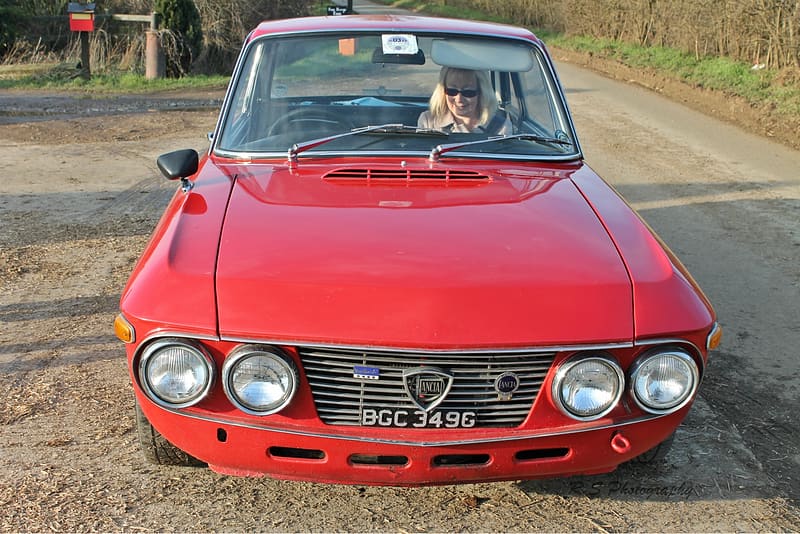
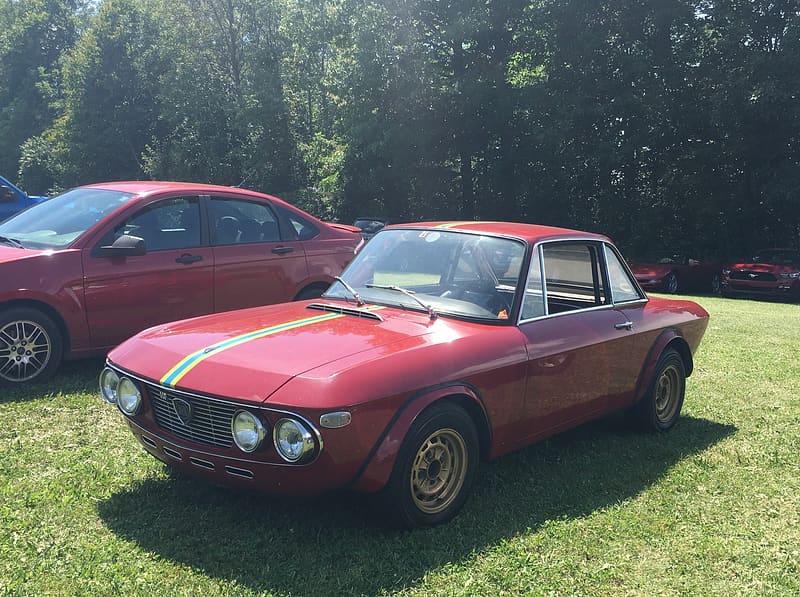
Coupé HF 1.2 / Rallye 1.3 HF

1966–1969 · 1,317 built · 100 hp

The HF Coupés were lightened homologation cars: the 1966 Coupé HF with an 87 hp 1.2 L engine, and the 1967 Rallye 1.3 HF with 100 hp. Lancia saved weight by leaving off the bumpers and using light alloy for the hood and doors and Plexiglas for the rear window. Only 435 HF 1.2s and 882 Rallye 1.3 HFs were built.

How to spot one

A Series 1 Coupé with no bumpers, HF badges and the regular headlights (the 1.6 HF's are bigger on the inside pair). It.wikipedia notes a yellow-and-blue stripe on hood and roof and an elephant badge on the front fenders on HF cars.

1 spot · Photos
Uncommon

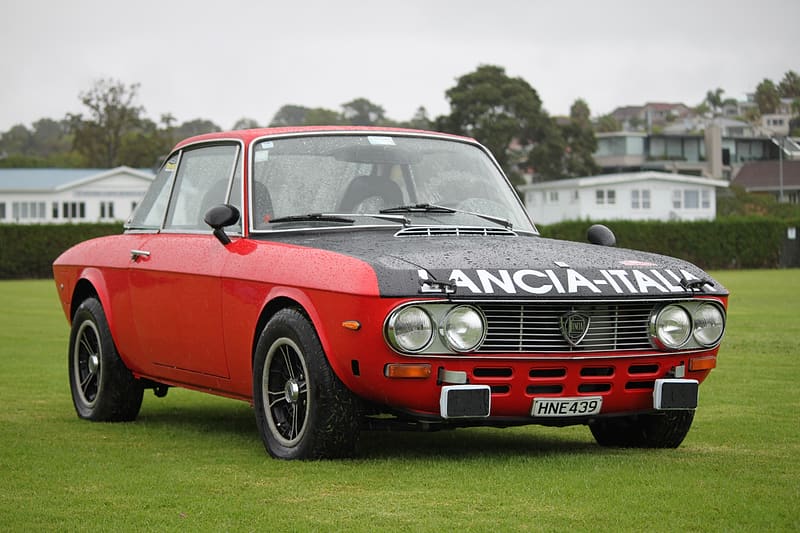
Rallye 1.6 HF "Fanalone"

1969–1970 · 1,258 built · 113 hp

Built to homologate the Fulvia's 1.6 L engine for rallying, the Rallye 1.6 HF had a 1,584 cc V4 with 113 hp, a five-speed gearbox, wider tires on 13-inch alloy wheels under flared arches, and negative camber front geometry. Its nickname "Fanalone" ("big lamps") comes from the inner headlights, larger than the outer pair. 1,258 were built (it.wikipedia).

How to spot one

The inner pair of headlights is bigger than the outer pair, and en.wikipedia says the easiest tell is the triangular holes between the headlamps and the grille. Add no bumpers, wheel-arch extensions and 13-inch 6J alloy wheels on a Series 1 body.

2 spots · Photos

Coupé Series 2

1970–1976 · 5 variants · 0 spots · 19 possible
Not sorted yetIts spots are among the unsorted onesCommon

Series 2 Coupé 1.3 S

1970–1973 · 45,216 built · 89 hp

The 1970 restyle, the first Fulvia change after Fiat took over, was mostly about cutting cost: a thinner grille, bumpers with a black rubber strip, plastic in place of wood veneer on the dashboard and steel in place of aluminum for the hood and doors. The 1.3 S engine made 89 hp and now came with a five-speed gearbox, plus better brakes. It was the most-built Fulvia Coupé, 45,216 by it.wikipedia.

How to spot one

Bumpers with a black rubber strip and a thinner, more linear grille set it apart from a Series 1. Finarte notes the tail lettering in capitals underlined by a line. Bright grille (the Coupé 3's is black) and normal arches (the 1600 HF's are flared).

7 possible · help confirm
Not sorted yetIts spots are among the unsorted onesUncommon

Series 2 1600 HF (incl. Lusso)

1970–1973 · 3,690 built · 113 hp

The Series 2 kept a 1.6 L HF in the range: the same 113 hp 1,584 cc V4 as the Fanalone in the new body, with flared wheel arches and Cromodora light-alloy wheels. The plain 1600 HF came without bumpers; the Lusso added headrests, door deflectors and full sound insulation. 3,690 of both were built.

How to spot one

A Series 2 Coupé (thin grille) with flared wheel arches and Cromodora alloy wheels; the plain 1600 HF has no bumpers. Its headlights are all the same size, hence the later nickname "Fanalino" (RM Sotheby's), so big inner lamps mean a Series 1 Fanalone instead. A Montecarlo also has flares, but with a matte black hood and trunk lid and 4.5J steel wheels.

7 possible · help confirm
Not sorted yetIts spots are among the unsorted onesCommon

Coupé 3

1974–1976 · 25,334 built · 89 hp

The last Fulvia Coupé was mechanically the Series 2 1.3 S with a matte black grille and headlight frame, a padded steering wheel, three-point belts, headrests and white-faced dials. 25,334 were built from 1974 to 1976, when the Fulvia ended.

How to spot one

A Series 2 body with a matte black grille and black headlight surround in place of the bright ones, and "Fulvia 3" badges.

4 possible · help confirm
Not sorted yetIts spots are among the unsorted onesUncommon

Montecarlo

1972–1976 · 6,969 built · 89 hp

A special edition of the 1.3 S celebrating Munari's 1972 Monte Carlo Rally win, in two-tone colors like the works cars, with the 1600 HF's flared arches and the 1.6 HF Lusso's bucket seats with headrests. A Coupé 3 Montecarlo followed in 1974. 6,969 of the two were built.

How to spot one

Matte black hood and trunk lid with rally-plate-style stickers, flared arches, no bumpers, rectangular fog lamps in front, a single black side mirror and plain 4.5J steel wheels. Coupé 3 Montecarlos also have the black grille.

1 possible · help confirm
Not sorted yetIts spots are among the unsorted onesUncommon

Coupé 3 Safari

1974–1976 · 900 built · 89 hp

A simplified Coupé 3 named for the Fulvia's Safari Rally entries, with denim and leatherette seats, no bumpers and matte black exterior trim. 900 were built.

How to spot one

A Coupé 3 with no front bumper, black-painted wheels, and a black grille, air intake and wipers.

Help sort them

Sport Zagato

1965–1972 · 1 variant · 1 spot
Uncommon

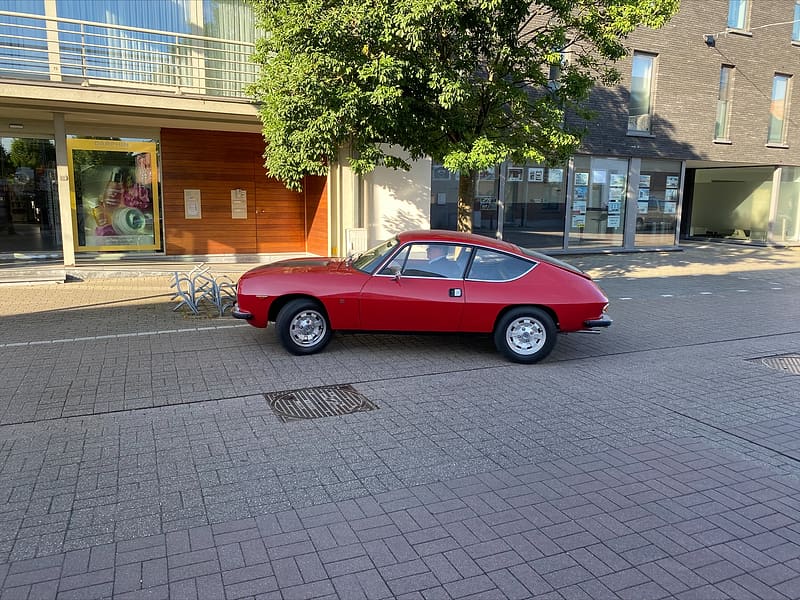
Sport Zagato

1965–1972 · 7,102 built · 91 hp

Zagato built the Sport as a lighter, lower fastback on the Coupé's mechanicals. The first 202, and the first 709 Sport 1.3s, had all-aluminum bodies; later Series 1 cars were steel with aluminum hood, doors and spare-wheel hatch, and the Series 2 of late 1970 was all steel, with a raised roof and wider fenders. The steel rear hatch could be raised a few centimeters by an electric motor to air the cabin. The Sport 1600 of 1970–1972 used the HF engine without the HF badge. 7,102 were built.

How to spot one

A Zagato fastback body, not the Coupé's notchback; some have covered headlamps (a BaT 1.3 S). Series 1 Sports have a hood hinged on the right side, a separate spare-wheel hatch, NSU Prinz tail lamps and a mirror on the front fender; the Series 2 has a front-hinged hood, no spare-wheel hatch, larger bullet-shaped Peugeot 204 tail lamps, new driving lights and the mirror on the door.

1 spot · Photos

Berlina

1963–1972 · 1 variant · 0 spots
Not sorted yetIts spots are among the unsorted onesCommon

Berlina

1963–1972 · 192,097 built · 69 hp

The four-door Fulvia came first, in 1963, with a 1,091 cc V4 of 57 hp, then 69 hp in the twin-carburetor 2C. The GT and GTE of 1967–1969 took 1.2 L and 1.3 L engines, and the Series 2 of 1969 had a new front and rear, a 20 mm longer wheelbase, a new interior and, from 1970, a five-speed gearbox. 192,097 were built, more than any other Fulvia.

How to spot one

The only four-door Fulvia. The Series 2 (1969 on) has a new grille, new headlights and a redesigned rear, and its grille badge is plastic rather than enameled.

Help sort them

7 Fulvia spots need a variant

Most spotters just write “Fulvia”. 7 of these have a clue in the description and wait in Help identify: when three spotters agree, the spot gets its variant.

4 of 11 sorted (36%) · 7 questions waiting
Help sort 7