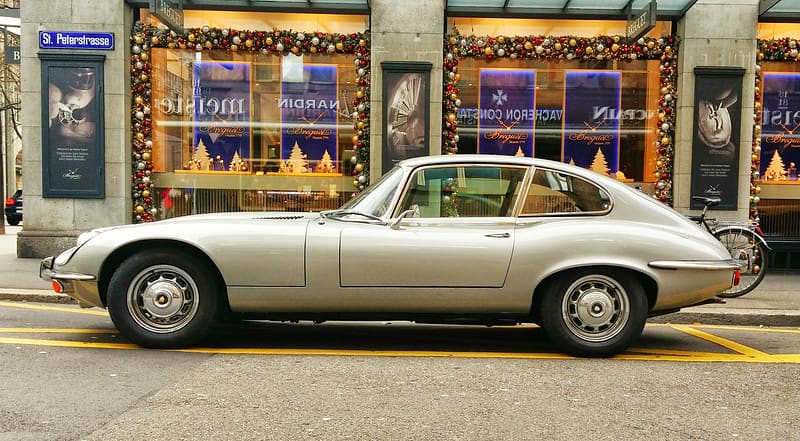
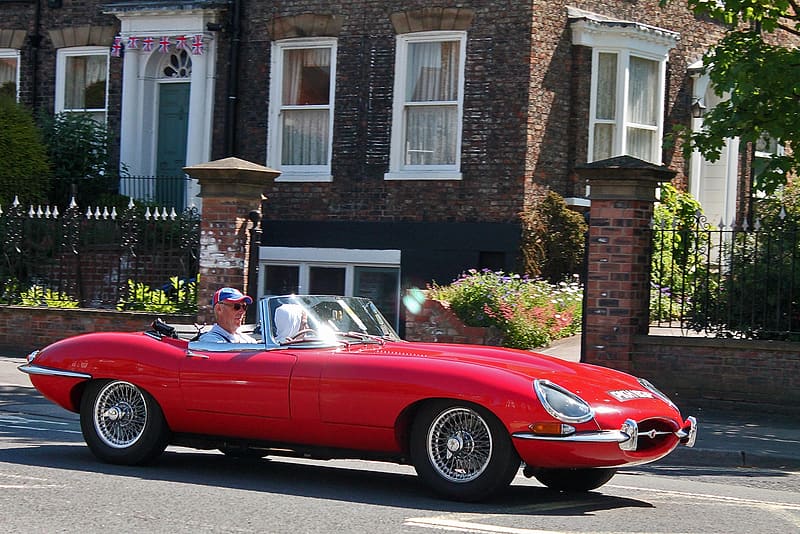
Jaguar E-Type

Malcolm Sayer’s 150-mph icon of the 1960s, often called the most beautiful car ever made.

Common· 10 pts1961–1974Out of production72,515 built12 variants
Jaguar E-Type
Built72,515Approximate
Years1961–1974Out of production
Value today$70k–$260kRecent prices, by variant
Power265–272 hpBy version
0–60 mph6.4 sQuickest version
Top speed150 mphFastest version
On ExoticSpotter571257 spotters · 67 places

Every E-Type

12 variants, by generation: what each one is, and how to tell it apart on the street.

Series 1

1961–1968 · 6 variants · 3 spots · 2 possible
Common

E-Type 3.8 Roadster

1961–1964 · 265 hp

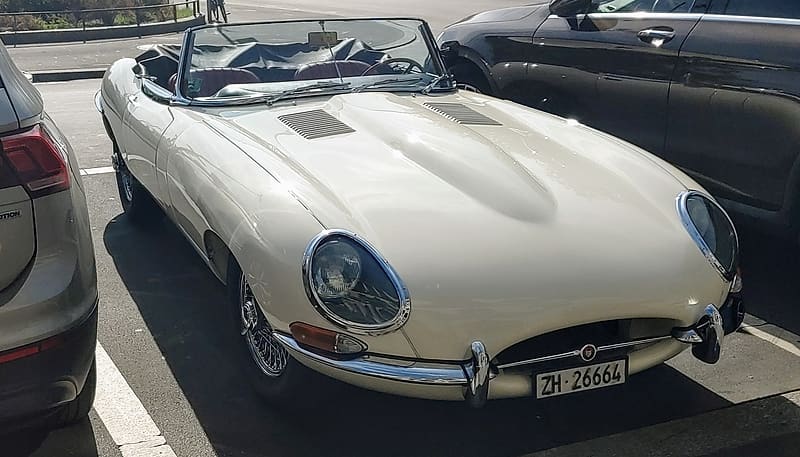
The original E-Type, launched at Geneva on 15 March 1961, at first for export only, with UK sales from that July. It used the triple-carburetor 3.8-liter XK six from the XK150S with 265 bhp, and a Moss four-speed gearbox without synchromesh on first gear on all but the last cars. The first 500 had flat floors and outside bonnet latches that needed a tool to open; these are the rarest and most valuable. Motor magazine timed an early roadster at 149.1 mph and 0–60 mph in 7.1 seconds.

How to spot one

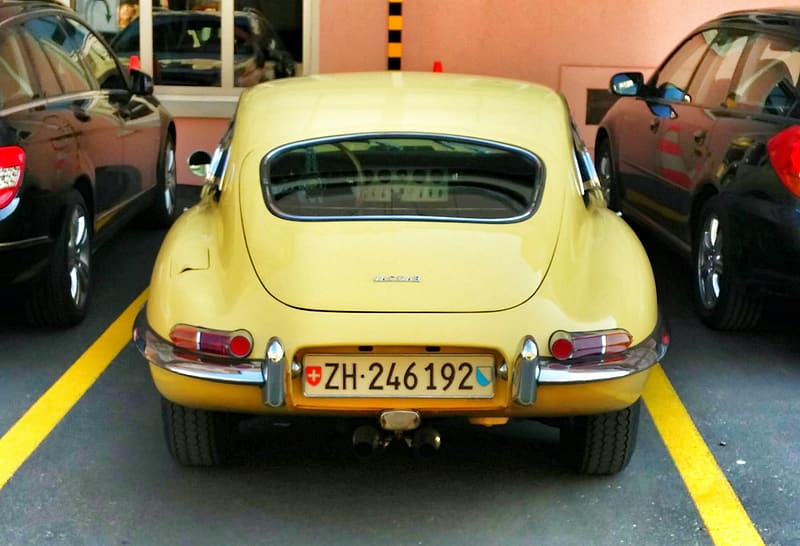
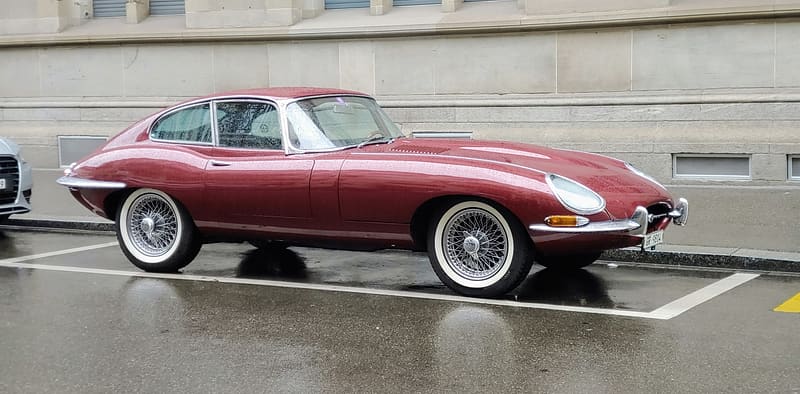
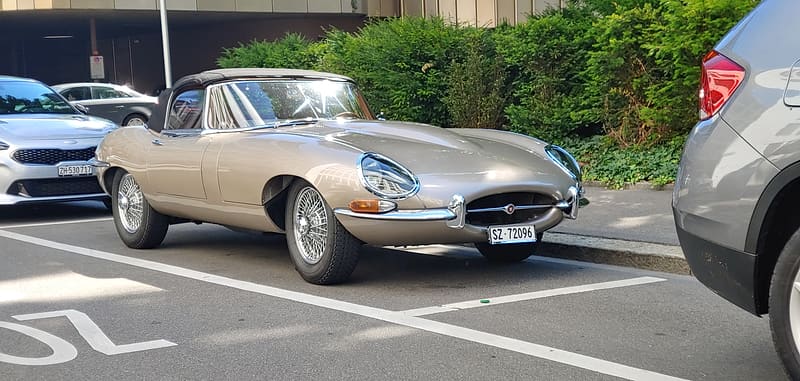
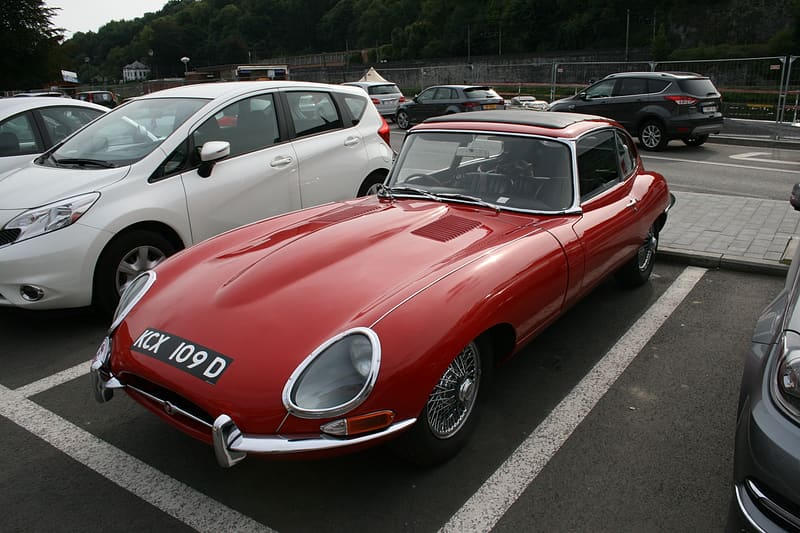
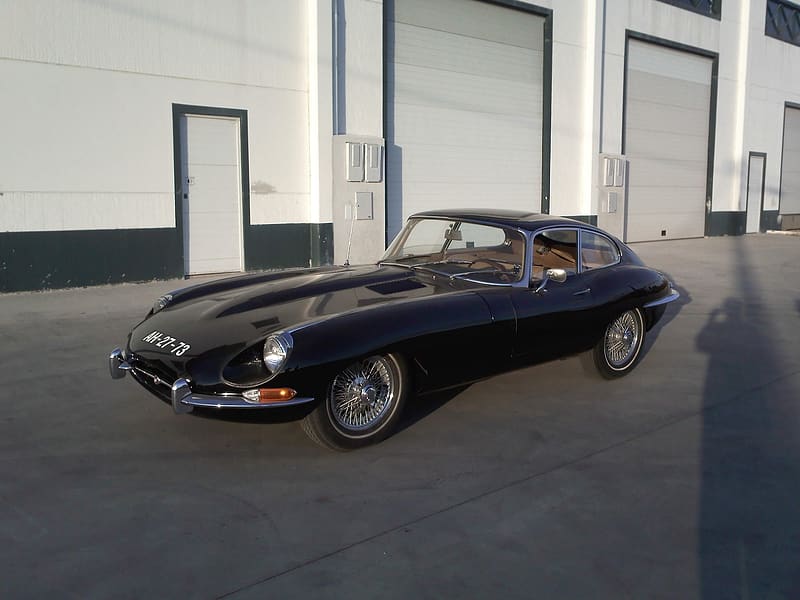
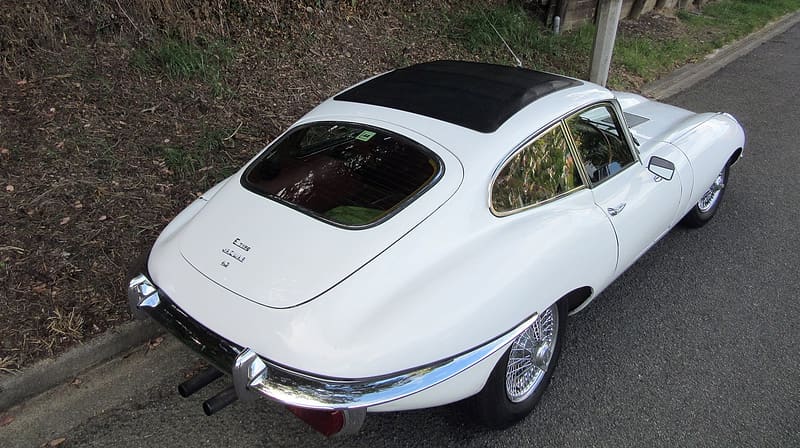
Series 1 cars have glass-covered headlights, a small grille opening, lights above the bumpers and exhaust tips under the number plate; a 3.8 has a plain “Jaguar” badge on the boot, where a 4.2 says “Jaguar 4.2 Litre E-Type.” Flat-floor cars have bonnet latches on the outside of the body.
1 spot · Photos
Not sorted yetIts spots are among the unsorted onesCommon

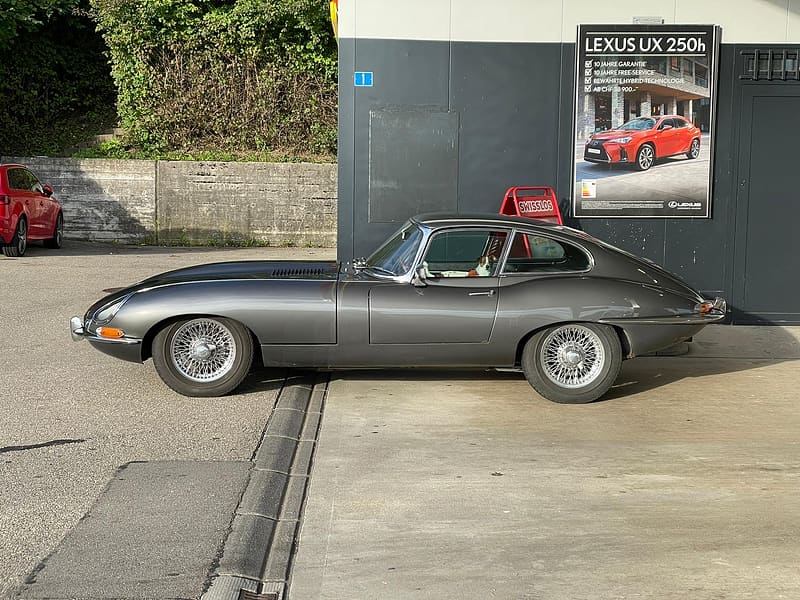
E-Type 3.8 Coupe

1961–1964 · 265 hp

The original E-Type, launched at Geneva on 15 March 1961, at first for export only, with UK sales from that July. It used the triple-carburetor 3.8-liter XK six from the XK150S with 265 bhp, and a Moss four-speed gearbox without synchromesh on first gear on all but the last cars. The first 500 had flat floors and outside bonnet latches that needed a tool to open; these are the rarest and most valuable. Motor magazine timed an early roadster at 149.1 mph and 0–60 mph in 7.1 seconds.

How to spot one

Series 1 cars have glass-covered headlights, a small grille opening, lights above the bumpers and exhaust tips under the number plate; a 3.8 has a plain “Jaguar” badge on the boot, where a 4.2 says “Jaguar 4.2 Litre E-Type.” Flat-floor cars have bonnet latches on the outside of the body.
Help sort them
Not sorted yetIts spots are among the unsorted onesCommon

E-Type 4.2 Roadster

1964–1968 · 265 hp

From October 1964 the engine grew to 4.2 liters (4,235 cc). Power stayed at 265 bhp, but torque rose from 240 to 283 lb-ft, and the car got a Jaguar-designed all-synchromesh four-speed gearbox, more comfortable seats, better brakes and an alternator. The styling was unchanged, and the 4.2 Series 1 is generally the most valuable regular E-Type.

How to spot one

It looks like a 3.8 (covered headlights, small grille, lights above the bumpers) but has a “Jaguar 4.2 Litre E-Type” badge on the boot lid.

1 possible · help confirm
Not sorted yetIts spots are among the unsorted onesCommon

E-Type 4.2 Coupe

1964–1968 · 265 hp

From October 1964 the engine grew to 4.2 liters (4,235 cc). Power stayed at 265 bhp, but torque rose from 240 to 283 lb-ft, and the car got a Jaguar-designed all-synchromesh four-speed gearbox, more comfortable seats, better brakes and an alternator. The styling was unchanged, and the 4.2 Series 1 is generally the most valuable regular E-Type.

How to spot one

It looks like a 3.8 (covered headlights, small grille, lights above the bumpers) but has a “Jaguar 4.2 Litre E-Type” badge on the boot lid.

1 possible · help confirm
Uncommon

E-Type 2+2

1966–1968 · 5,599 built

A four-seat version of the coupe, added in 1966. Its body is 9 inches (229 mm) longer, with a different roof angle, and it was offered with an automatic gearbox. The roadster and the regular coupe stayed two-seaters.

How to spot one

A coupe with a longer body and a differently angled roofline than the two-seat coupe; there is no 2+2 roadster.

1 spot + 1 possible · Photos
Uncommon

E-Type Series 1.5

1967–1968 · 6,726 built

An unofficial name for the 1968 model-year cars built from August 1967, which mixed the Series 1 body with some Series 2 changes forced by new US rules. The headlight covers were removed, toggle switches gave way to black rockers, and US cars got two Zenith-Stromberg carburetors instead of three SUs, cutting claimed power from 265 to 246 hp. A small number of late Series 1 cars also had open headlights.

How to spot one

A Series 1 body, with the small grille and lights above the bumpers, but open headlights without glass covers; US cars have hexagonal wheel nuts instead of winged spinners.

1 spot · Photos

Series 2

1968–1971 · 1 variant · 7 spots
Common

E-Type Series 2

1968–1971 · 18,809 built · 265 hp

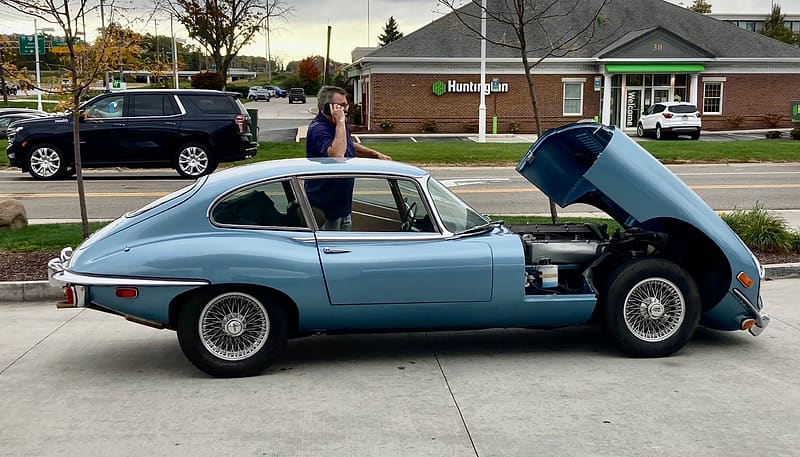
The 1968–1971 E-Type, changed largely to meet US safety rules. It kept the open headlights and added a bigger grille and twin electric fans for better cooling, a steering-column ignition lock, rocker switches and a collapsible steering column, with air conditioning and power steering as options. US cars kept the detuned twin-Stromberg engine.

How to spot one

Open headlights with a larger grille opening, bigger front indicators, a wraparound rear bumper and taillights moved below the bumpers.

7 spots + 1 possible · Photos

Series 3

1971–1974 · 1 variant · 28 spots
Common

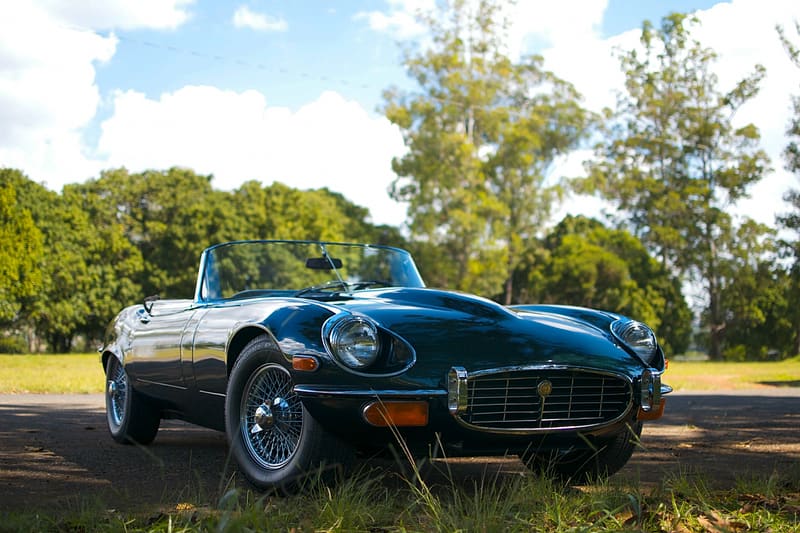
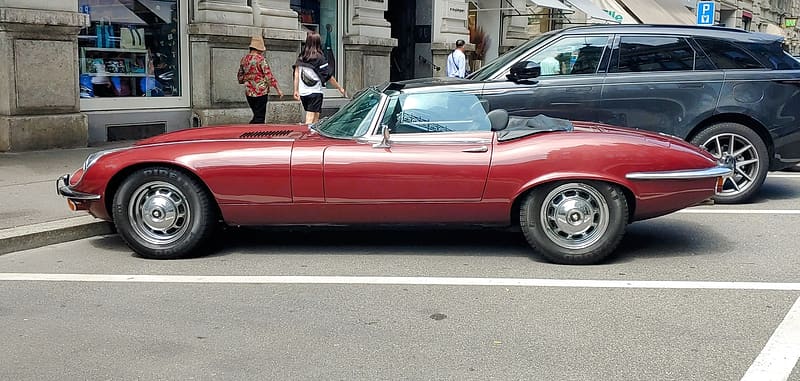
E-Type Series 3 V12

1971–1974 · 15,287 built · 272 hp · $70k–$260k

Introduced in 1971 with Jaguar’s new 5.3-liter V12, with four carburetors and a claimed 272 hp, plus stronger brakes and standard power steering. It came only as a roadster and a 2+2 coupe, both on the longer wheelbase, so the short two-seat coupe was dropped. The last 50 were commemorative cars, all black but one, and the final roadster was built in June 1974.

How to spot one

A large cross-slatted grille, flared wheel arches, wider tires, four exhaust tips and a V12 badge on the tail; US cars from 1973 have big rubber overriders on the bumpers.

28 spots + 5 possible · Photos

Competition cars

2 variants · 0 spots · 3 possible
Not spotted yetBe the firstLegendary

Lightweight E-Type

1963–1964 · 12 built

Jaguar’s racing E-Type of 1963–1964 and a follow-up to the D-Type. Jaguar planned 18 but built 12, plus two spare bodies, with aluminum body panels and an aluminum-block 3.8-liter six making 300 bhp instead of the road car’s 265, and some later got a ZF five-speed gearbox. They never won at Le Mans or Sebring but did well in private hands; Bob Jane won the 1963 Australian GT Championship in one, and one sold for $7.37 million at Scottsdale in 2017.

3 possible · help confirm
Not spotted yetBe the firstLegendary

Low Drag Coupe

1962 · 1 built

A one-off test car built in 1962 to see if the E-Type could be made more like the D-Type racer. Malcolm Sayer kept the steel tub but added lighter aluminum outer panels, a more steeply raked windshield and Perspex side and rear windows, and it used a tuned 3.8-liter engine with a wide-angle cylinder head. Jaguar sold it in 1963 to racing driver Dick Protheroe, and it is believed to be in the collection of Viscount Cowdray.

How to spot one

A fixed fastback roof with the rear hatch welded shut, a more sloping windshield and brake cooling ducts next to the rear side windows. Peter Lindner’s Lightweight was later rebuilt with a similar low-drag roof.

Be the first to spot one

Modern versions

2 variants · 0 spots · 3 possible
Not spotted yetBe the firstLegendary

Lightweight E-Type continuation

2014–Present · 6 built

In May 2014 Jaguar Heritage announced it would build the six Lightweight E-Types that were planned in 1963 but never made, each using one of the unused chassis numbers. They were hand-built to the specification of the last original car, with an aluminum body and a 300-hp 3.8-liter six, and certified by the FIA for historic racing; Wikipedia puts the cost at about $1.65 million each. The prototype, “Car Zero,” was shown at Pebble Beach in August 2014 and stayed with the Jaguar Daimler Heritage Trust.

3 possible · help confirm
Not spotted yetBe the firstLegendary

E-Type Zero

2017

An electric E-Type from Jaguar Classic, unveiled as the E-Type Concept Zero in September 2017. It is a 1968 Series 1.5 roadster with a 40 kWh battery in place of the six-cylinder engine and an electric motor in place of the gearbox, giving 0–60 mph in 5.5 seconds and a range of about 168 miles. Prince Harry and Meghan Markle drove it after their wedding in May 2018. In August 2018 Jaguar said it would convert customers’ E-Types from 2020, but the plan was halted in 2019.

How to spot one

It looks like a Series 1.5 roadster; Jaguar’s production plan called for LED headlights and a carbon-fiber dashboard with a touchscreen instead of the original lamps and dials.

Be the first to spot one

533 E-Type spots need a variant

Most spotters just write “E-Type”. 533 of these have a clue in the description and wait in Help identify: when three spotters agree, the spot gets its variant.

38 of 571 sorted (7%) · 533 questions waiting
Help sort 533
Jaguar E-Type spotted in Zurich, SwitzerlandJaguar E-Type spotted in Pfäffikon Schwyz, SwitzerlandJaguar E-Type spotted in Zurich, SwitzerlandJaguar E-Type spotted in Zurich, SwitzerlandJaguar E-Type spotted in Zurich, SwitzerlandJaguar E-Type spotted in Zurich, SwitzerlandJaguar E-Type spotted in Akron, OhioJaguar E-Type spotted in Zurich, Switzerland