 Very rare
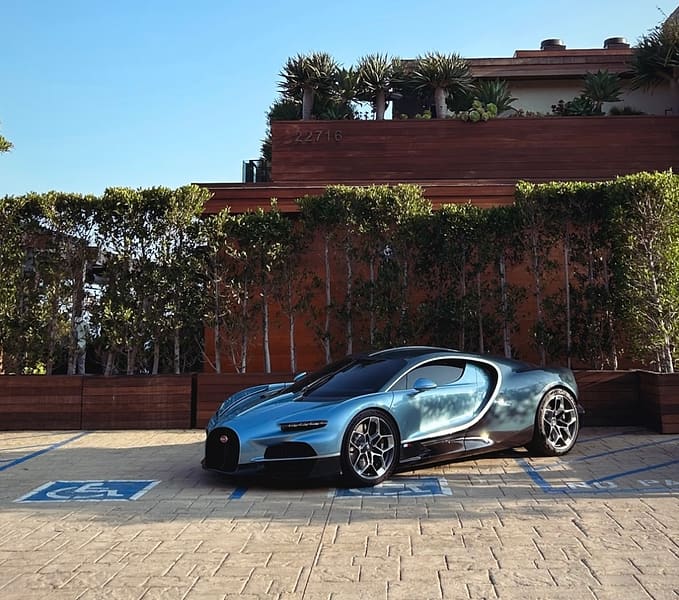
Tourbillon
2026–Present · 250 built
The Chiron’s successor: a Cosworth-built naturally aspirated V16 with three electric motors and 1,775 hp.

The French maker from Molsheim, famous for Ettore Bugatti’s Type 35 racers and Royale, and today for the W16 Veyron and Chiron hypercars.
 MolsheimSince 190910 models1 in production
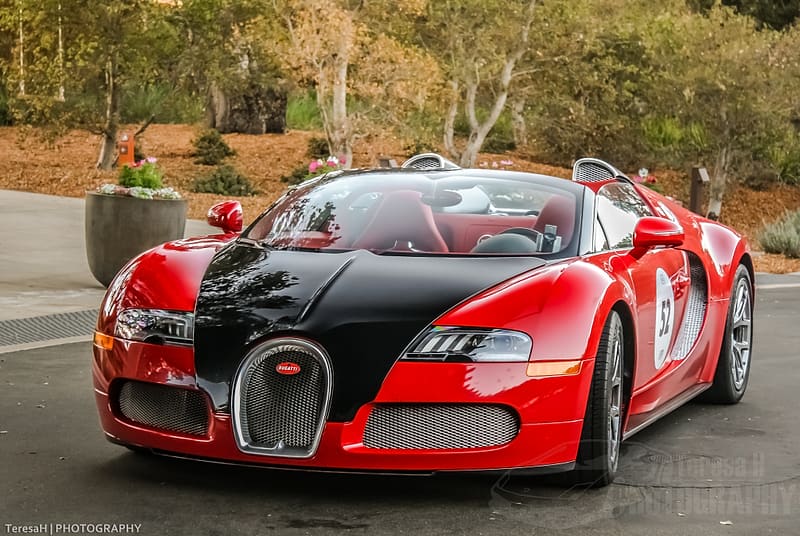 IconBugatti Veyron450 built
Every Bugatti on ExoticSpotter, newest first. Each opens its own guide, with every variant and how to spot it.
Very rare2026–Present · 250 built
The Chiron’s successor: a Cosworth-built naturally aspirated V16 with three electric motors and 1,775 hp.
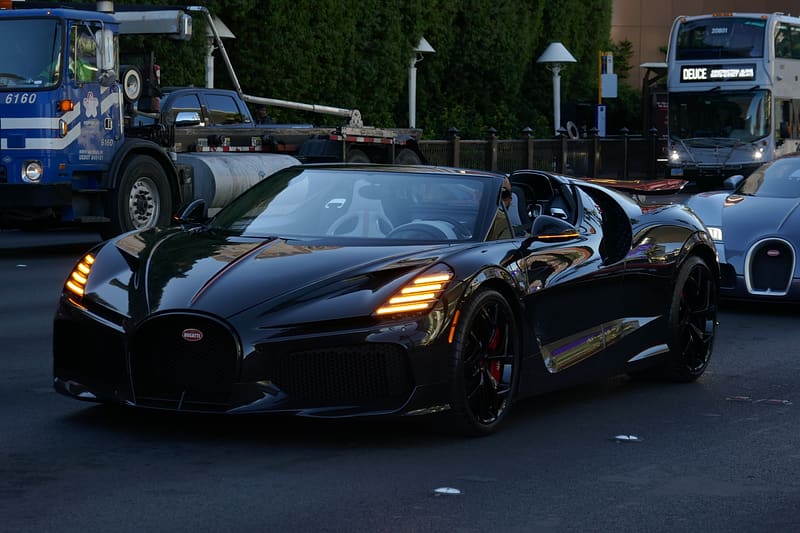 Legendary
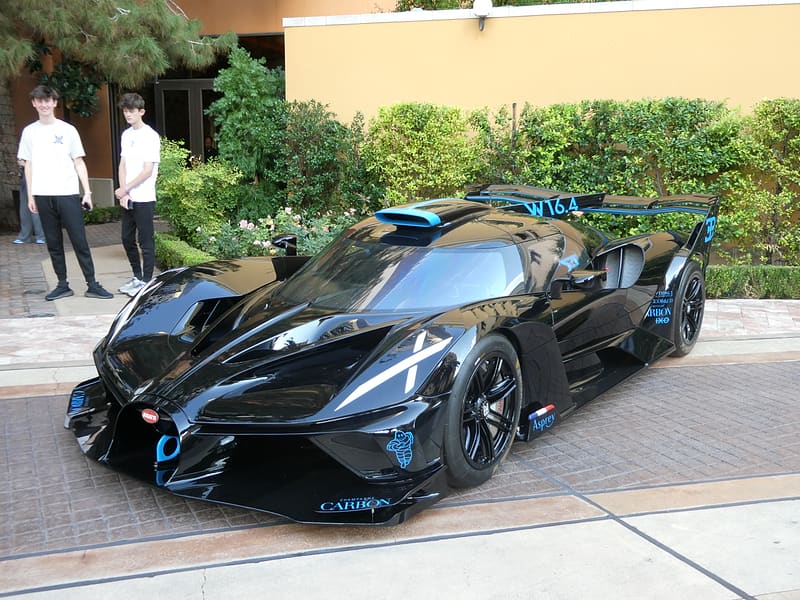 Legendary
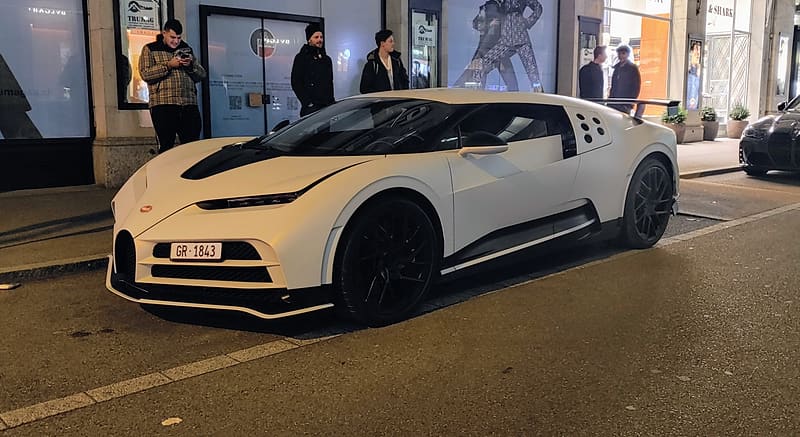 Legendary
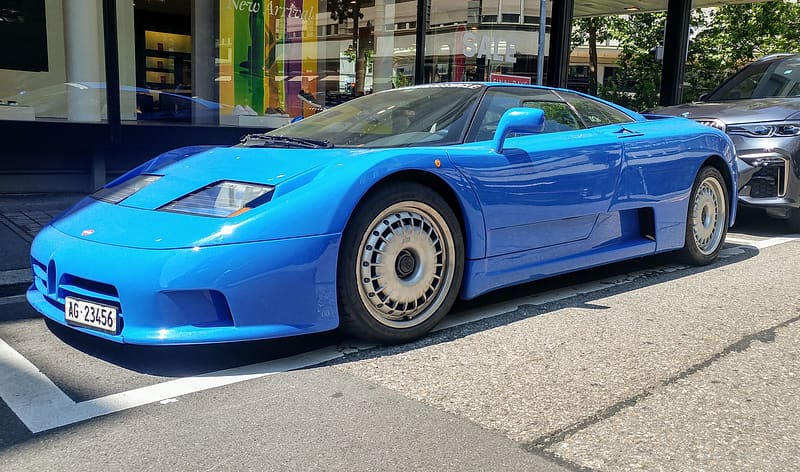
2022 · 10 built
An $8.96-million, ten-car tribute to the EB110, built on the Chiron with 1,578 hp.
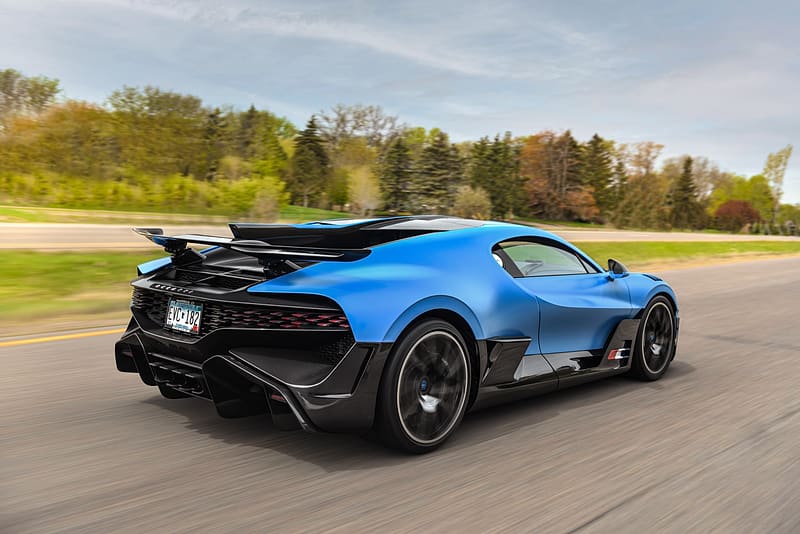 Legendary
2019 · 1 built
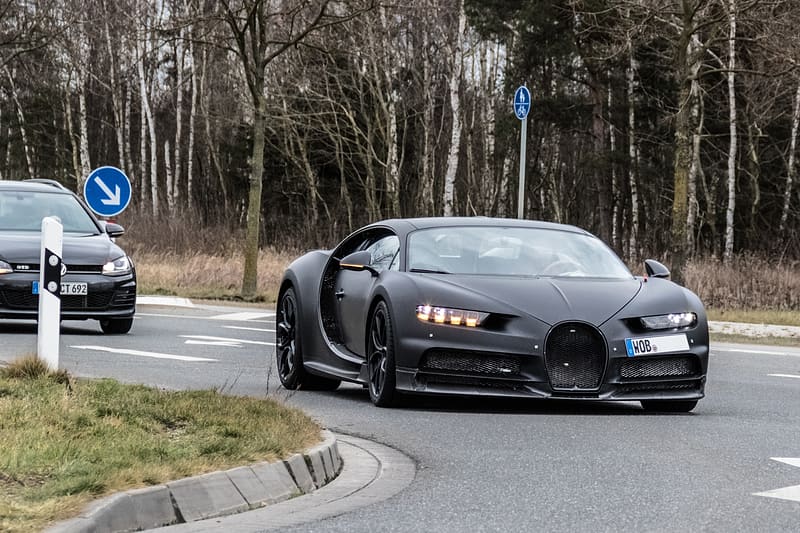
A one-off black Chiron and tribute to the lost Type 57 SC Atlantic, reported at about $18.7 million.
 Rare
The rarest Bugattis our spotters have found: fewer than 500 built.
Model names honor people and history: Veyron, Chiron and Divo are named after Bugatti racing drivers Pierre Veyron, Louis Chiron and Albert Divo; EB110 and Centodieci (Italian for 110) mark Ettore Bugatti’s 110th birthday; and the 16.4 in the Veyron’s name means 16 cylinders and four turbochargers.
The Chiron and the Tourbillon share Bugatti’s design cues, a horseshoe grille, a central spine, a C-shaped line on the side and two-tone paint, so tell modern models apart by their tails, wings and lights; many Veyron and Chiron special editions differ only in colors and materials.
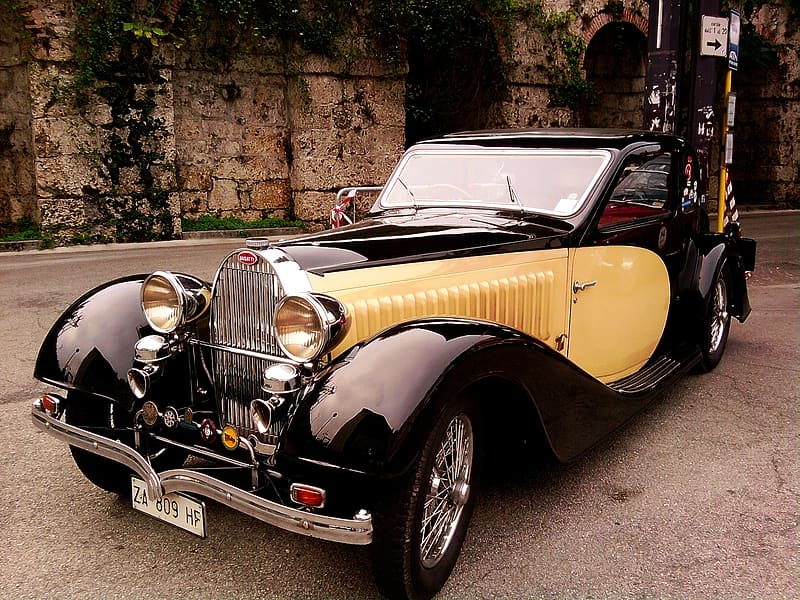
On pre-war Grand Prix cars, the horseshoe radiator and eight-spoke cast aluminum wheels mark a Type 35; the road-going 35A and the four-cylinder Type 37 usually ran on wire wheels.
Bugatti builds only dozens of cars a year (77 in 2020), so any sighting of a modern one is rare. The Schlumpf Collection at the Musée National de l’Automobile in Mulhouse, France, holds many historic Bugattis.