Engineer August Horch founded his first car company in Cologne in 1899 and moved it to Zwickau in 1904. After falling out with his partners he left in 1909 and started a second company in Zwickau, but a court ruled that the Horch name belonged to his old firm. A friend’s son suggested audi, the Latin for “listen”, just as horch is in German, and Audi Automobilwerke was registered on 25 April 1910. The first Audi, the Type A, was built that year, and in 1921 the Type K became the first German production car with left-hand drive.
In 1928 Jørgen Rasmussen, owner of DKW, bought a majority of Audi, and in 1932 Audi, DKW, Horch and Wanderer merged to form Auto Union, based in Chemnitz. The four linked rings, one for each company, date from this time, though before the war they appeared only on Auto Union’s racing cars. Auto Union came to rely on small DKW cars, and the last pre-war Audis were delivered in 1939. A study Audi commissioned in 2014 found that during World War II the company used thousands of concentration-camp prisoners and forced laborers.
After the war the Zwickau factory ended up in East Germany, where it later built the Trabant, and a new Auto Union was set up in Ingolstadt in 1949 to build DKW two-stroke cars. Daimler-Benz owned it from 1958 to 1964, when Volkswagen bought in and then took full control. Volkswagen revived the Audi name in 1965 for a four-stroke car developed from the DKW F102, and in 1969 merged Auto Union with NSU of Neckarsulm. Audis went on sale in the United States for the 1970 model year.
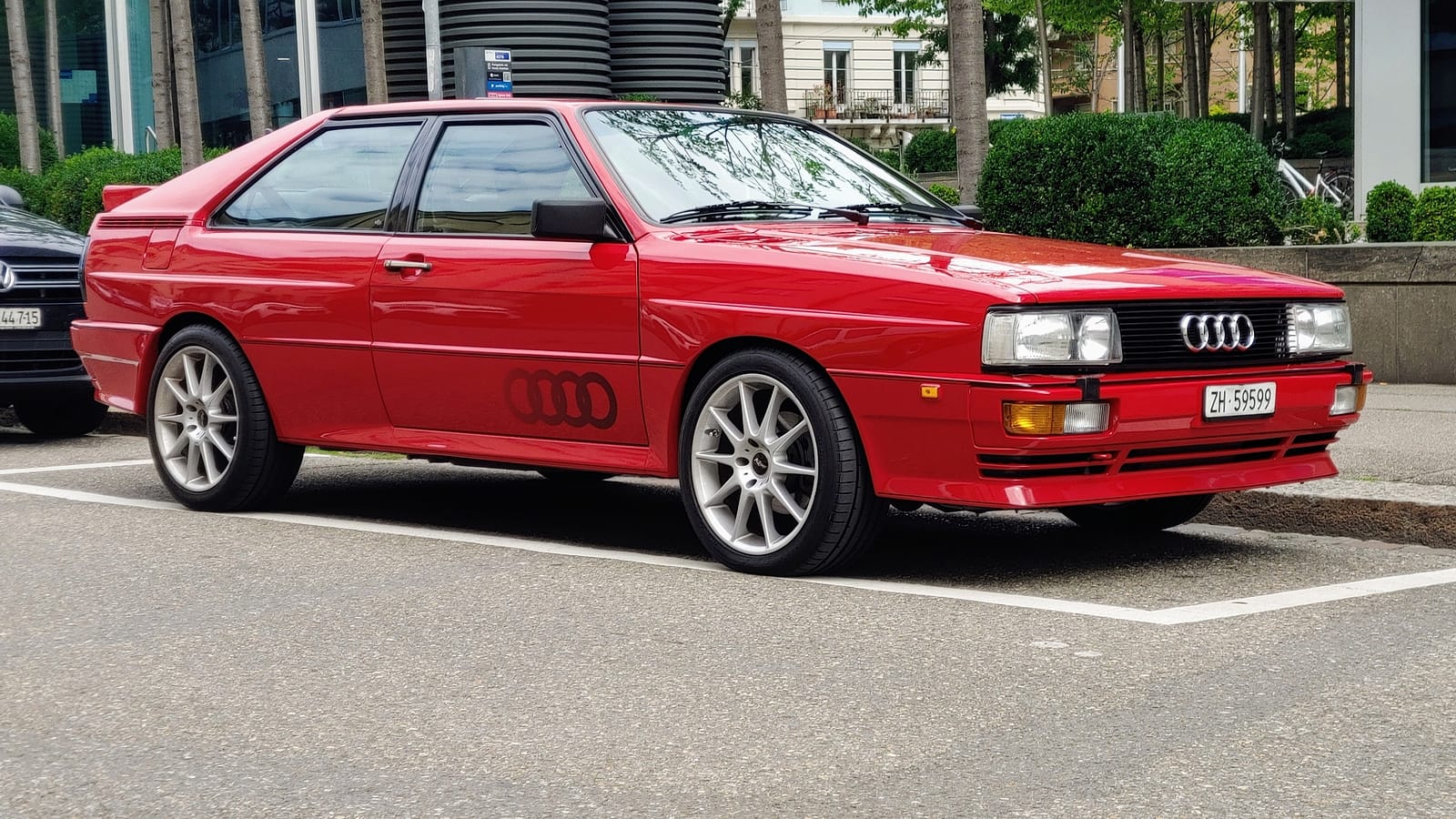
The Audi 100 of 1968 and the Audi 80 of 1972 became the company’s biggest sellers. In 1980 it launched the Quattro, a turbocharged coupe with permanent all-wheel drive, which won the World Rally Championship manufacturers’ title in 1982 and 1984 and the drivers’ title in 1983 and 1984. The company took the name Audi AG and moved its headquarters back to Ingolstadt in 1985. In the United States, sales fell from 74,061 in 1985 to 12,283 in 1991 after reports of sudden unintended acceleration in the Audi 5000.
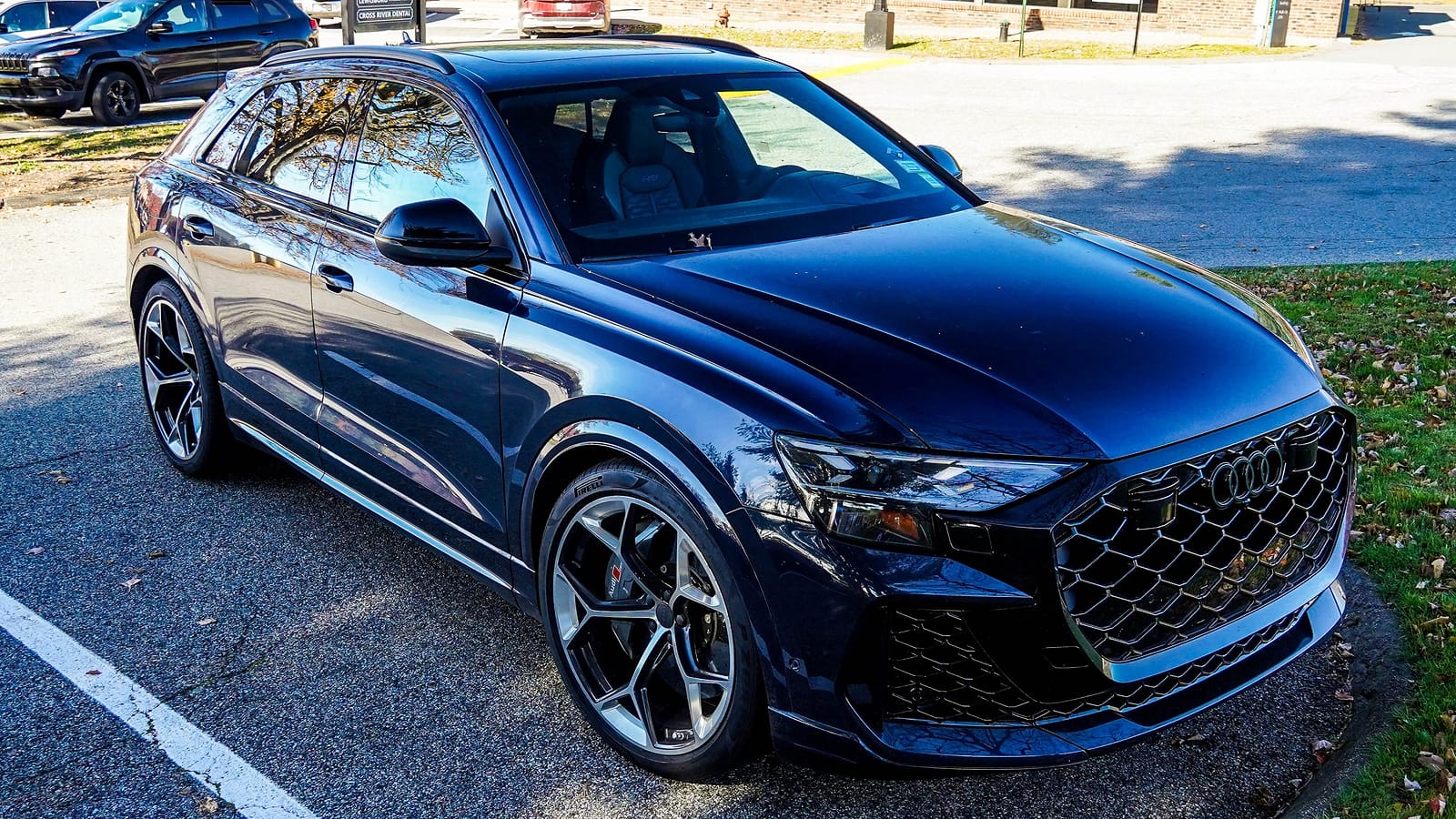
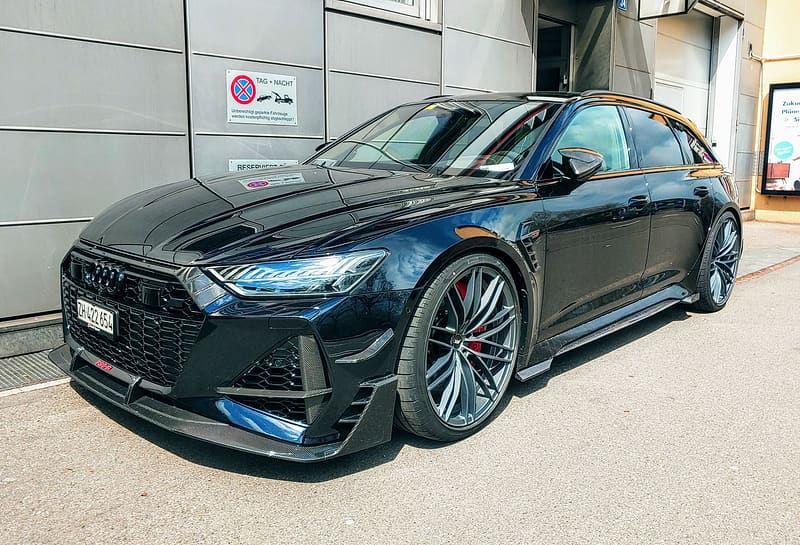
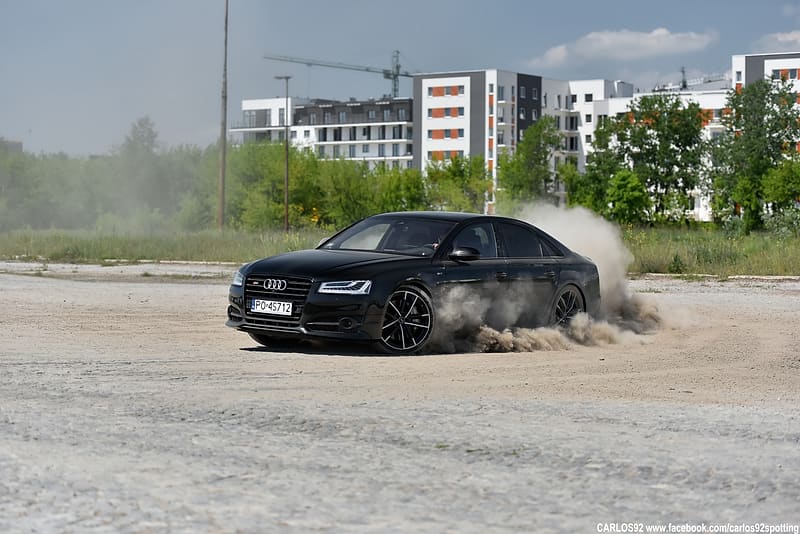
In the 1990s Audi moved upmarket against Mercedes-Benz and BMW, starting with the Audi V8 in 1990. The S2 of 1990 began its S performance line, and the RS 2 of 1994, developed with Porsche, was the first RS model. The A8 of 1994 had an aluminum space frame, the A4 replaced the 80 in 1995, and the TT coupe and roadster followed in 1998. Its high-performance arm, founded in 1983 as quattro GmbH and renamed Audi Sport GmbH in 2016, builds the RS models and built the R8 at Neckarsulm.
Audi first raced at Le Mans in 1999 and won it 13 times between 2000 and 2014, with the R8 prototype, the diesel R10 TDI, the R15 and the hybrid R18, before leaving endurance racing after 2016. Its mid-engined R8 road car, built on Lamborghini Gallardo and later Huracán underpinnings, ran from 2006 to early 2024. In 2015 Audi admitted that about 2.1 million of its cars were caught up in Volkswagen’s diesel emissions scandal, and in November 2020 it became a wholly owned part of the Volkswagen Group. It delivered 1,623,551 cars in 2025, 223,032 of them fully electric, and its own Formula One team, built from Sauber, made its debut at the 2026 Australian Grand Prix.
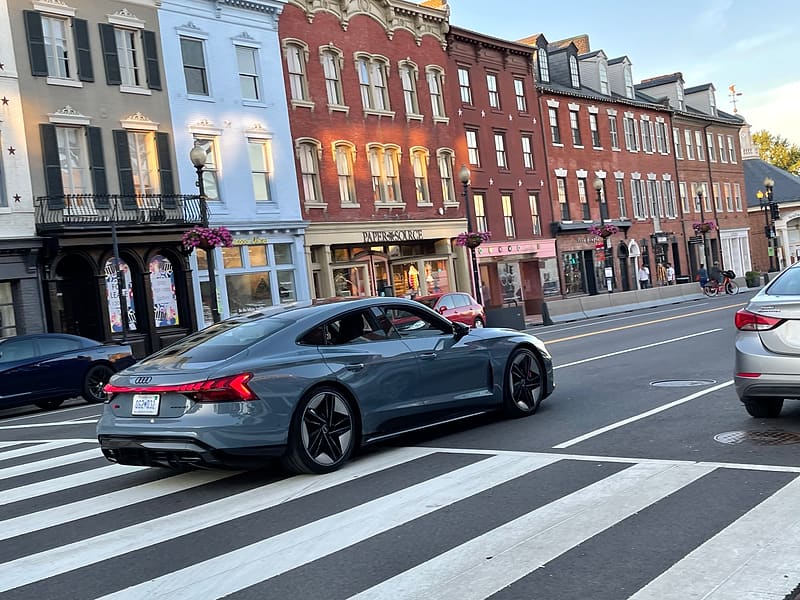 Common
 IngolstadtSince 19097 models5 in production
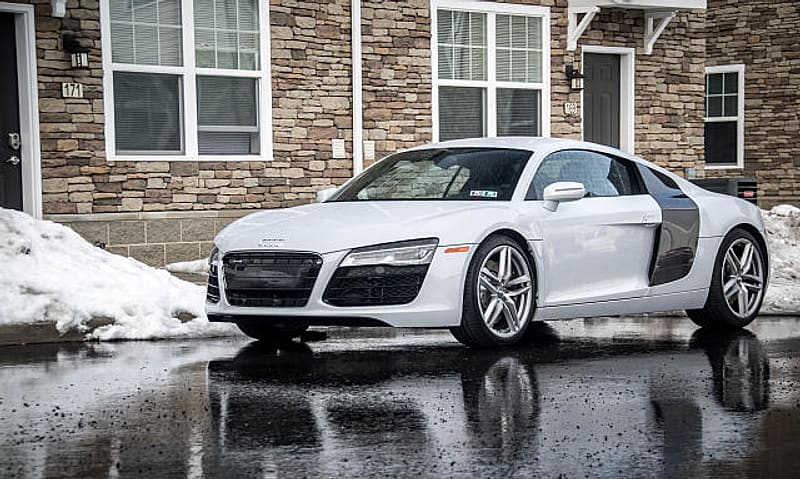 Most spottedAudi R845,949 built